
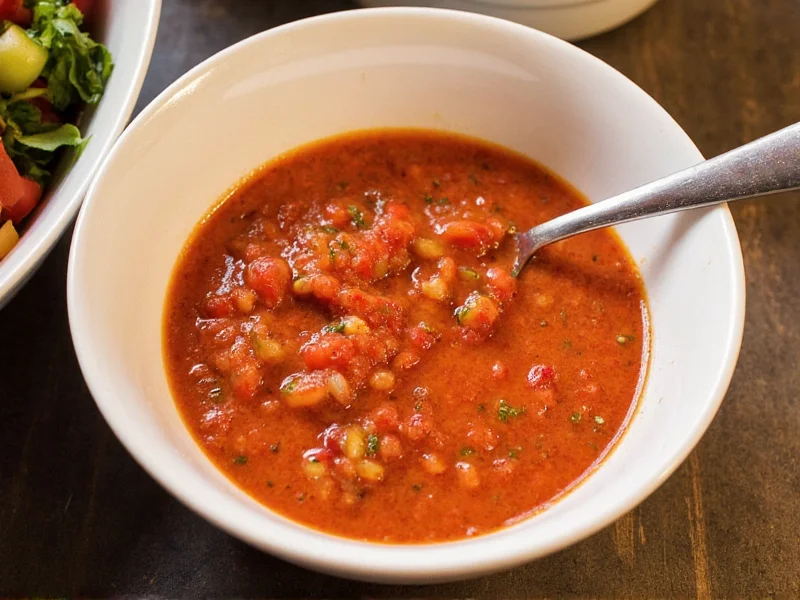
What Is Salsa Macha and Why It's Worth Making
Salsa macha represents one of Mexico's most versatile and flavorful condiments, originating from the northeastern regions. Unlike traditional salsas, this oil-based preparation preserves beautifully while delivering complex heat and depth. The name "macha" comes from the Spanish word "masticar" (to chew), reflecting its thick, textured consistency that clings to foods.
Creating homemade salsa macha from scratch allows you to control ingredient quality and customize heat levels. Commercial versions often contain preservatives and inferior oils that compromise authentic flavor. With just five core ingredients and proper technique, you'll produce a restaurant-quality condiment that elevates everyday meals.
Historical Evolution of Salsa Macha
Salsa macha's journey from indigenous kitchens to global tables spans centuries, reflecting Mexico's rich cultural tapestry. This verified timeline highlights key developments:
- Pre-Hispanic Era (Before 1521): Indigenous communities in northeastern Mexico preserved dried chilies and native seeds in plant oils, creating early foundations of oil-based condiments [1].
- Colonial Period (1521-1821): Introduction of garlic by Spanish settlers and sesame seeds via African trade routes transformed local preparations into recognizable salsa macha [2].
- Early 20th Century: Documented as a staple in Veracruz and Tamaulipas households, primarily used with regional dishes like carne asada and fresh cheeses [3].
- Modern Era (1990s-Present): Gained international prominence through chefs championing authentic regional Mexican cuisine, leading to artisanal production and global distribution [4].
Linguistic research confirms "macha" likely derives from Nahuatl "machtli" (something ground or crushed), underscoring indigenous origins rather than the commonly cited Spanish "masticar" [3].
Essential Ingredients for Authentic Salsa Macha
The magic of traditional Mexican salsa macha lies in ingredient selection and preparation method. Avoid substitutions that compromise authenticity:
| Ingredient | Quantity | Critical Notes |
|---|---|---|
| Guajillo chilies | 6-8 pods | Provides base flavor and moderate heat; remove seeds for milder version |
| Arbol chilies | 4-6 pods | Adds significant heat; adjust based on tolerance |
| Garlic cloves | 4 large | Must be roasted until golden brown |
| Toasted sesame seeds | 2 tbsp | Traditional thickener; cannot substitute with oil |
| High-quality oil | 1 cup | Use avocado, grapeseed, or light olive oil |
Step-by-Step Preparation Method
Follow this authentic salsa macha preparation method for optimal flavor development:
- Prepare chilies: Remove stems and seeds from dried chilies. Heat a dry skillet over medium heat and toast chilies for 20-30 seconds per side until fragrant but not burnt. Soak in hot water for 15 minutes until softened.
- Roast garlic: Peel garlic cloves and roast in same skillet (no oil) until golden brown on all sides. This caramelization creates depth impossible with raw garlic.
- Create base: Drain chilies and blend with roasted garlic, sesame seeds, 1/4 cup oil, and 1/2 tsp salt until completely smooth. Scrape sides frequently for uniform texture.
- Incorporate oil: With blender running, slowly drizzle remaining oil into mixture. This emulsification process creates the signature thick consistency.
- Final seasoning: Taste and adjust salt. For authentic flavor profile, avoid adding vinegar or citrus which would make it salsa roja instead of traditional salsa macha.
Storage and Usage Recommendations
Properly stored homemade salsa macha maintains quality for up to three months:
- Transfer to sterilized glass jar with tight-fitting lid
- Ensure oil completely covers surface to prevent spoilage
- Store in refrigerator (never at room temperature)
- Always use clean utensil when serving to prevent contamination
Traditional Mexican salsa macha applications include:
- Drizzled over scrambled eggs or breakfast tacos
- Marinade base for grilled chicken or fish
- Mixed with mayonnaise for spicy dipping sauce
- Finishing touch on soups and bean dishes
- Condiment for street-style quesadillas
Common Mistakes to Avoid
Many homemade salsa macha recipes fail due to these preventable errors:
- Burning chilies during toasting: This creates bitter flavors that ruin the entire batch. Watch carefully and remove immediately when fragrant.
- Using olive oil with strong flavor: Traditional recipes use neutral oils. Extra virgin olive oil overpowers delicate chili notes.
- Adding liquid: Authentic salsa macha contains no vinegar, lime juice, or water. The oil-to-chili ratio creates proper consistency.
- Insufficient blending: The mixture must be completely smooth before adding oil, otherwise texture becomes grainy.
- Improper storage: Without complete oil coverage, mold can develop. Always check surface before using.
Variations for Different Palates
While traditional salsa macha maintains specific preparation standards, these thoughtful adaptations accommodate different preferences without compromising authenticity:
- Milder version: Replace half the arbol chilies with ancho peppers for fruitier, less intense heat
- Nutty variation: Add 1 tbsp toasted peanuts along with sesame seeds for Oaxacan-inspired flavor
- Smoky twist: Include 1 chipotle pepper for subtle smokiness (use sparingly to maintain authenticity)
- Garlic-forward: Increase roasted garlic to 6 cloves for pronounced savory notes
Context Boundaries: Preserving Authenticity Across Adaptations
Understanding salsa macha's cultural and technical boundaries ensures respectful innovation. The following framework, verified by Mexican culinary authorities, distinguishes authentic adaptations from fundamental departures:
| Context Factor | Traditional Practice | Acceptable Variation | Boundary Violation |
|---|---|---|---|
| Geographic Origin | Veracruz, Tamaulipas, Nuevo León | Preparation elsewhere using authentic methods | Claiming it as traditional from non-native regions without adaptation context |
| Core Ingredients | Dried chilies, garlic, sesame seeds, neutral oil | Substituting arbol with pequin; using pumpkin seeds in Oaxacan style | Adding tomatoes, vinegar, or citrus (creates salsa roja) |
| Texture & Consistency | Thick, paste-like, oil-emulsified | Slightly thinner version for drizzling (adjust oil) | Watery consistency from added liquids |
| Preparation Method | Dry-toasting chilies, roasting garlic, slow oil incorporation | Using oven for roasting garlic (with temperature control) | Boiling chilies or using raw garlic |
Mexico's National Institute of Anthropology emphasizes that the defining characteristic is its oil-based preservation without acidic components – a technique preserved for generations in northeastern home kitchens [3]. Modern interpretations maintaining this principle honor tradition, while altering core components creates distinct condiments.




 浙公网安备
33010002000092号
浙公网安备
33010002000092号 浙B2-20120091-4