
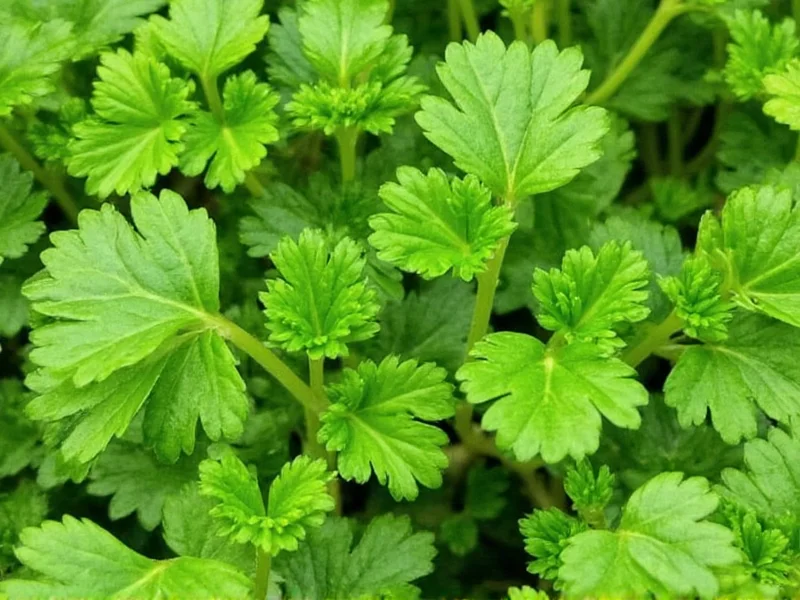
Understanding the Botanical Distinction
Coriander (Coriandrum sativum) and parsley (Petroselinum crispum) belong to different genera within the Apiaceae family. While they share some visual characteristics as leafy herbs, they have distinct botanical profiles:
| Characteristic | Coriander (Cilantro) | Parsley |
|---|---|---|
| Botanical Name | Coriandrum sativum | Petroselinum crispum |
| Leaf Shape | Rounded, lacy edges | Pointed, serrated edges |
| Flavor Profile | Strong, citrusy, sometimes soapy (to some) | Milder, grassy, slightly bitter |
| Stem Texture | More delicate, hollow | Sturdier, solid |
| Flowering | Produces cilantro seeds (coriander seeds) | Does not produce culinary seeds |
Why the Confusion Between Coriander and Parsley Exists
The "is coriander parsley" confusion arises from several factors that trip up home cooks and culinary beginners. In many English-speaking countries outside North America, the term "coriander" refers to both the fresh leaves and the dried seeds of Coriandrum sativum. However, in the United States and Canada, we call the fresh leaves "cilantro" and reserve "coriander" for the dried seeds.
Additionally, young coriander plants can resemble flat-leaf parsley, especially to inexperienced gardeners. Both herbs feature bright green, compound leaves that grow in similar patterns. This visual similarity contributes to the common question: is coriander the same as parsley in cooking?
Visual Identification: Telling Coriander and Parsley Apart
When standing before a grocery store display wondering is coriander parsley or something different, use these visual cues:
- Leaf shape: Coriander leaves have rounded, almost circular edges with a lacy appearance, while parsley leaves (especially flat-leaf variety) have more pointed, serrated edges.
- Color: Coriander tends to be a brighter, more yellowish green, whereas parsley displays a deeper, darker green.
- Stem structure: Coriander stems are more delicate and often hollow, while parsley stems are sturdier and solid.
- Aroma test: Crush a leaf between your fingers. Coriander emits a strong citrus scent, while parsley has a more neutral, grassy aroma.
Flavor Differences That Matter in Cooking
Understanding the difference between cilantro and parsley becomes crucial when following recipes. Coriander (cilantro) delivers a bold, citrusy flavor that can dominate a dish, while parsley offers a more subtle, fresh note that complements rather than commands.
Professional chefs emphasize that substituting one for the other significantly alters a dish's character. Mediterranean recipes calling for parsley won't achieve the intended flavor profile with coriander, just as Southeast Asian dishes requiring coriander lose authenticity with parsley substitution.
Can You Substitute Coriander for Parsley?
When considering can I substitute coriander for parsley in a recipe, the answer depends on context:
- In garnishes: Substitution works poorly due to flavor intensity differences
- In sauces like chimichurri or tabbouleh: Not recommended—each herb defines its respective dish
- When out of parsley: Use half the amount of coriander to avoid overwhelming the dish
- When out of coriander: Consider basil or mint rather than parsley for similar fresh profiles
Understanding coriander leaves vs parsley helps prevent culinary mishaps. While both serve as fresh herbs, their distinct flavor compounds mean they fulfill different roles in global cuisines.
Regional Terminology Explained
The question is coriander the same as parsley often stems from regional language differences. In British English and many Commonwealth countries:
- Coriander = Fresh leaves AND dried seeds
- Cilantro = Not commonly used term
Whereas in American English:
- Cilantro = Fresh leaves
- Coriander = Dried seeds
This terminology difference explains why many non-North Americans searching is coriander parsley might encounter confusing information. The same plant part has different names across English dialects, while parsley remains consistently named.
Common Misconceptions Clarified
Several persistent myths contribute to the coriander plant vs parsley confusion:
- Myth: Coriander and parsley are different names for the same herb
Fact: They're botanically distinct plants with different flavor profiles and culinary uses - Myth: Coriander seeds come from parsley plants
Fact: Coriander seeds come only from Coriandrum sativum; parsley doesn't produce culinary seeds - Myth: Young parsley and coriander are identical
Fact: While similar when immature, their leaf structures differ significantly as they mature
Historical Timeline: Evolution of Culinary Use
Understanding the historical context clarifies why these herbs developed distinct culinary identities. Archaeological and botanical records show:
- 5000 BC: Earliest evidence of coriander use in Neolithic sites (Nahal Hemar, Israel). Seeds were used as both food and medicine (Kew Royal Botanic Gardens)
- 1550 BC: Coriander documented in the Ebers Papyrus for digestive remedies, establishing its medicinal role in ancient Egypt (U.S. National Library of Medicine)
- 3rd Century BC: Parsley first described by Theophrastus in Enquiry into Plants as a ceremonial herb, not yet adopted for cooking (Kew Royal Botanic Gardens)
- 1st Century AD: Dioscorides differentiates coriander's culinary/medicinal uses from parsley in De Materia Medica, marking the first botanical distinction (Yale Dioscorides Project)
- 16th Century: European colonists introduce coriander to the Americas where "cilantro" emerges as the leaf-specific term, while parsley maintains consistent nomenclature (Encyclopædia Britannica)
Genetic Perception Variance: Global Sentiment Analysis
Scientific research reveals why coriander's flavor polarizes consumers globally. A peer-reviewed study of 14,604 participants analyzed genetic and cultural factors influencing perception:
| Population Group | Dislike Coriander (%) | Primary Genetic Marker |
|---|---|---|
| East Asian | 21 | OR6A2 rs72921001 |
| European | 17 | OR6A2 rs72921001 |
| African | 14 | OR6A2 rs72921001 |
| Hispanic | 12 | OR6A2 rs72921001 |
| Middle Eastern | 8 | OR6A2 rs72921001 |
This genetic variation affects aldehyde detection, causing soapy perception in coriander but not parsley. The study (Eriksson et al., 2012) published in Flavour journal confirms these differences are biologically rooted, not cultural. Notably, parsley shows consistent neutral-positive reception across all populations (Flavour Journal).
Practical Tips for Home Cooks
When working with these herbs, remember these practical distinctions:
- Store coriander with stems in water (like flowers) and cover loosely with plastic bag in refrigerator
- Parsley withstands cooking better than coriander, which loses flavor quickly with heat
- Coriander works best in raw applications (salsas, chutneys), while parsley shines in both raw and cooked dishes
- When a recipe says "fresh coriander," it means cilantro leaves—not parsley
Frequently Asked Questions
Is coriander the same plant as parsley?
No, coriander (Coriandrum sativum) and parsley (Petroselinum crispum) are completely different plants belonging to different genera within the same plant family. They have distinct botanical characteristics, flavors, and culinary uses.
Why do people confuse coriander with parsley?
People confuse them because young coriander leaves resemble flat-leaf parsley visually, and regional naming differences cause confusion. In many countries 'coriander' refers to both the fresh leaves and seeds, while in North America we call the fresh leaves 'cilantro' and reserve 'coriander' for the seeds.
Can I substitute parsley for coriander in recipes?
Substitution isn't recommended as they have very different flavor profiles. Coriander has a strong citrus flavor while parsley is milder. In emergencies, use half the amount of coriander if substituting for parsley, but expect significant flavor changes to your dish.
What's the difference between cilantro and coriander?
Cilantro refers specifically to the fresh leaves of Coriandrum sativum, while coriander typically refers to the dried seeds of the same plant. In many countries outside North America, 'coriander' refers to both the leaves and seeds, causing additional confusion.
How can I tell coriander and parsley apart in the grocery store?
Look for these differences: coriander leaves have rounded, lacy edges and a brighter green color with a strong citrus scent when crushed, while parsley has more pointed, serrated edges, deeper green color, and a milder grassy aroma. Coriander stems are more delicate and often hollow compared to parsley's sturdier stems.




 浙公网安备
33010002000092号
浙公网安备
33010002000092号 浙B2-20120091-4