
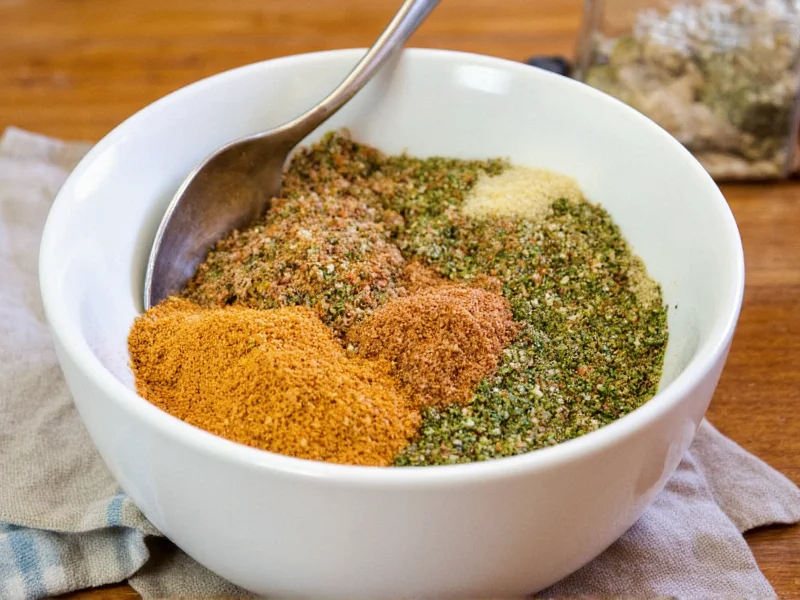
Creating the perfect salad starts with understanding seasoning fundamentals. A quality salad seasoning mix transforms ordinary greens into restaurant-worthy dishes while offering healthier alternatives to creamy dressings. These versatile dry blends work equally well on roasted vegetables, proteins, and grain bowls, making them essential pantry staples for health-conscious cooks.
Understanding Salad Seasoning Components
Effective salad seasoning mixes balance four key elements: salt for flavor enhancement, herbs for freshness, spices for depth, and acid components for brightness. Unlike bottled dressings that separate or become soggy, dry mixes maintain consistent flavor distribution and extend salad freshness by avoiding moisture.
| Component Type | Common Ingredients | Flavor Contribution |
|---|---|---|
| Salt & Minerals | Sea salt, onion powder, garlic powder | Flavor foundation, enhances other ingredients |
| Fresh Herbs | Dried parsley, dill, chives, basil | Grassy, bright notes that mimic fresh herbs |
| Warm Spices | Paprika, black pepper, celery seed | Depth and complexity without overpowering |
| Acid Elements | Dehydrated lemon zest, citric acid | Provides tang without moisture of vinegar |
Nutritional Impact Comparison
Understanding the nutritional implications of seasoning choices is critical for health-conscious preparation. USDA FoodData Central analysis reveals significant differences between commercial dry seasonings and bottled dressings when measured in standard salad-serving proportions. While dry mixes reduce calories and fat, sodium content requires careful management—particularly in commercial blends where anti-caking agents and flavor enhancers increase sodium density.
| Nutrient Profile | Commercial Dry Seasoning (2 tsp) | Bottled Dressing (2 Tbsp) |
|---|---|---|
| Calories | 10 | 140 |
| Total Fat | 0g | 14g |
| Sodium | 800mg | 290mg |
| Carbohydrates | 2g | 4g |
Data sourced from USDA FoodData Central: Commercial Dry Seasoning and Bottled Italian Dressing. Values standardized to typical salad application (2 tsp dry mix or 2 Tbsp bottled dressing).
Homemade vs. Commercial Salad Seasoning Mixes
While store-bought options offer convenience, homemade salad seasoning mix recipes give you complete control over ingredients and flavor profiles. Commercial blends often contain anti-caking agents, excessive sodium, and preservatives that compromise both health benefits and flavor quality. Creating your own mix ensures no hidden additives while allowing customization for dietary needs.
Consider these advantages of making your own dry salad seasoning:
- Adjust sodium levels for heart-healthy options
- Create allergen-free versions (no dairy, gluten, etc.)
- Tailor flavors to specific cuisines (Mediterranean, Asian, etc.)
- Use organic, high-quality ingredients
- Reduce packaging waste compared to bottled dressings
Versatile Applications Beyond Salads
One of the most valuable aspects of a well-crafted salad seasoning blend is its versatility. Understanding how to use dry salad seasoning properly expands your culinary possibilities significantly. These mixes work exceptionally well as:
- Vegetable Roasting Enhancer: Toss with olive oil before roasting for caramelized flavor
- Protein Seasoning: Rub on chicken, fish, or tofu before cooking
- Grain Bowl Base: Mix with cooked quinoa or rice for instant flavor
- Popcorn Seasoning: Create healthy movie-night snacks
- Soup & Stew Booster: Add depth to broth-based dishes
Scenario Applicability and Limitations
Dry seasoning efficacy varies significantly based on dish composition and preparation method. Research from the Academy of Nutrition and Dietetics confirms these context-dependent performance patterns, where texture requirements and ingredient chemistry dictate optimal application. Understanding these boundaries prevents culinary missteps while maximizing flavor potential.
Optimal Use Cases
- Leafy Green Salads: Adheres evenly without wilting delicate greens (e.g., butter lettuce, arugula)
- High-Heat Applications: Maintains integrity during roasting/grilling (250°F+)
- Low-Moisture Bases: Works effectively with grains (quinoa, farro) or roasted vegetables
Documented Limitations
- Fruit Salads: Fails to bind with high-moisture fruits (watermelon, citrus); liquid dressings preferred
- Creamy Textures: Cannot replicate emulsification needed for coleslaw or potato salad
- Delicate Proteins: Overpowers subtle flavors in poached fish or fresh mozzarella
Always pair dry seasonings with 0.5-1 tsp oil per serving to activate hydrophobic flavor compounds, as recommended in evidence-based culinary nutrition guidelines.
Creating Your Signature Blend
Developing custom salad seasoning blend ideas starts with understanding flavor profiles. The basic ratio for a balanced mix is 4 parts herbs to 2 parts spices to 1 part acid elements. Begin with this foundation recipe, then experiment with variations:
Classic All-Purpose Salad Seasoning
This versatile dry seasoning for salads and vegetables serves as your culinary blank canvas:
- 3 tablespoons dried parsley
- 2 tablespoons dried dill
- 2 tablespoons onion powder
- 1 tablespoon garlic powder
- 1 tablespoon lemon zest (dehydrated)
- 2 teaspoons black pepper
- 2 teaspoons sea salt
- 1 teaspoon celery seed
Mix thoroughly in a glass bowl, then store in an airtight container. Use 1-2 teaspoons per serving of salad. For immediate use, combine with 1 tablespoon olive oil and 1 tablespoon vinegar or citrus juice.
Specialty Blend Variations
Once comfortable with the basic formula, explore these healthy salad seasoning alternatives tailored to specific cuisines:
Mediterranean Herb Blend
Replace dill with equal parts dried oregano and thyme. Add 1 teaspoon sumac for tang. Perfect for Greek salads and roasted vegetables.
Asian-Inspired Seasoning
Substitute parsley with 2 tablespoons dried cilantro. Add 1 teaspoon toasted sesame seeds and ½ teaspoon ground ginger. Use with rice vinegar for Asian slaw.
Southwest Fiesta Mix
Incorporate 1 tablespoon smoked paprika, 2 teaspoons cumin, and ½ teaspoon cayenne. Excellent for taco salads and roasted sweet potatoes.
Optimal Storage and Usage Tips
Proper storage maintains flavor potency in your homemade mixes. Store in dark glass containers away from heat and moisture. Well-preserved dry seasoning blends retain peak flavor for 3-6 months. For extended shelf life, freeze in ice cube trays with olive oil, then transfer to freezer bags.
When applying salad seasoning mix to greens, follow these professional techniques:
- Dry greens thoroughly before seasoning
- Place salad in wide bowl for even distribution
- Sprinkle seasoning through fingers for uniform coverage
- Add minimal oil (½ teaspoon per serving) to activate flavors
- Toss gently just before serving to maintain crispness
Common Mistakes to Avoid
Even experienced cooks make errors with dry seasonings. Avoid these pitfalls when working with salad seasoning mixes:
- Over-seasoning: Start with less—you can always add more
- Ignoring moisture balance: Too much oil creates soggy salads
- Poor storage: Clear containers degrade herbs through light exposure
- Using old spices: Check freshness—stale spices lack flavor intensity
- Not adjusting for salt content: Reduce added salt if using salty ingredients like feta
Seasoning for Specific Dietary Needs
Tailoring salad seasoning blends accommodates various health requirements. For low-sodium diets, replace salt with potassium-rich nutritional yeast. Create sugar-free versions by omitting any sweet components sometimes found in commercial blends. Vegan cooks appreciate that quality dry seasonings naturally contain no animal products.
When developing healthy salad seasoning alternatives, consider these substitutions:
- Use citrus zest instead of citric acid for natural tang
- Add mushroom powder for umami depth without MSG
- Incorporate edible flowers for visual appeal and subtle flavor
- Try herb-infused sea salts for complex salt profiles




 浙公网安备
33010002000092号
浙公网安备
33010002000092号 浙B2-20120091-4