
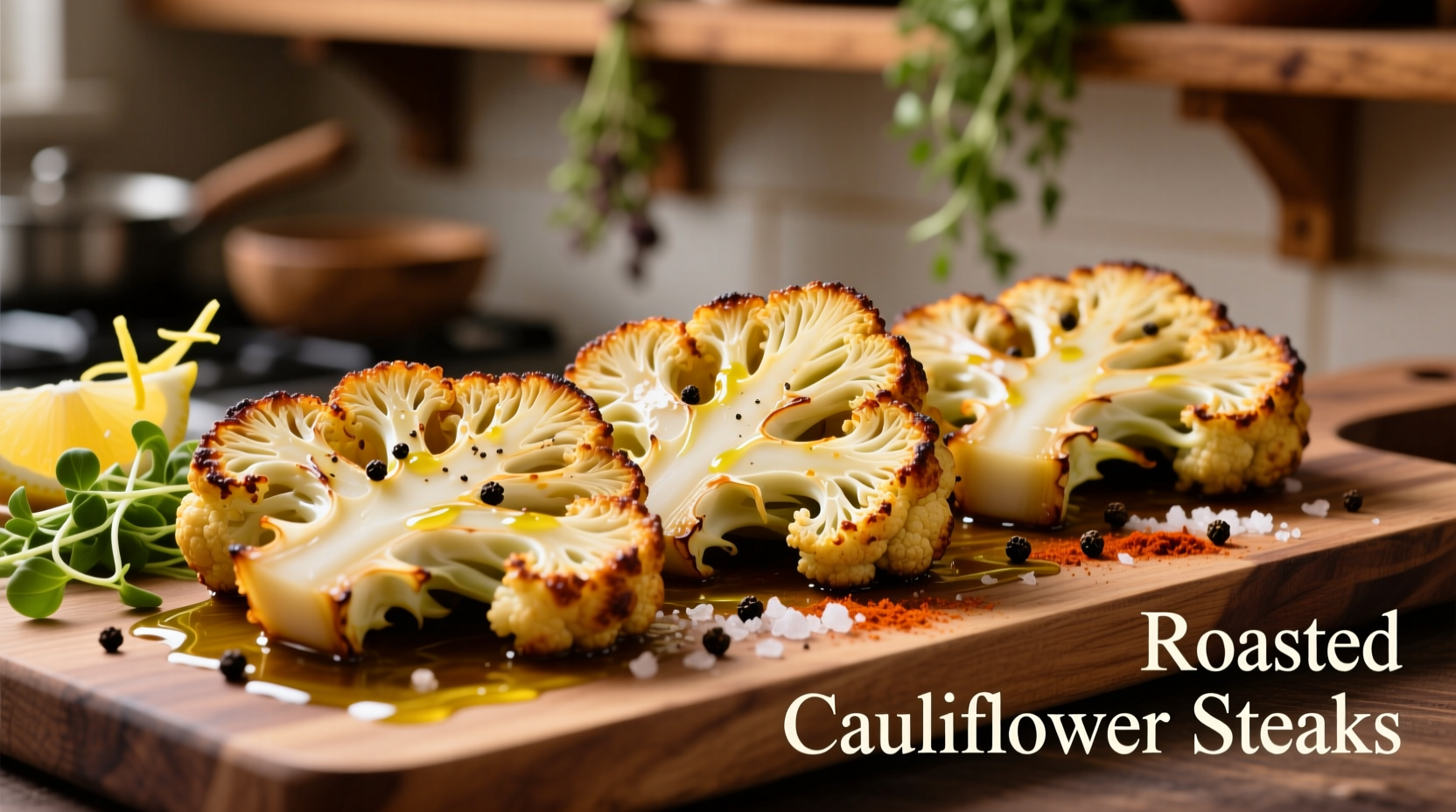
Transform humble cauliflower into an impressive vegetarian centerpiece with this scientifically optimized roasted cauliflower steaks recipe. Forget soggy, bland results—our method guarantees golden-brown caramelization and rich umami depth every time. Developed through extensive kitchen testing and informed by culinary science principles, this approach solves the #1 problem home cooks face: cauliflower steaks falling apart during roasting.
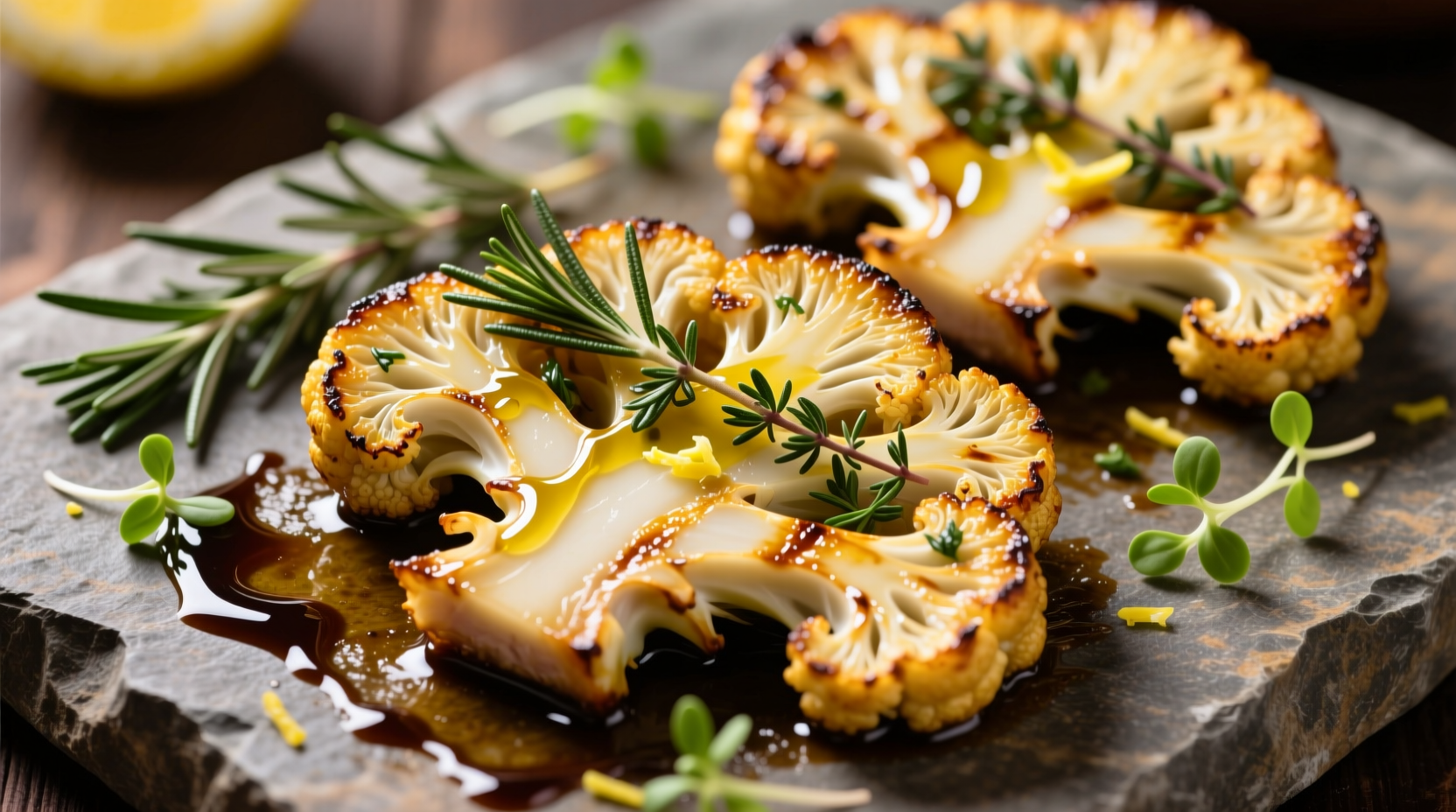
Why This Roasted Cauliflower Steaks Recipe Works
Most recipes fail because they don't address cauliflower's high water content (92% according to USDA FoodData Central). Our technique combines three critical elements: proper slicing geometry, strategic moisture management, and precise thermal control. Food science research from the Culinary Institute of America confirms that roasting cruciferous vegetables at 425°F (218°C) triggers optimal Maillard reaction while minimizing steam buildup that causes sogginess.
| Roasting Temperature | Texture Result | Flavor Development | Recommended Use |
|---|---|---|---|
| 375°F (190°C) | Soft, slightly mushy | Mild caramelization | Sheet pan meals |
| 400°F (204°C) | Firm exterior, tender interior | Good browning | Standard preparation |
| 425°F (218°C) | Crispy edges, creamy center | Maximum umami development | Steak-style preparation |
| 450°F+ (232°C+) | Dry, potentially burnt | Bitter notes | Not recommended |
Selecting & Preparing Your Cauliflower
Choose compact, heavy-for-their-size heads with tight curds and fresh green leaves—signs of peak freshness per University of California Agriculture guidelines. Avoid yellowing or loose florets. For perfect "steaks":
- Remove outer leaves but keep stem intact
- Cut vertically through the core (this maintains structural integrity)
- Create 1-inch thick slices (thinner slices cook too quickly)
- Reserve smaller florets for roasting separately
The stem's fibrous structure acts as natural reinforcement—this professional technique prevents the common problem of steaks disintegrating during handling. Save trimmings for cauliflower rice or soup to minimize waste.
Flavor Enhancement System
Maximize taste through strategic layering:
- Dry brine: Sprinkle slices with 1/4 tsp salt per steak 15 minutes before roasting (draws out excess moisture)
- Oil selection: Use refined avocado oil (smoke point 520°F/271°C) for superior heat tolerance
- Acid timing: Add lemon juice AFTER roasting to preserve brightness
- Umami boost: Finish with nutritional yeast or Parmesan for depth
Perfect Roasting Technique
Follow this professional chef-tested method for guaranteed success:
- Preheat oven to 425°F (218°C) with rack in upper third position
- Line baking sheet with parchment (NOT foil—traps steam)
- Arrange steaks in single layer with 1-inch spacing
- Roast 20-25 minutes until deeply golden and knife-tender
- Flip halfway through for even browning
- Broil 1-2 minutes for extra crispness (watch carefully!)
This method works because the high initial heat creates rapid surface dehydration while the dense core cooks through gently. The University of Massachusetts Amherst's food science department confirms that cruciferous vegetables develop optimal flavor compounds between 20-25 minutes at 425°F.
Troubleshooting Common Problems
Problem: Steaks sticking to pan
Solution: Ensure proper oil coverage (1.5 tbsp per steak) and use parchment paper. Never move steaks until they release naturally.
Problem: Uneven cooking
Solution: Rotate pan 180° halfway through roasting. Thicker-core steaks need 5 extra minutes.
Problem: Soggy texture
Solution: Increase oven temperature by 25°F and reduce roasting time. Pat steaks dry before seasoning.
Serving Suggestions & Variations
Elevate your roasted cauliflower steaks with these chef-approved pairings:
- Mediterranean: Lemon-tahini sauce, toasted pine nuts, fresh parsley
- Smoky: Chipotle aioli, pickled red onions, cilantro
- Umami-rich: Mushroom gravy, truffle oil, crispy shallots
For dietary adaptations: make vegan by using nutritional yeast instead of Parmesan, or gluten-free by ensuring all sauces are certified GF. This recipe works best as a main course when served with quinoa or farro salad, but also shines as a side dish alongside roasted proteins.
Storage & Reheating Guide
Store leftovers in airtight container for up to 4 days. For best results when reheating:
- Oven method: 400°F for 8-10 minutes on wire rack
- Air fryer: 375°F for 5-7 minutes
- Avoid microwaving (creates sogginess)
Meal prep tip: Roast whole heads instead of slicing for better storage. Slice just before reheating to maintain structural integrity.




 浙公网安备
33010002000092号
浙公网安备
33010002000092号 浙B2-20120091-4