
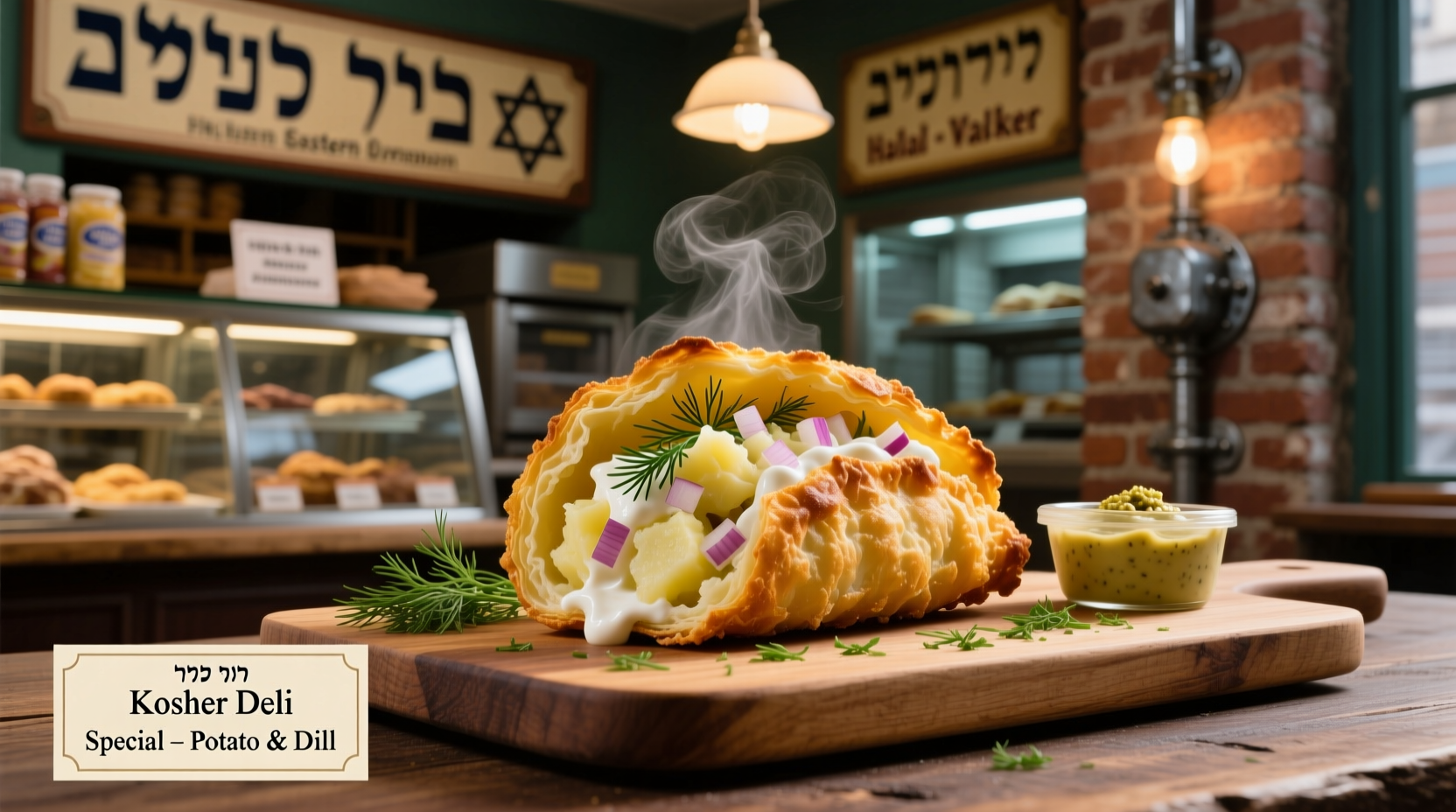
What Makes Potato Knish the Quintessential Kosher Deli Snack
When you order a potato-filled snack from a kosher deli, you're almost certainly getting a potato knish. This handheld delight consists of a soft dough exterior包裹 (enveloping) a warm, seasoned mashed potato center. Unlike latkes (potato pancakes) or kugel (baked casserole), knishes are portable, individually portioned, and perfect for on-the-go eating—making them ideal deli fare.
Authentic potato knishes maintain strict kosher preparation standards. The Orthodox Union confirms that traditional knish recipes naturally comply with kosher dietary laws when prepared with vegetable oil instead of animal fats, making them parve (neutral) and suitable for consumption with both meat and dairy meals according to kosher guidelines.

From Eastern Europe to New York Streets: The Knish Timeline
The knish's journey reveals why it became synonymous with kosher delis:
| Time Period | Development | Kosher Significance |
|---|---|---|
| 16th-18th Century | Originated in Ukraine/Poland as peasant food | Simple ingredients met kosher requirements naturally |
| 1880-1920 | Immigrants brought recipe to NYC's Lower East Side | Street vendors sold knishes as affordable kosher street food |
| 1930s-1950s | Became deli counter staple | Knish shops like Yonah Schimmel's established kosher standards |
| Present Day | Modern variations while maintaining tradition | Certified kosher knishes available nationwide |
How Traditional Potato Knishes Differ From Modern Versions
While the core concept remains consistent, preparation methods have evolved. Understanding these differences helps identify authentic deli-quality knishes:
| Characteristic | Traditional Knish | Modern Variation |
|---|---|---|
| Dough | Flaky yeast dough | Puff pastry or pie crust |
| Filling | Simple mashed potatoes with schmaltz (rendered chicken fat) or oil | Seasoned with cheese, herbs, or additional vegetables |
| Shape | Square or rectangular | Round or triangular |
| Cooking Method | Baked | Fried or air-fried |
What Makes a Knish Properly Kosher
Not all potato pastries qualify as kosher deli snacks. Authentic kosher knishes adhere to specific requirements verified by organizations like the Orthodox Union:
- Ingredient verification—All components must have kosher certification, especially critical for dough ingredients like oils and shortenings
- Preparation separation—Made in facilities that maintain strict separation from non-kosher equipment
- Parve status—Traditional potato knishes contain no dairy or meat products, making them parve (neutral) and versatile for kosher meals
- Certification—Look for reliable kosher symbols like OU, OK, or Star-K on packaged products
The American Jewish University's culinary archives confirm that traditional knish recipes naturally aligned with kosher requirements before formal certification systems existed, as their simple potato and dough composition avoided prohibited ingredient combinations.
Regional Variations You Might Encounter
While New York-style knishes dominate popular perception, regional differences exist across kosher delis nationwide:
- New York City—Thicker dough, square shape, often served with mustard
- Miami—Lighter, crispier texture reflecting Cuban pastry influences
- Los Angeles—Modern interpretations with sweet potato or vegetable fillings
- Chicago—Larger portions reflecting Midwest hearty eating traditions
How to Identify an Authentic Deli-Quality Potato Knish
When selecting potato knishes at kosher delis, look for these quality indicators:
- Texture contrast—Crisp exterior with moist, fluffy interior filling
- Seasoning balance—Subtle onion flavor without overpowering saltiness
- Temperature—Served warm (never cold or lukewarm)
- Structural integrity—Holds shape without leaking filling
Food historians at the YIVO Institute for Jewish Research note that authentic knishes should have a slightly golden crust with visible flakiness—evidence of proper dough preparation. The potato filling should maintain its shape when cut, indicating proper starch management during preparation.
Enjoying Potato Knishes: Traditional Serving Methods
Purists enjoy potato knishes simply, but these serving suggestions enhance the experience:
- Classic deli style—With a dollop of spicy brown mustard
- Modern twist—Accompanied by apple sauce for sweet-savory contrast
- Complete meal—Paired with a kosher dill pickle and black and white cookie
- Reheating tip—Revive leftovers in oven (not microwave) to maintain crisp texture
Common Misconceptions About Potato Knishes
Several myths persist about this beloved deli snack:
- Myth: Potato knishes are the same as pierogies
Fact: While both are filled pastries, knishes use yeast dough while pierogies use unleavened dough, and knishes are always baked while pierogies are typically boiled then fried - Myth: All knishes are kosher
Fact: Only those prepared according to kosher standards with proper supervision qualify as kosher - Myth: Knishes are exclusively Jewish food
Fact: Similar filled pastries exist in Polish (krokiety) and Ukrainian (kartopliak) cuisines, but the knish as known in America developed specifically in Jewish communities
Bringing Knish Tradition Home
You don't need a kosher deli nearby to enjoy authentic potato knishes. Home preparation allows customization while maintaining tradition:
- Use certified kosher ingredients for guaranteed compliance
- Mash potatoes with vegetable oil instead of butter for parve version
- Roll dough thin for proper crisp-to-soft ratio
- Bake at high temperature (400°F) for optimal texture
The Jewish Food Society confirms that traditional knish recipes have been preserved through community cookbooks since the early 20th century, with the earliest documented recipes appearing in the 1918 publication "The Settlement Cook Book" by Lizzie Black Kander.




 浙公网安备
33010002000092号
浙公网安备
33010002000092号 浙B2-20120091-4