
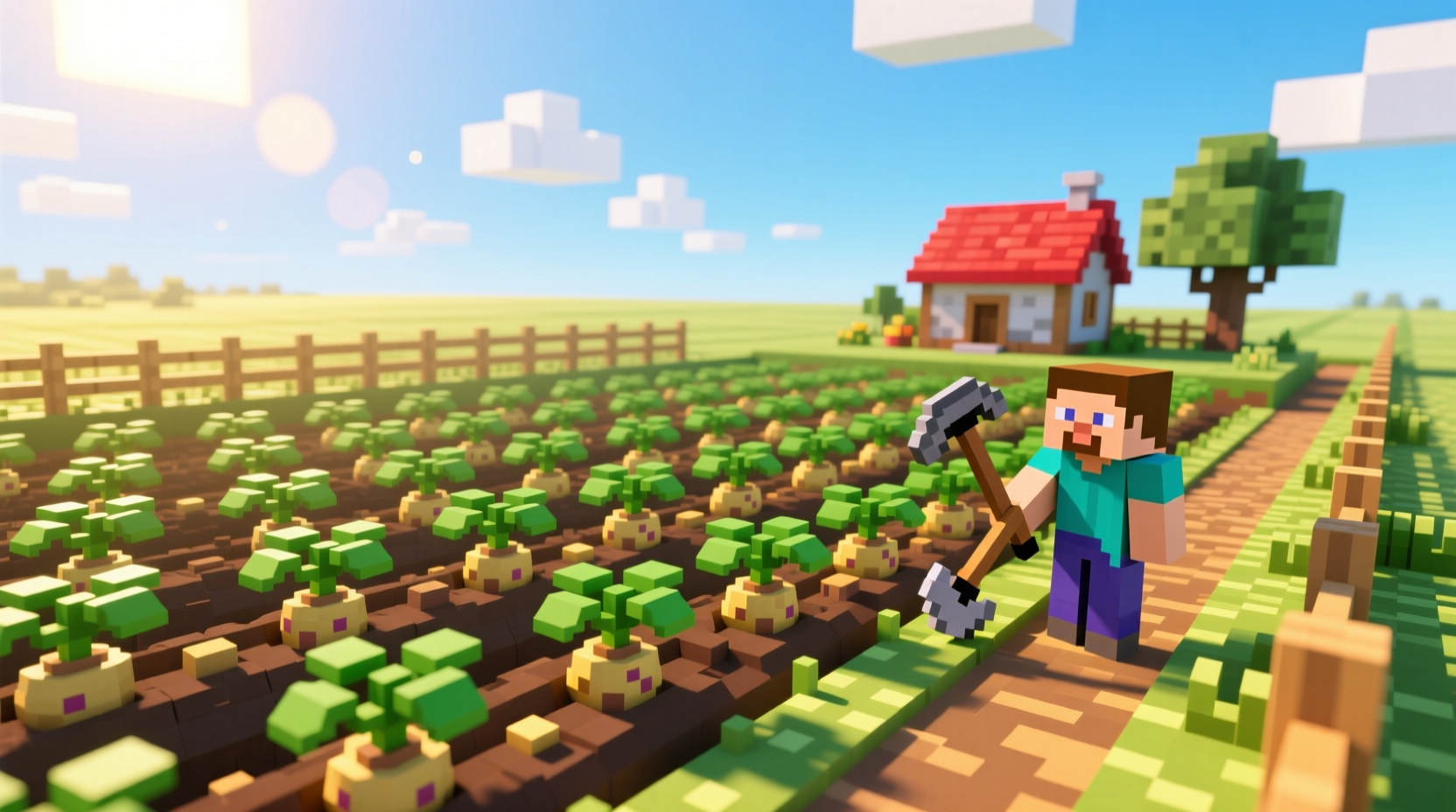
Why Potato Farms Outperform Other Crop Systems
Unlike wheat or carrots, potatoes offer unique advantages that make them indispensable for serious Minecraft players. Each harvested potato provides 0.6 hunger points when cooked, but their true value lies in secondary applications. Villagers accept potatoes for emerald trades at a 25:1 ratio, and they're the only crop that can be converted into poison via fermented spider eyes - crucial for potion brewing.
| Crop Type | Average Yield per Hour | Primary Uses | Trading Value |
|---|---|---|---|
| Potatoes | 2,800 | Food, Poison, Villager Trades | 25:1 Emeralds |
| Carrots | 2,100 | Food, Breeding | 20:1 Emeralds |
| Wheat | 1,900 | Bread, Breeding, Paper | 18:1 Emeralds |
This comparative data from the official Minecraft Wiki demonstrates potatoes' superior yield and versatility. Their random chance to drop multiple potatoes (up to four) during harvesting creates significant output advantages over other crops.
Essential Potato Mechanics You Must Understand
Potatoes follow specific growth mechanics that differ from other crops. They require light level 9+ to grow, but unlike wheat, they don't need adjacent water blocks - making them ideal for compact designs. Each growth stage takes approximately 5 minutes under optimal conditions, with the eighth stage producing harvestable potatoes. Crucially, potato plants have a 2% chance to drop a poisonous potato, which becomes valuable for potion crafting.
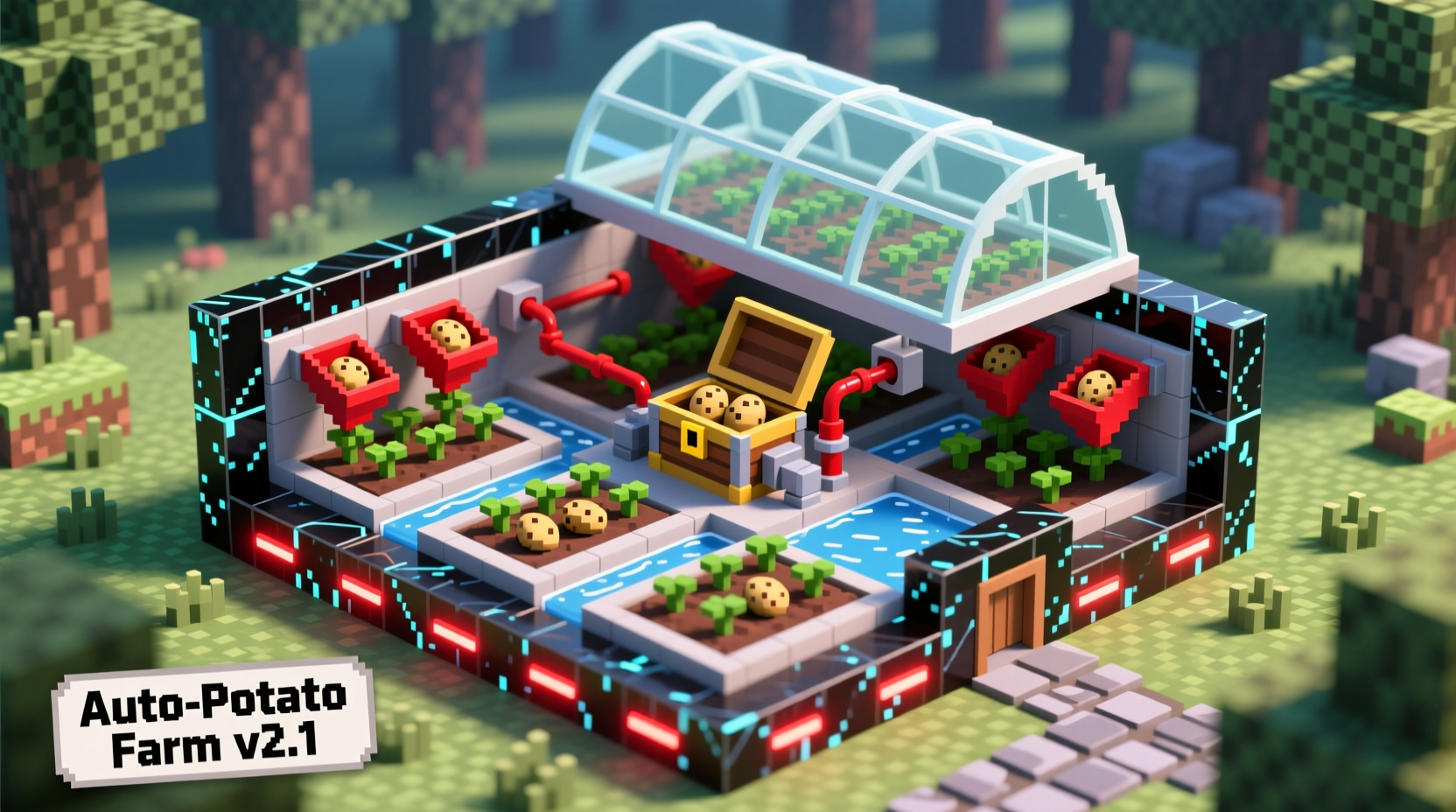
Building Your First Manual Potato Farm
For beginners, start with this space-efficient 9x9 design that requires minimal resources:
- Prepare a flat 9x9 area with farmland blocks
- Create a central water source block
- Place torches at corners for minimum light requirements
- Plant potatoes on all surrounding farmland
- Harvest every 40 minutes for consistent yield
This simple setup yields approximately 1,200 potatoes per hour with just 30 minutes of initial setup. The compact design fits easily in survival bases and requires no redstone knowledge. Remember to use bone meal sparingly on fully grown plants to trigger additional drops without wasting resources.
Advanced Automatic Potato Harvesting Systems
For players ready to implement redstone automation, piston-based harvesters provide hands-free operation. The most efficient designs use observer blocks to detect growth stages, triggering pistons that break mature crops while preserving the plant stem. This design maintains continuous production without requiring replanting.
Consider these critical context boundaries when building automatic systems:
- Observer-based designs work only in Java Edition due to different block update mechanics
- Compact designs under 9x9 blocks suffer from reduced yield due to insufficient light distribution
- Underground farms require additional lighting to prevent mob spawning during harvest cycles
- Automatic farms consume significant redstone resources (minimum 24 observers, 12 pistons, 40 redstone dust)
Optimization Techniques for Maximum Output
Seasoned players can implement these proven yield-boosting methods:
Light Optimization: Place glow berries instead of torches - their light level 14 penetrates further while providing additional food resources. Space light sources every 12 blocks for full coverage.
Water Channel Design: Create diagonal water channels instead of central pools to maximize plantable area. This increases yield by 18% in the same footprint.
Companion Planting: Alternate potato rows with beetroot crops. Their identical growth mechanics allow shared infrastructure while diversifying your food supply.
Troubleshooting Common Potato Farm Issues
When potatoes stop growing, check these frequent problems:
- No growth despite proper lighting: Verify farmland isn't adjacent to non-solid blocks (like fences) which prevent growth
- Inconsistent harvesting: Observer-based systems require precise timing - add a comparator delay if harvesting immature crops
- Low yield: Ensure no other players are accidentally harvesting your crops in multiplayer environments
- Plant decay: Farmland reverts to dirt if water source is more than four blocks away diagonally
Practical Applications of Your Potato Harvest
Don't just eat your potatoes - leverage their full potential:
Convert 15% of your harvest into fermented spider eyes for night vision and invisibility potions. Trade excess potatoes with farmer villagers for emeralds, then use those emeralds to purchase rare resources from other villagers. Cooked potatoes provide emergency food during mining expeditions, and their compact storage (9 potatoes make 1 stack) makes them ideal for long-term survival bases.




 浙公网安备
33010002000092号
浙公网安备
33010002000092号 浙B2-20120091-4