
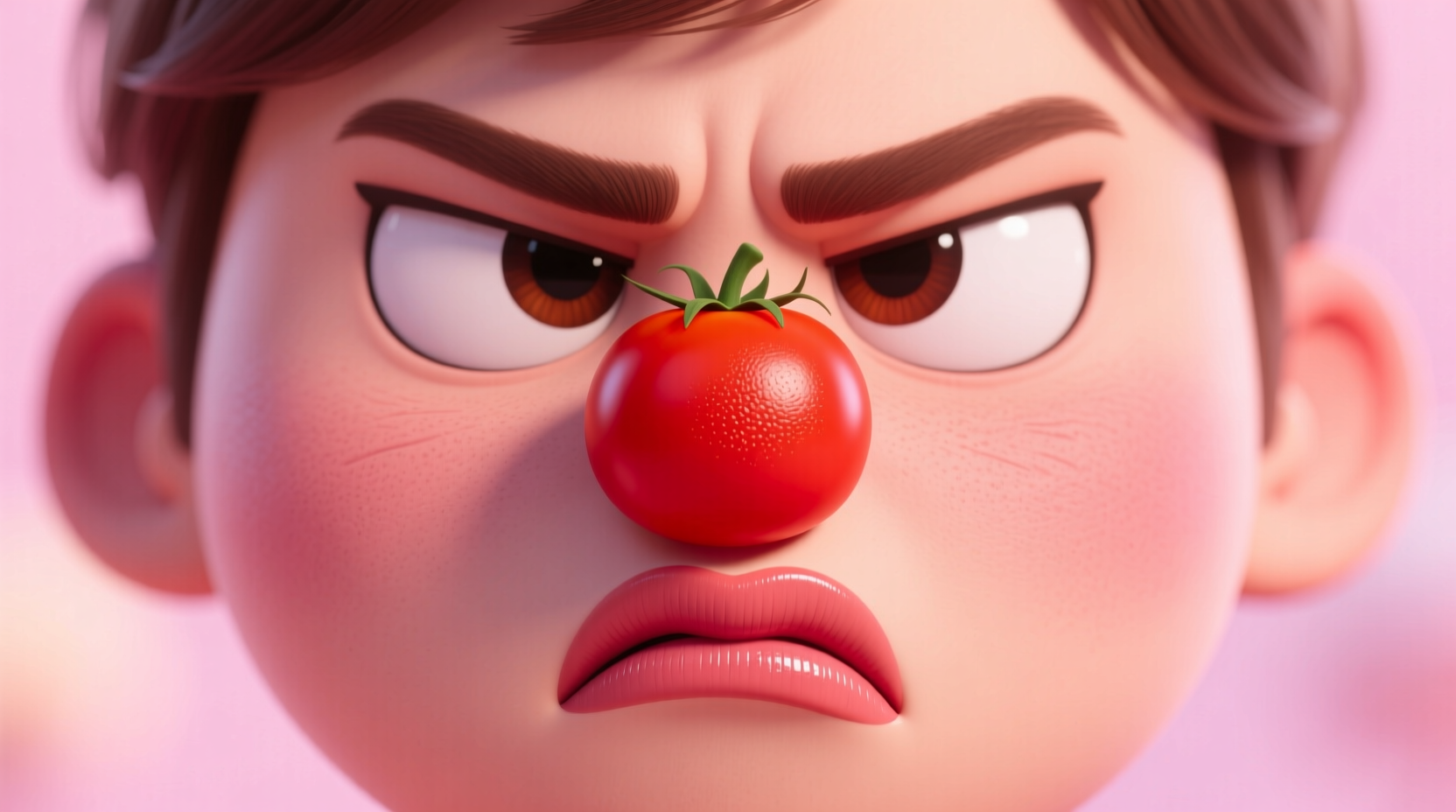
Understanding Children's Playful Expressions
When children engage in \"poopy face tomato nose\" antics, they're participating in a universal form of social play that serves important developmental purposes. This type of facial expression game helps children explore emotional range, practice social bonding, and develop nonverbal communication skills.
Developmental Timeline of Facial Expression Play
Children's fascination with making funny faces follows a predictable developmental pattern:
- 6-12 months: Babies begin mimicking facial expressions they see
- 1-2 years: Toddlers experiment with exaggerated expressions during peek-a-boo games
- 2-4 years: \"Poopy face\" variations emerge as children develop more complex social play
- 4-6 years: \"Tomato nose\" techniques (pinching nose to make it red) become popular among preschoolers
- 6+ years: Most children outgrow this specific play pattern as social interactions become more sophisticated
Why Children Love \"Poopy Face Tomato Nose\" Games
This particular expression game appeals to children for several developmental reasons:
- Sensory exploration: The physical sensation of pinching their nose creates temporary color change they find fascinating
- Emotional regulation practice: Making silly faces helps children process and express emotions in a safe context
- Social bonding: Shared laughter during these games strengthens peer relationships
- Power dynamics: Children enjoy the temporary role reversal of making adults laugh at their \"inappropriate\" behavior
| Expression Type | Typical Age Range | Developmental Purpose | When to Monitor Closely |
|---|---|---|---|
| Poopy face variations | 2-5 years | Social bonding, emotional exploration | If persistent beyond age 6 or accompanied by social difficulties |
| Tomato nose technique | 3-6 years | Sensory exploration, cause-effect understanding | If causing physical injury or done obsessively |
| Tongue protrusion games | 18 months-4 years | Oral motor development, communication practice | If continuing past age 5 or interfering with speech |
When \"Poopy Face Tomato Nose\" Might Signal Concerns
While generally harmless, certain patterns warrant attention according to the American Academy of Pediatrics developmental guidelines. Monitor for:
- Continued use beyond age 6-7 when peers have moved to more sophisticated play
- Obsessive repetition that interferes with learning or social interactions
- Self-injurious behaviors like excessive nose pinching causing bruising
- Lack of other age-appropriate social play behaviors
How to Respond to Children's Silly Face Games
Parents and educators can support healthy development while managing classroom or home environments:
- Acknowledge with humor: \"That's a wonderfully silly face! I see you've made your nose as red as a ripe tomato!\"
- Set gentle boundaries: \"We save silly faces for playtime, not during story time when we need to listen carefully.\"
- Expand their expression vocabulary: Introduce other facial expressions that convey specific emotions
- Model appropriate timing: \"Silly faces are great for recess, but we use calm faces during circle time.\"
Common Misconceptions About Children's Expressive Play
Many parents worry unnecessarily about these normal childhood behaviors. Research from the National Association for the Education of Young Children shows:
- \"Poopy face\" play doesn't indicate potty obsession or behavioral problems
- Temporary nose redness from pinching causes no physical harm
- Using \"poopy\" doesn't mean children understand adult meanings of the word
- This play pattern typically disappears naturally as children develop more complex social skills

Supporting Healthy Social Development Through Play
Instead of discouraging \"poopy face tomato nose\" games, channel this natural impulse into constructive activities:
- Create a \"face feelings chart\" showing various emotions
- Use mirrors for \"expression exploration time\" with clear time boundaries
- Incorporate facial expression games into emotion recognition lessons
- Teach children appropriate contexts for different types of play
Remember that this phase passes quickly. What seems like endless silly faces today will soon be replaced by more complex social interactions as your child's communication skills develop.




 浙公网安备
33010002000092号
浙公网安备
33010002000092号 浙B2-20120091-4