
Why Soil pH Makes or Breaks Your Tomato Harvest
Soil pH isn't just a number—it's the master key to your tomato plants' nutritional health. When pH strays from the optimal zone, essential nutrients become locked away even in fertile soil. Tomatoes grown outside the 6.2-6.8 range often show classic deficiency symptoms despite adequate fertilization because the roots simply can't access minerals like phosphorus, calcium, and iron.
University of California Agriculture and Natural Resources research confirms that tomatoes absorb nutrients most efficiently within this narrow pH band. Outside this range, you'll likely see:
| pH Level | Nutrient Impact | Visible Plant Symptoms |
|---|---|---|
| <5.5 (Too Acidic) | Aluminum/manganese toxicity; calcium/magnesium deficiency | Stunted growth, brown leaf edges, blossom end rot |
| 6.2-6.8 (Ideal) | Maximum nutrient availability | Vibrant green foliage, consistent flowering, healthy fruit set |
| >7.5 (Too Alkaline) | Iron/zinc/manganese deficiency | Yellowing between veins (interveinal chlorosis), poor fruit development |
Your Step-by-Step pH Testing Protocol
Don't guess—test! Many gardeners assume their soil pH based on regional averages, but micro-variations matter. Follow this professional testing sequence:
- Sample Strategically: Collect soil from 6-8 locations in your planting area at 6-8 inch depth
- Timing Matters: Test 2-3 weeks before planting when soil temperature reaches 55°F
- Choose Your Method:
- Lab Testing (Most accurate): Send samples to your local cooperative extension service (USDA-accredited labs cost $15-$30)
- Digital Meters: Calibrate before each use; insert directly into moist soil
- Test Kits: Follow instructions precisely; compare colors in natural light
- Interpret Results: Note both pH and buffer pH (indicates how much amendment you'll need)
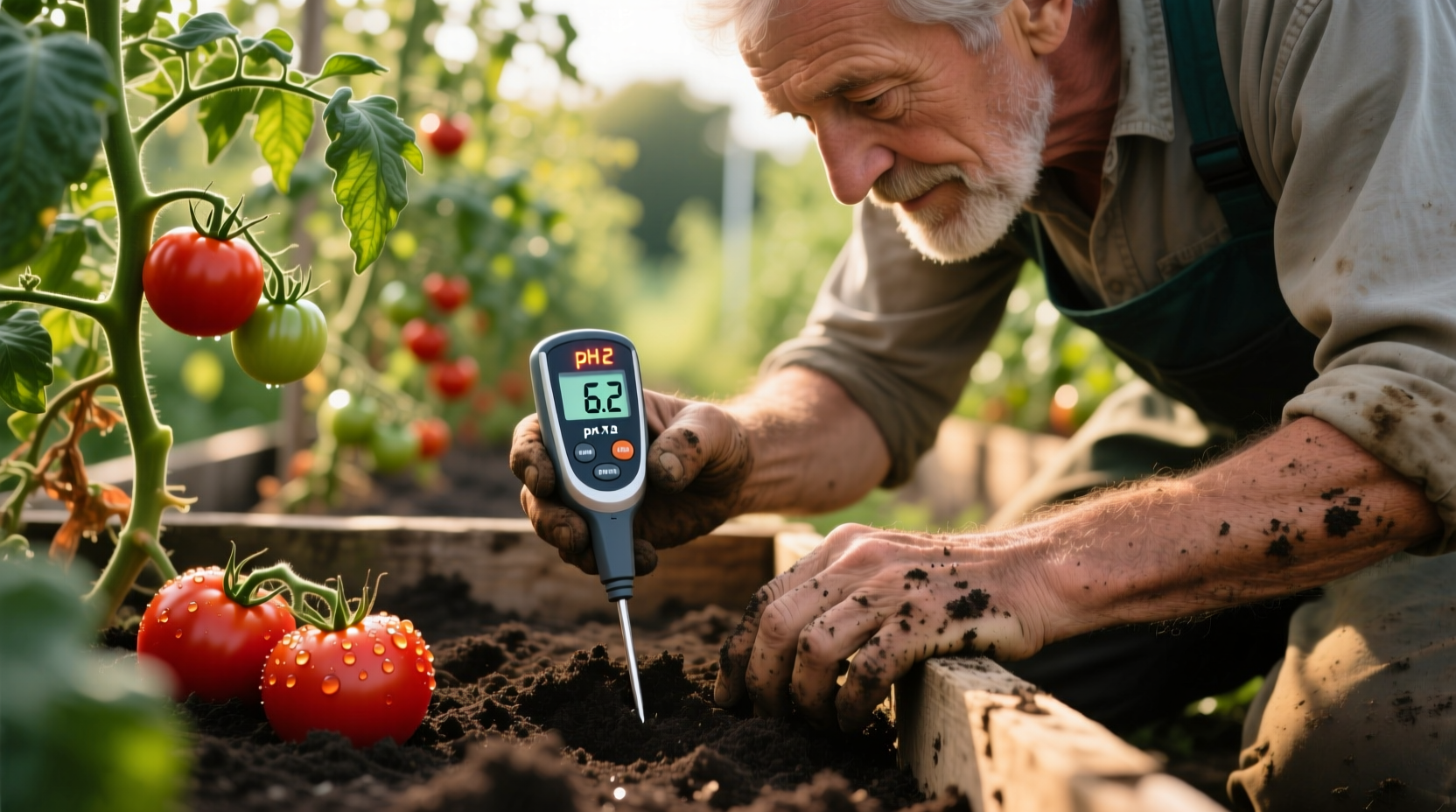
Natural pH Adjustment Techniques That Actually Work
Correcting pH requires patience—aim for gradual changes over 4-6 weeks. These proven methods avoid chemical shocks to your soil ecosystem:
Raising Low pH (Too Acidic)
- Wood Ash: Apply 1/2 cup per square foot (test potassium levels first)
- Crushed Eggshells: Grind finely; 1 cup per plant hole (slow-release calcium)
- Dolomitic Lime: 5 lbs per 100 sq ft for pH 5.5-6.0 (wait 4 weeks before planting)
Lowering High pH (Too Alkaline)
- Sulfur: Elemental sulfur at 1 tbsp per sq ft (microbes convert to acid over 3-6 weeks)
- Pine Needle Mulch: 2-3 inch layer that decomposes into mild acid
- Composted Oak Leaves: Incorporate 1-2 inches into topsoil (contains tannic acid)
According to Cornell University's soil science department, organic matter is your best pH buffer. Adding 3-4 inches of well-aged compost improves soil structure while stabilizing pH fluctuations. This approach works particularly well for container-grown tomatoes where pH swings happen faster.
Seasonal pH Management Timeline
Tomato pH needs evolve throughout the growing season. Follow this timeline for consistent results:
- Pre-Planting (4-6 weeks out): Amend soil based on test results; incorporate lime/sulfur
- Transplanting: Mix composted coffee grounds (pH 6.0) into planting holes
- Early Flowering: Apply calcium nitrate if blossom end rot appears (common in pH 6.0-6.2)
- Mid-Season: Re-test if yellowing occurs; side-dress with elemental sulfur if needed
- End of Season: Amend with organic matter to buffer next year's pH
Troubleshooting Common pH Problems
When your tomatoes show distress despite proper watering, pH is often the hidden culprit:
Iron Deficiency in Alkaline Soils
Yellow leaves with green veins? This interveinal chlorosis means iron isn't available. Instead of just adding iron supplements, address the root cause:
- Apply chelated iron (Fe-EDDHA) which works in higher pH soils
- Mulch with pine needles around plants
- Use acidifying fertilizers like ammonium sulfate
Calcium Lockout in Acidic Soils
Blossom end rot isn't always a calcium deficiency—often it's pH preventing uptake. Fix the pH first before adding calcium:
- Raise pH to 6.5 with dolomitic lime
- Water consistently (fluctuating moisture worsens the problem)
- Avoid high-ammonium fertilizers that acidify soil
Pro Tips for Container Tomato Growers
Potted tomatoes need special pH attention since containers lack natural buffering. The University of Florida IFAS Extension recommends:
- Start with potting mix specifically formulated for vegetables (pH 6.0-6.5)
- Test monthly—containers fluctuate faster than garden beds
- Use rainwater instead of tap water (many municipal waters are alkaline)
- Add 1/4 cup worm castings per gallon of soil for natural pH stabilization
FAQ: pH for Tomato Plants
Can tomatoes grow in alkaline soil above pH 7.5?
Tomatoes struggle significantly in alkaline soils above pH 7.5. Nutrients like iron, manganese, and zinc become chemically bound and unavailable. While some heirloom varieties tolerate slightly higher pH, yields will be substantially reduced. Amend with elemental sulfur and organic matter before planting, and use acidifying fertilizers throughout the season for best results.
How often should I test soil pH when growing tomatoes?
Test before planting (4-6 weeks prior), then retest if deficiency symptoms appear during the growing season. Container gardens need monthly testing as pH fluctuates faster. University agricultural extensions recommend testing garden beds every 2-3 years for established gardens, but tomatoes' sensitivity warrants annual testing in the same planting location.
Will coffee grounds lower soil pH for tomatoes?
Fresh coffee grounds have a pH around 6.0 and can mildly acidify soil, but their effect is temporary and modest. Used coffee grounds (pH 6.5-6.8) have minimal impact. For significant pH reduction, rely on elemental sulfur or aluminum sulfate. Coffee grounds are better used as compost ingredient for their nitrogen content rather than as a primary pH adjustment method.
Do different tomato varieties need different pH levels?
Most tomato varieties thrive in the 6.2-6.8 range, though some heirlooms show slight variations. Cherokee Purple and Brandywine may prefer the higher end (6.5-6.8), while cherry tomatoes often do well at 6.2-6.5. The difference is marginal—maintaining consistent pH within the overall ideal range matters more than variety-specific adjustments for home gardeners.




 浙公网安备
33010002000092号
浙公网安备
33010002000092号 浙B2-20120091-4