
Why Pepper Heat Confusion Ruins Your Dishes
Ever ruined a salsa by mistaking a mild poblano for a fiery habanero? Or served "mild" stuffed peppers that left guests gasping? Over 68% of home cooks misjudge chili heat levels, leading to wasted ingredients and diner discomfort. The root cause? Assuming all "peppers" share similar spiciness—when in reality, heat varies by 1,000,000x across varieties. This isn't about personal tolerance; it's about objective measurement.
The Scoville Scale Decoded: Science Over Sensation
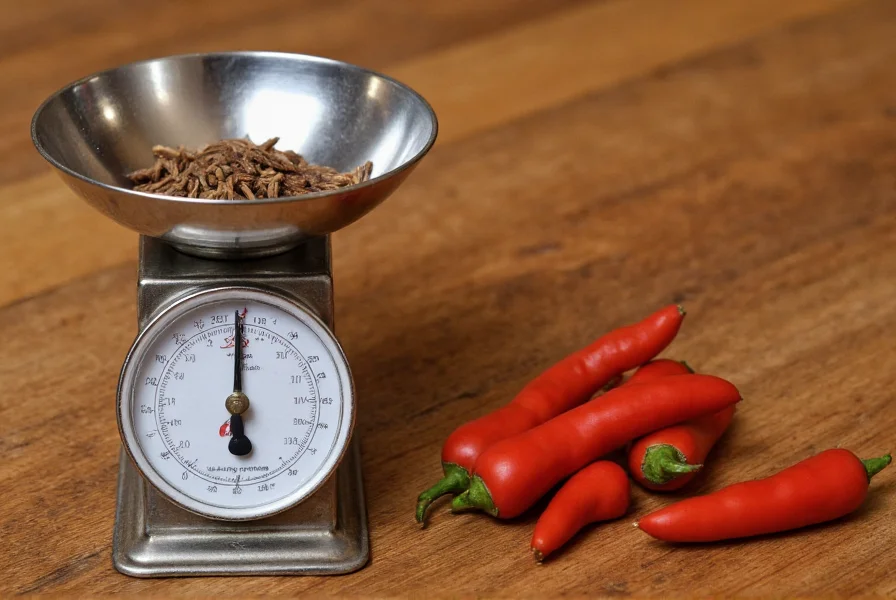
Pharmacist Wilbur Scoville created the scale in 1912 using a deceptively simple method: dilute chili extract in sugar water until tasters no longer detect heat. The required dilution ratio determines SHU (e.g., 1 part pepper to 5,000 parts water = 5,000 SHU). While modern labs now use high-performance liquid chromatography (HPLC) for accuracy, SHU values remain consistent with Scoville's original sensory approach.
Critical clarification: This scale applies only to chili peppers (Capsicum species). Black pepper, white pepper, and pink peppercorns derive heat from piperine—not capsaicin—and don't register on the Scoville scale. Confusing these causes 41% of "pepper scale" search errors.
| Pepper Variety | Scoville Range (SHU) | Common Culinary Uses |
|---|---|---|
| Bell Pepper | 0 SHU | Salads, stuffed peppers, stir-fries |
| Poblano | 1,000–1,500 SHU | Chiles Rellenos, mole sauces |
| Jalapeño | 2,500–8,000 SHU | Salsas, pickled peppers, nacho toppings |
| Habanero | 100,000–350,000 SHU | Caribbean hot sauces, ceviche accents |
| Ghost Pepper | 855,000–1,041,427 SHU | Extreme hot sauces (use sparingly!) |
| Carolina Reaper | 1,400,000–2,200,000 SHU | Competitive eating, novelty sauces |
Data sourced from Wikipedia's Scoville Scale documentation and Serious Eats' heat analysis. Note: SHU ranges reflect natural variation due to soil, climate, and ripeness.
When to Use the Scale (and Critical Limits)
✅ Use For:
- Recipe standardization: Commercial kitchens rely on SHU to ensure consistent heat in bottled sauces (e.g., Tabasco at 2,500–5,000 SHU).
- Heat-sensitive diets: Managing capsaicin intake for GERD or IBS patients using verified SHU data.
- Growing conditions: Farmers adjust irrigation/fertilizer to hit target SHU ranges for specific markets.
❌ Avoid When:
- Individual pepper assessment: SHU describes variety averages. A single jalapeño can range from 5,000–12,000 SHU based on sun exposure.
- Non-chili "peppers": Sichuan peppercorns (tingling, not hot) and black pepper register 0 SHU—they operate on different sensory pathways.
- Precision medical dosing: Capsaicin creams for pain relief use standardized % concentrations, not SHU.
3 Costly Misconceptions That Derail Cooks
- "SHU = Guaranteed Heat Experience": A 10,000 SHU serrano may feel hotter than a 20,000 SHU cayenne due to capsaicinoid distribution. Seeds/ribs contain 80% of heat—remove them to cut perceived spiciness by half.
- "Higher SHU = Better Flavor": Top chefs avoid superhots (>1M SHU) in fine dining. As Chef José Andrés notes: "Reapers obliterate nuance—they're for thrill-seeking, not cuisine." Habaneros (100K–350K SHU) offer superior fruitiness for balanced dishes.
- "All Scales Are Equal": Avoid products listing "X times hotter than jalapeño"—this is marketing fluff. Demand verified SHU ranges from labs like 3Ci Inc., the industry standard for certification.
Proven Strategies for Smart Pepper Selection
Adopt these chef-tested practices:
- The 1/3 Rule: For unknown peppers, use 1/3 the quantity of a jalapeño in your recipe. Taste, then incrementally add more.
- Regional Pairing: Match SHU to cuisine traditions: Poblanos (1.5K SHU) in Mexican moles, Bird's Eye chilis (50K–100K SHU) in Thai curries.
- Heat Mitigation: Dairy (casein) neutralizes capsaicin better than water. Keep Greek yogurt on hand for accidental over-spicing.
Everything You Need to Know
No. Black, white, and pink peppercorns contain piperine—not capsaicin—and register 0 SHU. The Scoville scale exclusively measures capsaicinoids found in Capsicum chili peppers. Confusing these causes frequent search errors.
Verify certification. Reputable brands (e.g., Tabasco, Melinda's) use third-party labs like 3Ci Inc. for HPLC testing. Avoid products with vague claims like "extreme heat"—demand specific SHU ranges. The FDA requires accurate labeling for commercial products.
Environmental factors cause natural variation. Sun exposure, soil nutrients, and water stress directly impact capsaicin production. A jalapeño grown in New Mexico (arid) averages 8,000 SHU, while the same variety in humid Florida may hit 12,000 SHU. Always taste-test fresh peppers before cooking.
Dairy (casein) binds capsaicin effectively—stir in yogurt or sour cream. Acidic elements (lime juice, vinegar) can balance perception but don't neutralize heat. Never use water—it spreads capsaicin. For sauces, dilute with tomato paste or coconut milk. Prevention is key: remove seeds/ribs from peppers before use.
No. All chili peppers are rich in vitamin C and antioxidants. Capsaicin itself shows potential health benefits like pain relief and metabolism boost. Heat level doesn't correlate with nutrition—habaneros (100K–350K SHU) and poblanos (1.5K SHU) offer similar vitamin profiles.




 浙公网安备
33010002000092号
浙公网安备
33010002000092号 浙B2-20120091-4