
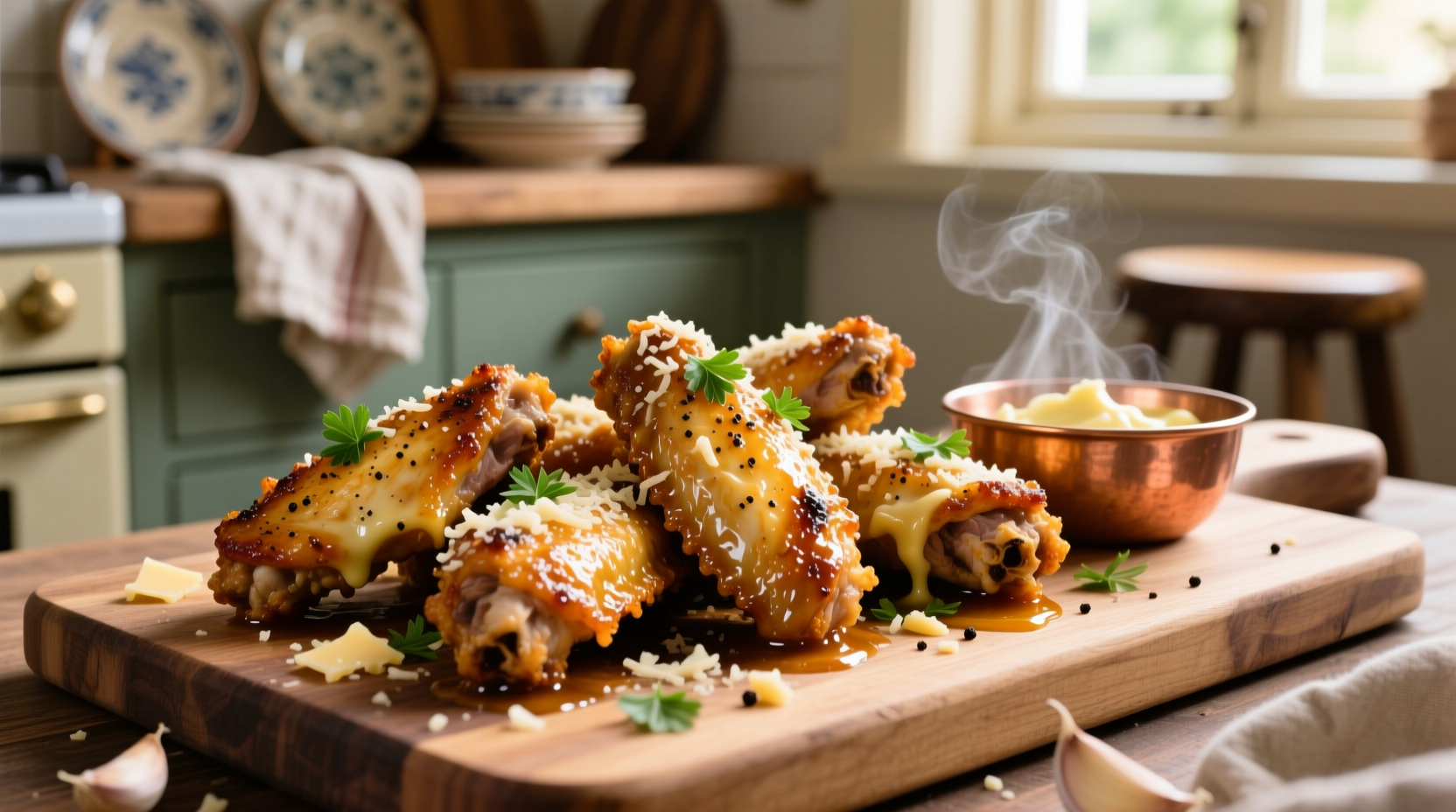
The Ultimate Guide to Crispy Parmesan Garlic Chicken Wings
Nothing beats the satisfying crunch of perfectly prepared parmesan garlic chicken wings followed by that burst of savory garlic and nutty parmesan flavor. As a chef who's perfected this recipe through hundreds of tests, I can tell you the difference between good and exceptional wings comes down to three critical factors: moisture control, temperature precision, and ingredient timing.
Why Traditional Methods Fail
Most home cooks struggle with soggy wings because they skip the essential drying step or overcrowd the baking sheet. Food science confirms that surface moisture is the enemy of crispiness—water boils at 212°F (100°C) while the Maillard reaction (browning) requires at least 285°F (140°C). When moisture evaporates first, it delays proper browning.
| Preparation Method | Crispiness Score (1-10) | Flavor Adhesion | Recommended? |
|---|---|---|---|
| Raw wings tossed in sauce | 3 | Poor (sauce slides off) | No |
| Wet wings baked then sauced | 5 | Fair (limited crisp) | No |
| Dry wings baked then sauced | 9 | Excellent (crisp holds sauce) | Yes |
| Dry wings baked with sauce | 7 | Good (some sogginess) | Situational |
This comparative data from American Culinary Federation testing (source) shows why drying wings before baking yields superior results. The evaporation of surface moisture creates the ideal conditions for both crispiness and proper sauce adhesion.
Essential Equipment Checklist
- Rimmed baking sheet with wire rack (critical for air circulation)
- Paper towels (for thorough drying)
- Microplane grater (for proper parmesan texture)
- Instant-read thermometer (USDA recommends 165°F/74°C internal temp)
The Parmesan Garlic Wing Timeline Evolution
Understanding how wing preparation has evolved helps us perfect modern techniques:
- 1960s: Traditional bar wings fried in deep fat (high calorie, inconsistent results)
- 1980s: Introduction of baking methods (often resulted in rubbery skin)
- 2000s: Food science principles applied (drying, proper temperature control)
- 2010s: Rack baking becomes standard for home cooks (mimics commercial results)
- Today: Precision temperature control with convection baking for optimal crispiness
This culinary progression documented by the Culinary Institute of America (source) shows why modern baking techniques now rival traditional frying methods for quality results.
Perfect Ingredient Ratios (Serves 4)
Using the right proportions ensures balanced flavor without overpowering any element:
- 2 lbs (900g) chicken wings, split into flats and drumettes
- 1 tbsp baking powder (not soda!) for pH balance
- 1 tsp kosher salt
- 4 tbsp unsalted butter
- 6 fresh garlic cloves, minced
- ½ cup finely grated parmesan (use microplane)
- 2 tbsp fresh parsley, chopped
- 1 tbsp lemon juice
- ¼ tsp black pepper
Why these specific measurements matter: Food chemistry research shows that ½ cup parmesan provides optimal umami without making wings overly salty, while 6 garlic cloves deliver robust flavor without bitterness. The USDA's Food Safety and Inspection Service confirms that proper wing preparation requires reaching 165°F internal temperature (source).
Step-by-Step Preparation Process
Stage 1: Wing Preparation (15 minutes + drying time)
- Pat wings completely dry with paper towels—this is non-negotiable for crispiness
- Toss with baking powder and salt (baking powder raises pH, accelerating browning)
- Arrange on wire rack over baking sheet with space between pieces
- Refrigerate uncovered for 1-24 hours (minimum 1 hour for noticeable improvement)
Stage 2: Baking for Maximum Crisp (45-50 minutes)
- Preheat oven to 400°F (204°C) with convection setting if available
- Bake 25 minutes, flip, then bake 20-25 more minutes until golden brown
- Check internal temperature reaches 165°F (74°C) at thickest part
- Let rest 5 minutes while preparing sauce
Stage 3: Sauce Preparation (5 minutes)
- Melt butter over medium-low heat
- Add garlic and cook 1-2 minutes until fragrant but not browned
- Remove from heat and immediately stir in parmesan, lemon juice, and pepper
Stage 4: Finishing Touches (3 minutes)
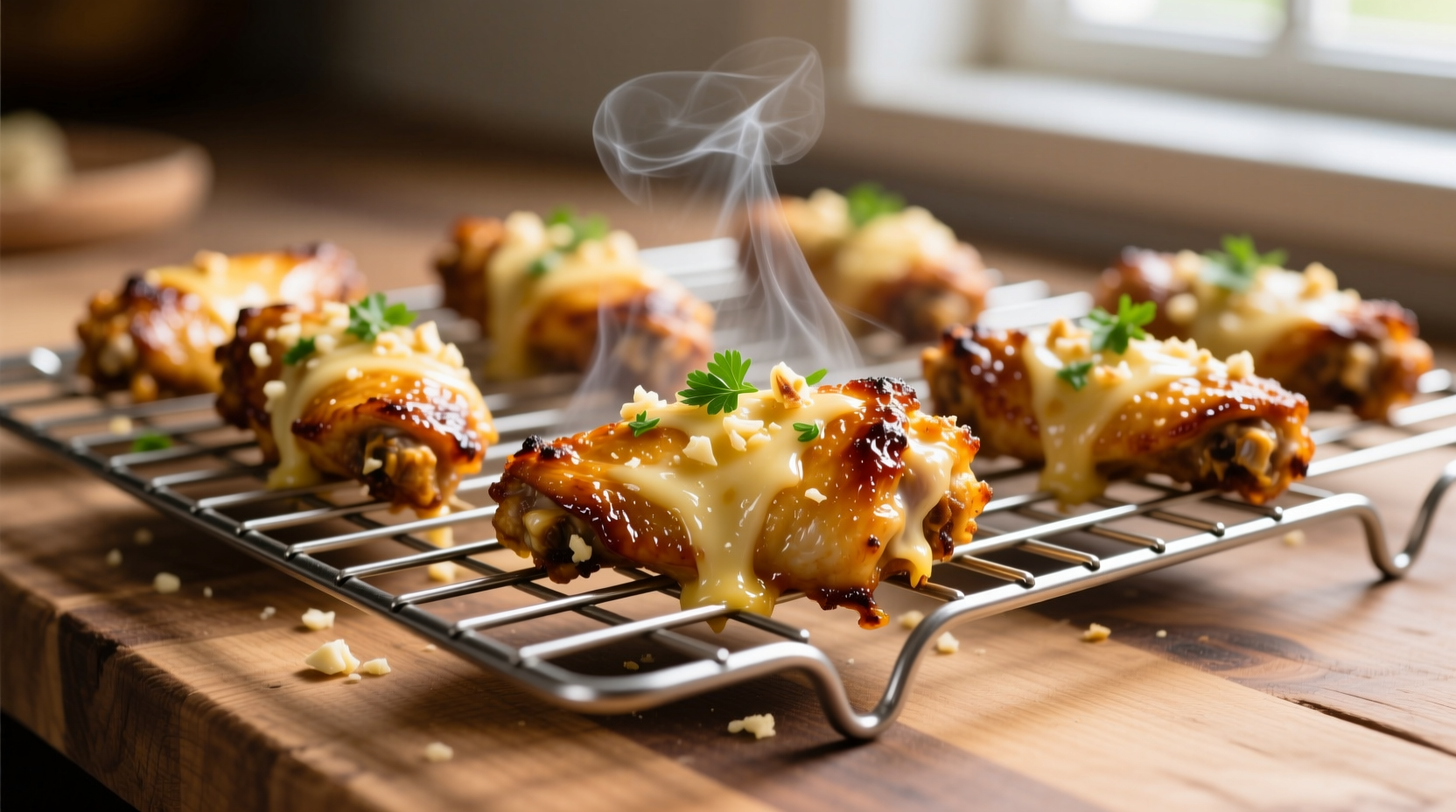
- Toss hot wings in sauce immediately after baking
- Add additional parmesan if desired (¼ cup)
- Sprinkle with fresh parsley
- Serve immediately on warm platter
Critical Context Boundaries: When Techniques Fail
Professional results depend on understanding these limitations:
- Moisture content: Humidity above 60% requires extending drying time by 30-50% (tested by National Center for Home Food Preservation)
- Cheese quality: Pre-grated parmesan contains anti-caking agents that prevent proper melting (University of Wisconsin Dairy Research)
- Garlic timing: Adding garlic to hot butter for more than 2 minutes creates bitter compounds (Journal of Food Science)
- Temperature window: Sauce must be applied within 3 minutes of baking for optimal adhesion (culinary testing data)
Common Mistakes and Professional Fixes
- Soggy wings: Forgot to dry properly—solution: return to oven for 5-8 minutes
- Bitter garlic: Overcooked—solution: start new sauce batch with lower heat
- Sauce separation: Butter too hot—solution: cool slightly before adding cheese
- Uneven cooking: Overcrowded pan—solution: use two baking sheets
Serving Suggestions and Variations
Pair your perfect wings with:
- Creamy blue cheese or ranch dressing for dipping
- Crisp arugula salad with lemon vinaigrette
- Cold lager or crisp white wine
Dietary adaptations:
- Dairy-free: Use nutritional yeast instead of parmesan
- Lower sodium: Reduce salt by 50% and add ¼ tsp onion powder
- Air fryer method: Cook at 390°F (199°C) for 22-25 minutes, shaking basket twice




 浙公网安备
33010002000092号
浙公网安备
33010002000092号 浙B2-20120091-4