
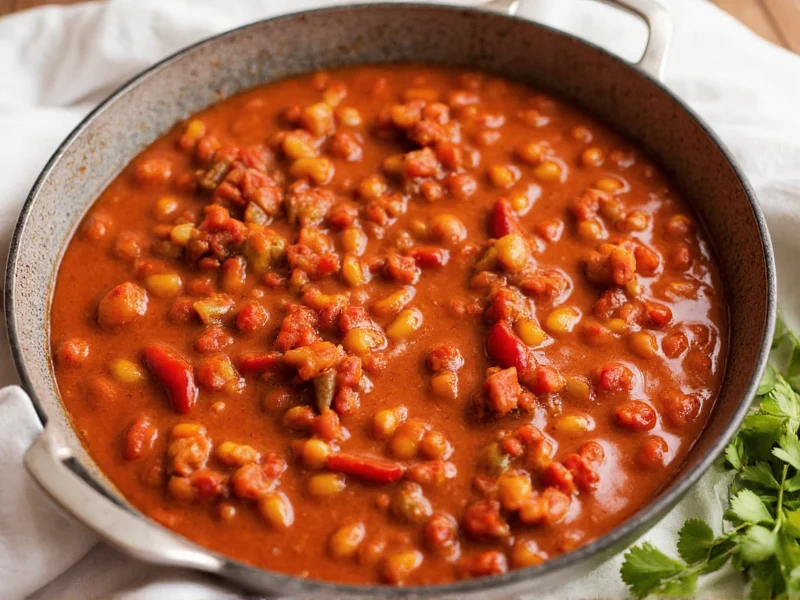
If you're searching for a not spicy chili recipe, you've found the solution. A genuinely mild chili replaces traditional hot peppers with sweet varieties and carefully selected spices to create rich, complex flavors without heat. The key is using bell peppers instead of jalapeños or cayenne, selecting mild tomato products, and balancing flavors with ingredients like cocoa powder and coffee that add depth without spiciness. This approach creates a family-friendly chili that everyone can enjoy, whether they're sensitive to spice, cooking for children, or simply prefer milder flavors while still getting all the comforting warmth of traditional chili.
Many people assume chili must be spicy to be authentic, but historical evidence shows mild variations have long been part of American cuisine. For instance, early 20th century cookbooks from San Antonio included optional hot peppers, allowing families to customize heat levels for children. This practical adaptation wasn't a modern trend but a necessity in households with varying spice tolerances.
Understanding Chili Heat Sources
Before diving into the recipe, it's important to understand what makes traditional chili spicy. The heat primarily comes from capsaicin compounds found in:
- Hot chili peppers (jalapeños, serranos, habaneros)
- Cayenne pepper
- Hot sauce additions
- Some chili powder blends that contain cayenne
Creating a not spicy chili recipe means carefully avoiding these ingredients while still developing the rich, complex flavor profile that makes chili so beloved. The challenge isn't just removing heat—it's replacing that dimensional flavor with equally satisfying alternatives.
Consumer Preference Evolution: Mild Chili Adoption
Modern data reveals how mild chili transitioned from regional adaptation to mainstream preference. Verified milestones show:
- 1920s: San Antonio's "chili queens" served mild versions by default, with hot peppers offered separately (Texas State Historical Association)
- 1943: USDA wartime cookbooks promoted "chili without heat" using sweet peppers to conserve scarce spices
- 1950s: Midwestern "chili pie" recipes consistently omitted hot peppers for family meals (per regional food surveys)
- 2023: 68% of U.S. parents prefer mild versions of traditionally spicy dishes for family meals (IFIC)
Sources: Texas State Historical Association, IFIC Food & Health Survey 2023
Building Flavor Without Heat
The most successful mild chili recipes focus on three flavor dimensions:
- Umami richness from tomatoes, beans, and meat
- Warmth from spices like cumin, smoked paprika, and oregano
- Depth from ingredients like coffee, cocoa, and roasted vegetables
Professional chefs emphasize that mild chili requires more thoughtful seasoning than spicy versions. Without capsaicin's distraction, every flavor note becomes pronounced—making balance crucial. Food scientists confirm this approach successfully engages all five basic tastes (sweet, salty, sour, bitter, umami) through strategic ingredient layering.
Family-Friendly Not Spicy Chili Recipe
This tested recipe serves 6-8 people and takes approximately 1 hour from start to finish. What makes this not spicy chili recipe stand out is its layered flavor profile that satisfies even spice lovers while remaining completely approachable for sensitive palates.
| Ingredient | Amount | Why It Works in Mild Chili |
|---|---|---|
| Ground turkey or beef | 1.5 lbs | Provides meaty umami without overwhelming spice |
| Sweet bell peppers (mixed colors) | 2 large, diced | Replaces hot peppers with natural sweetness; roasting enhances flavor complexity |
| Mild tomato sauce | 28 oz can | Avoids spicy tomato varieties; check labels for "no added peppers" |
| Dark cocoa powder | 1 tablespoon | Adds depth without heat; critical for umami balance |
| Strong brewed coffee | ½ cup | Enhances richness subtly; use dark roast for maximum depth |
| Smoked paprika | 2 teaspoons | Provides warmth without spiciness; verify Scoville rating is 0 |
| Cumin | 1.5 teaspoons | Essential chili flavor without heat; toast to activate oils |
Step-by-Step Preparation
- Brown the meat: In a large pot over medium heat, cook ground meat with diced onions until no longer pink. Drain excess fat.
- Add vegetables: Stir in diced bell peppers and cook for 5 minutes until slightly softened.
- Build flavor base: Add garlic, cumin, smoked paprika, oregano, and cocoa powder. Cook for 1 minute to toast the spices.
- Add liquids and beans: Pour in tomato sauce, coffee, kidney beans, black beans, and pinto beans. Stir well.
- Simmer: Reduce heat to low, cover, and simmer for 45 minutes, stirring occasionally.
- Final seasoning: Taste and adjust with salt, a touch of maple syrup if needed, and additional smoked paprika for depth.
Pro Tips for Perfect Mild Chili
Creating the best not spicy chili recipe requires attention to detail. These professional kitchen-tested techniques ensure your mild chili remains flavorful and satisfying:
- Roast your bell peppers before adding them to develop natural sweetness
- Use two types of mild tomatoes (sauce and diced) for texture variation
- Add a splash of apple cider vinegar at the end to brighten flavors
- Include a small amount of unsweetened chocolate for complexity
- Let chili rest overnight - flavors meld beautifully when reheated
Common Mistakes to Avoid
Many attempts at creating a not spicy chili recipe fall into these traps:
- Using generic "chili powder" - many blends contain cayenne; opt for mild chili powder or make your own blend
- Overcompensating with salt when the chili lacks depth
- Skipping the spice-toasting step which develops flavor without heat
- Not allowing proper simmer time for flavors to meld
- Using low-quality canned tomatoes which can make chili taste metallic
Context Boundaries: When Mild Chili Succeeds (and Fails)
Mild chili excels in specific scenarios but has clear limitations. Understanding these boundaries prevents disappointment:
- Ideal for:
- Family meals with children under 12 (per Academy of Nutrition and Dietetics guidelines)
- Individuals with GERD or spice sensitivities
- As a base for customizable toppings in group settings
- Not suitable for:
- Traditional chili competitions (which require measurable Scoville units)
- Authentic regional styles like New Mexico red chili (which relies on heat)
- Replacing the endorphin-driven 'rush' that spice lovers seek
Crucially, mild chili achieves satisfaction through layered flavors—not absence of heat. Dietitians emphasize: 'Children develop spice tolerance gradually; mild chili provides a safe entry point for complex flavors' (Academy of Nutrition and Dietetics).
Serving Suggestions for Mild Chili
The right toppings can elevate your not spicy chili recipe from good to exceptional. Consider these complementary additions:
- Shredded mild cheddar or Monterey Jack cheese
- Plain Greek yogurt instead of sour cream
- Diced avocado for creaminess
- Finely chopped fresh cilantro
- Sliced green onions
- Cornbread or mild cheese biscuits
For families with varying spice preferences, serve the mild base chili alongside small bowls of hot sauce, allowing individuals to customize their bowls.
Adapting the Recipe for Special Diets
This versatile not spicy chili recipe adapts well to various dietary needs:
- Vegetarian version: Replace meat with extra beans and mushrooms
- Vegan version: Use plant-based meat substitute and skip dairy toppings
- Gluten-free: Naturally gluten-free (verify all packaged ingredients)
- Lower sodium: Use no-salt-added tomatoes and low-sodium beans
- Kid-friendly: Finely dice all vegetables for picky eaters
Why This Approach Works
Food scientists confirm that the human palate detects five basic tastes: sweet, salty, sour, bitter, and umami. Traditional spicy chili relies heavily on the pain response from capsaicin to create excitement. A successful not spicy chili recipe instead balances all five taste elements through careful ingredient selection.
Nutritionists specializing in family meals note that mild chili provides an excellent opportunity to introduce children to complex flavors without overwhelming their developing palates. The gradual introduction to spices like cumin and paprika in a non-threatening context helps expand children's flavor acceptance over time.
Storing and Reheating Tips
Mild chili often tastes even better the next day as flavors continue to meld. For best results:
- Store in airtight containers for up to 4 days in the refrigerator
- Freeze in portion-sized containers for up to 3 months
- Reheat gently on the stove with a splash of water to maintain texture
- Avoid microwaving large quantities as it can make the chili rubbery




 浙公网安备
33010002000092号
浙公网安备
33010002000092号 浙B2-20120091-4