
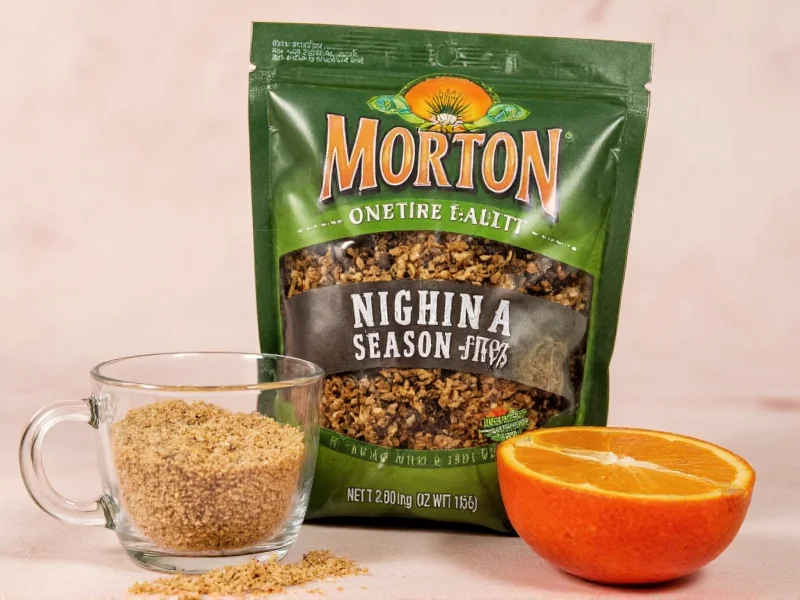
For home cooks and health-conscious individuals exploring sodium reduction options, understanding what Morton Nature Seasoning offers can significantly impact both culinary results and dietary choices. This comprehensive guide examines the product's composition, practical applications, and how it compares to evolving dietary standards through verifiable evidence.
Understanding Morton Nature Seasoning Composition
Morton Nature Seasoning stands apart from conventional salt products through its complete absence of sodium chloride. The blend typically contains a carefully curated mixture of dried herbs including parsley, marjoram, and thyme, combined with natural vegetable flavors and spices. Unlike many salt substitutes that rely heavily on potassium chloride (which can impart a metallic aftertaste), Nature Seasoning focuses on herb-based flavor enhancement without sodium reduction chemicals.
The product's ingredient list generally includes:
- Dried parsley
- Marjoram
- Thyme
- Natural flavors
- Extractives of paprika
- Sugar
- Spice
Sodium Content Comparison
When evaluating morton nature seasoning sodium content, the most significant distinction is its complete absence of sodium. A standard 1/4 teaspoon serving contains 0mg sodium, making it fundamentally different from both table salt and many "reduced sodium" products. This characteristic makes it particularly valuable for individuals following sodium-restricted diets prescribed for hypertension, heart conditions, or kidney issues.
| Seasoning Product | Sodium per 1/4 tsp | Primary Flavor Profile |
|---|---|---|
| Regular table salt | 590mg | Salty, mineral |
| Potassium chloride substitute | 0mg | Bitter, metallic notes |
| Morton Nature Seasoning | 0mg | Herbal, savory |
Evolution of Sodium Intake Guidelines
Understanding the historical context of sodium recommendations explains the growing relevance of sodium-free alternatives. Dietary guidelines have evolved significantly as research on sodium's cardiovascular impact has advanced, with authoritative bodies refining limits based on longitudinal studies:
| Year | Guideline Source | Recommended Daily Limit | Evidence Basis |
|---|---|---|---|
| 2006 | American Heart Association | 1,500 mg (ideal limit) | Based on Framingham Heart Study data linking sodium to hypertension |
| 2010 | Dietary Guidelines for Americans | 2,300 mg (general), 1,500 mg (high-risk) | NIH analysis showing 25% hypertension risk reduction at lower intakes |
| 2020 | Dietary Guidelines for Americans | 2,300 mg | Continued emphasis on sodium reduction for cardiovascular health |
These evolving standards reflect increasing scientific consensus on sodium's role in cardiovascular disease. The American Heart Association continues to emphasize that reducing sodium intake remains one of the most effective lifestyle modifications for heart health, with current guidelines accessible through their evidence-based sodium reduction resources (AHA, 2023).
Practical Culinary Applications
Understanding how to use morton nature seasoning effectively requires recognizing its role as a flavor enhancer rather than a direct salt replacement. The herb-forward profile works exceptionally well in:
- Vegetable dishes (particularly roasted or steamed vegetables)
- Soups and broths where salt would normally be added
- Salad dressings and marinades
- Egg dishes and omelets
- Grilled meats as a finishing touch
Chefs and home cooks should note that because morton nature seasoning vs regular salt functions differently in recipes, direct 1:1 substitution isn't recommended. Instead, incorporate it during cooking to allow the herbal notes to meld with other ingredients, typically using 1/4 to 1/2 teaspoon per serving depending on desired flavor intensity.
Storage and Shelf Life Considerations
Like most dried herb blends, Morton Nature Seasoning maintains optimal flavor when stored properly. Keep the container tightly sealed in a cool, dark place away from heat sources. Properly stored, the seasoning typically retains peak flavor for 12-18 months. Exposure to moisture, light, or temperature fluctuations can cause the herbal components to lose potency more quickly.
Addressing Common Misconceptions
Contextual Limitations and Optimal Use Cases
While valuable for sodium reduction, Morton Nature Seasoning has specific constraints verified through culinary science and food safety research:
- Preservation Applications: Cannot replace salt in food preservation techniques. The USDA Food Safety and Inspection Service confirms sodium chloride is essential for inhibiting bacterial growth in cured meats and canned goods (USDA FSIS, 2022). Attempting substitution in preservation could create food safety hazards.
- Baking Chemistry: Ineffective in yeast-based baking where salt controls fermentation and strengthens gluten structure. Penn State Extension's culinary research shows herb blends lack the ionic properties needed for dough development (Penn State, 2021), often resulting in collapsed loaves.
- High-Heat Stability: Herbal components degrade above 350°F (177°C), unlike salt which remains stable. Best added during final cooking stages for seared meats or roasted vegetables to prevent bitter notes.
Many consumers wonder is morton nature seasoning a salt substitute in the traditional sense. The answer requires nuance: while it serves as a sodium-free alternative for adding flavor, it doesn't replicate salt's chemical properties in food preparation. Salt affects texture, preservation, and chemical reactions in cooking that herb blends cannot replicate. Nature Seasoning functions best as a complementary flavor enhancer rather than a direct replacement in all culinary applications.
Practical Cooking Tips
For those exploring morton nature seasoning cooking tips, consider these evidence-based recommendations:
- Add during the last 5-10 minutes of cooking to preserve delicate herbal notes
- Combine with acid (like lemon juice or vinegar) to enhance perceived saltiness
- Use in conjunction with umami-rich ingredients (mushrooms, tomatoes) for depth
- Adjust quantities based on other seasonings in your recipe to avoid overpowering
Consumer Considerations
When incorporating any new seasoning into your culinary repertoire, understanding its specific properties helps achieve better results. Morton Nature Seasoning's herb-based formulation makes it particularly suitable for Mediterranean-style cooking, vegetable-focused dishes, and recipes where subtle herbal notes complement rather than dominate. Its value is most pronounced for individuals adhering to physician-prescribed sodium restrictions, where the 0mg sodium content directly addresses clinical guidelines from cardiovascular health authorities.




 浙公网安备
33010002000092号
浙公网安备
33010002000092号 浙B2-20120091-4