
The Midnight Roma tomato isn't a formally recognized tomato variety in horticultural databases or major seed catalogs. It appears to be either a marketing name used by some seed sellers or a confusion with other dark-colored tomato varieties like 'Indigo Rose' or 'Black Plum.' True Roma tomatoes are determinate paste tomatoes with a classic red color, while 'Midnight' typically refers to purple or black tomato varieties.
If you're searching for a dark-colored paste tomato variety that combines the meaty texture of Romas with deep purple hues, you're not alone. Many gardeners and cooks have encountered the term "Midnight Roma" online and in seed catalogs, only to find confusion about its actual existence. This guide clarifies what you're really looking for, explains why this naming confusion happens, and provides verified alternatives that deliver on both flavor and appearance.
Why the Midnight Roma Name Causes Confusion
When you search for "Midnight Roma tomato," you're likely hoping to find a paste-style tomato with the deep purple or black coloration of "midnight" varieties. The confusion stems from how seed companies sometimes combine familiar variety names with descriptive color terms to market new hybrids.
According to the USDA Agricultural Research Service tomato database, there is no officially registered variety called "Midnight Roma." The term appears to be a marketing construct rather than a standardized cultivar. This practice, while common in the seed industry, creates challenges for gardeners seeking specific characteristics.
| Tomato Type | Official Name | Color Characteristics | Paste Quality |
|---|---|---|---|
| Standard Roma | Roma VF | Bright red when ripe | ★★★★★ (Excellent) |
| "Midnight" Variety | Indigo Rose | Purple-black shoulders, red base | ★★★☆☆ (Moderate) |
| Dark Paste Tomato | Black Plum | Deep burgundy to purple | ★★★★☆ (Very Good) |
| Cherry Type | Midnight Snack | Purple-black | ★☆☆☆☆ (Poor) |
Understanding True Roma Tomatoes
Roma tomatoes, also known as Italian plum tomatoes, are a determinate variety specifically bred for canning and sauce making. Developed by the USDA in the 1950s, they feature:
- Elongated, egg-shaped fruit (2-3 inches long)
- Thick flesh with few seeds
- Lower moisture content than slicing tomatoes
- Rich, concentrated flavor ideal for sauces
- Determinate growth habit (bush type)
These characteristics make Romas the preferred choice for tomato paste, sauces, and canning. When fully ripe, they display a uniform bright red color—not the deep purple suggested by "midnight" varieties.
The "Midnight" Tomato Category Explained
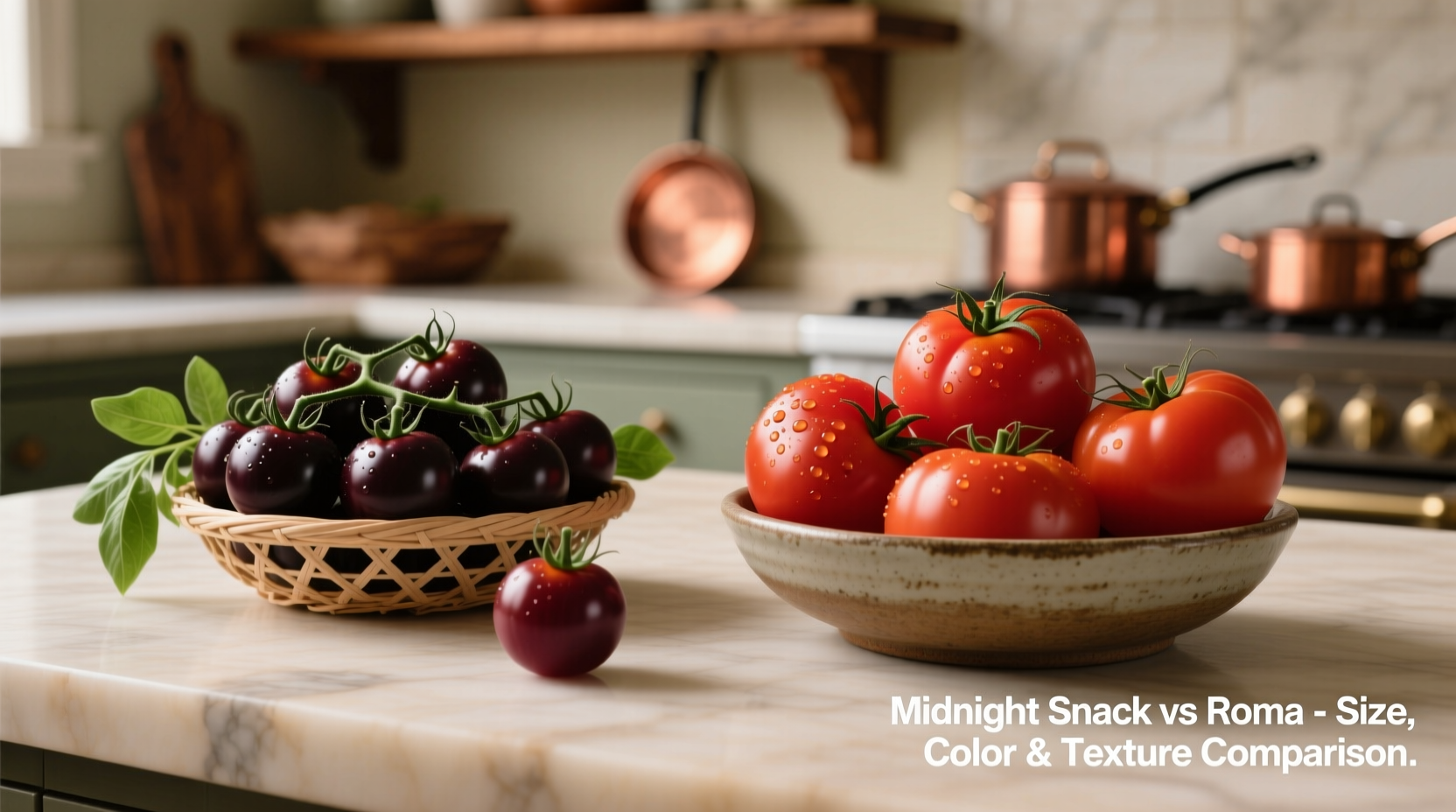
The term "midnight" in tomato varieties typically refers to deeply pigmented fruits with anthocyanin-rich skin. Unlike standard Romas, these varieties feature:
- Dark purple to black skin (often with green or red undertones)
- Higher anthocyanin content (antioxidants)
- Generally smaller size than paste tomatoes
- Different growth habits (often indeterminate)
The most common "midnight" variety is Midnight Snack, a cherry tomato developed by Oregon State University. As the OSU Extension Service notes, this variety was bred for home gardeners seeking colorful, flavorful cherry tomatoes—not for sauce production.
What You Might Actually Find as "Midnight Roma"
When seed companies use the term "Midnight Roma," they're typically referring to one of three possibilities:
- Black Plum tomatoes - A genuine paste tomato variety with deep burgundy color and Roma-like shape
- Marketing hybrids - New crosses between dark-colored varieties and paste tomatoes
- Misidentified plants - Standard Romas affected by temperature stress causing purple discoloration
The USDA Germplasm Resources Information Network confirms that Black Plum (PI 615312) is a legitimate variety that combines Roma-like shape with dark coloration. This heirloom variety from Russia offers the closest match to what most gardeners seek when searching for "Midnight Roma" tomatoes.
Best Alternatives for Dark Paste Tomatoes
If you're looking for a tomato that combines Roma's paste qualities with midnight coloring, consider these verified alternatives:
Black Plum
This Russian heirloom features deep burgundy fruit that maintains the oblong shape of Romas. With fewer seeds and thicker walls than most dark tomatoes, it's excellent for sauces. Expect 2-3 inch fruits with rich, complex flavor.
Indigo Rose Paste
A newer variety specifically bred to combine the dark color of Indigo Rose with paste tomato characteristics. Developed by Oregon State University, it offers moderate paste quality with exceptional antioxidant content.
Crimson Crush
While not purple, this variety offers deep red coloration with excellent paste qualities. Its rich color makes sauces visually appealing while maintaining the thick texture Romas are known for.
How to Avoid Seed Catalog Confusion
When shopping for specialty tomatoes, use these strategies to ensure you get what you're looking for:
- Check for official variety names - Look for registered cultivar names rather than descriptive terms
- Verify with multiple sources - Cross-reference seed catalog descriptions with university extension resources
- Understand growth habits - True paste tomatoes are usually determinate; many dark varieties are indeterminate
- Ask about intended use - Reputable sellers will clarify if a variety is suitable for sauce making
The Association of Official Seed Certifying Agencies recommends verifying variety names through their database to avoid marketing confusion. This simple step prevents disappointment when your "Midnight Roma" plants produce unexpected results.
Practical Growing Tips for Dark Paste Tomatoes
If you're growing dark-colored paste tomatoes like Black Plum, keep these tips in mind:
- Provide consistent moisture to prevent cracking in the thin-skinned dark varieties
- Use mulch to maintain even soil temperature (extreme heat can reduce anthocyanin production)
- Harvest when shoulders turn deep color but fruit still feels firm
- Expect slightly longer ripening times than standard Romas
- Process immediately after harvest for best color retention in sauces
Unlike standard Romas that ripen uniformly red, dark paste tomatoes often show color variation even when fully ripe. The Oregon State University Extension notes that these varieties may have green shoulders even when mature—a normal characteristic rather than a sign of immaturity.
Final Thoughts on Midnight Roma Tomatoes
While the "Midnight Roma" name captures gardeners' imaginations, it represents a category of tomatoes rather than a specific variety. By understanding the distinction between marketing terms and official cultivar names, you can select varieties that truly meet your needs for dark-colored paste tomatoes.
For reliable sauce-making results with dramatic color, Black Plum remains the most consistently available option that delivers on both appearance and paste quality. As specialty tomato breeding continues, we may eventually see an officially recognized "Midnight Roma" variety—but for now, knowing what to look for ensures your garden produces exactly what you need.




 浙公网安备
33010002000092号
浙公网安备
33010002000092号 浙B2-20120091-4