
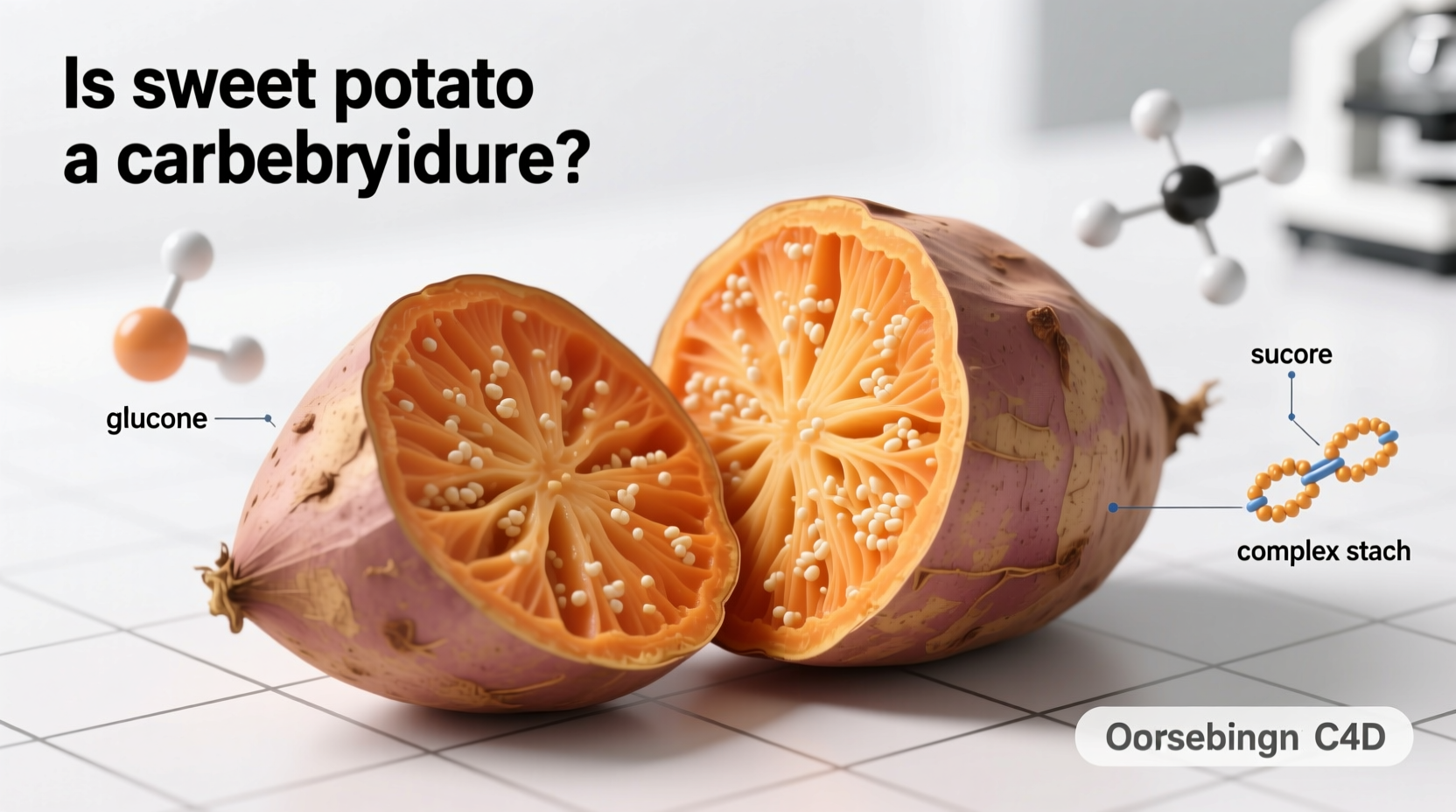
Understanding whether sweet potatoes qualify as carbohydrates matters significantly for anyone managing their diet, whether for weight control, diabetes management, or athletic performance. This straightforward question often masks deeper concerns about how this popular root vegetable fits into various nutritional approaches. Let's explore the science behind sweet potatoes' carbohydrate composition and what it means for your health.
The Carbohydrate Reality of Sweet Potatoes
When examining is sweet potato a carbohydrate, the answer lies in basic nutritional science. Sweet potatoes consist primarily of carbohydrates, but not all carbs are created equal. Unlike simple carbohydrates found in sugary snacks, sweet potatoes contain complex carbohydrates that provide sustained energy release.
According to the USDA FoodData Central database, a 100g serving of raw sweet potato contains:
| Nutrient | Amount per 100g | % Daily Value* |
|---|---|---|
| Total Carbohydrates | 20.1g | 7% |
| Dietary Fiber | 3.0g | 11% |
| Sugars | 4.2g | - |
| Starch | 18.0g | - |
*Based on a 2,000 calorie diet. Source: USDA FoodData Central, ID 01142
This nutritional breakdown reveals that while sweet potatoes are indeed carbohydrates, they're predominantly complex carbohydrates with significant fiber content. The fiber slows digestion, preventing blood sugar spikes that often accompany simple carbohydrates.
Understanding Carbohydrate Types in Sweet Potatoes
Not all carbohydrates function the same way in your body. Sweet potatoes contain three main types:
- Starch (approximately 90% of total carbs) - The primary energy storage form in plants
- Dietary Fiber (about 15% of total carbs) - Supports digestive health and blood sugar regulation
- Natural Sugars (roughly 20% of total carbs) - Primarily sucrose, glucose, and fructose
The specific carbohydrate composition varies based on sweet potato variety and cooking method. For instance, boiling sweet potatoes results in a lower glycemic index (44-50) compared to baking (94), making boiled sweet potatoes a better option for blood sugar management.

Sweet Potatoes vs. Other Carbohydrate Sources
When evaluating is sweet potato a good carbohydrate source, comparison with other common carb foods provides valuable context:
- Sweet potatoes vs. white potatoes: Both contain similar carb amounts, but sweet potatoes have more fiber and significantly higher vitamin A content
- Sweet potatoes vs. rice: One cup of cooked rice contains about 45g carbs with minimal fiber, while a medium sweet potato has 27g carbs with 4g fiber
- Sweet potatoes vs. bread: Two slices of white bread contain approximately 26g carbs with only 1g fiber, compared to a medium sweet potato's 27g carbs with 4g fiber
Research published in the American Journal of Clinical Nutrition confirms that whole food carbohydrate sources like sweet potatoes provide more nutritional value per calorie than refined carbohydrate sources. The study noted that populations consuming traditional diets rich in whole food carbohydrates, including sweet potatoes, demonstrated better metabolic health markers.
Practical Applications for Different Dietary Needs
Understanding that sweet potatoes are carbohydrates helps tailor their use to specific health goals:
For Weight Management
The high fiber content in sweet potatoes promotes satiety. A study from Purdue University found that participants who included sweet potatoes in their meals reported feeling fuller longer compared to those consuming equivalent calories from refined carbohydrates.
For Diabetes Management
Despite being carbohydrates, sweet potatoes can be part of a diabetes-friendly diet when prepared properly. The American Diabetes Association recommends boiling or steaming sweet potatoes rather than baking to maintain a lower glycemic index. Pairing sweet potatoes with protein and healthy fats further stabilizes blood sugar response.
For Athletic Performance
Athletes benefit from sweet potatoes' complex carbohydrates for sustained energy. Research in the Journal of the International Society of Sports Nutrition indicates that the carbohydrate profile of sweet potatoes provides effective fuel for endurance activities while delivering essential micronutrients often depleted during intense training.
Addressing Common Misconceptions
Several myths persist about sweet potatoes and carbohydrates:
- Misconception: "Sweet potatoes are high-sugar foods that should be avoided on low-carb diets"
- Reality: While they contain natural sugars, the fiber content moderates blood sugar impact. For most people not following extremely restrictive diets, sweet potatoes can be part of a balanced eating pattern.
- Misconception: "All carbohydrates are the same"
- Reality: The quality of carbohydrates matters significantly. Whole food sources like sweet potatoes provide nutrients and fiber absent in refined carbohydrates.
The Centers for Disease Control and Prevention emphasizes that focusing on carbohydrate quality rather than simply counting grams leads to better health outcomes. Their dietary guidelines specifically recommend replacing refined grains with whole food carbohydrate sources like sweet potatoes.
Maximizing Sweet Potato Benefits
To get the most nutritional value from sweet potatoes while managing carbohydrate intake:
- Choose boiling or steaming over baking for lower glycemic impact
- Leave the skin on to increase fiber content by up to 30%
- Pair with healthy fats (like olive oil or avocado) to enhance absorption of fat-soluble vitamins
- Consider portion sizes - a medium sweet potato (about 130g) contains approximately 27g carbs
- Combine with protein sources to create balanced meals that stabilize blood sugar
Remember that individual carbohydrate tolerance varies. People with specific health conditions should consult healthcare providers for personalized recommendations, but for most individuals, sweet potatoes represent a nutritious carbohydrate source that supports overall health when consumed as part of a balanced diet.




 浙公网安备
33010002000092号
浙公网安备
33010002000092号 浙B2-20120091-4