
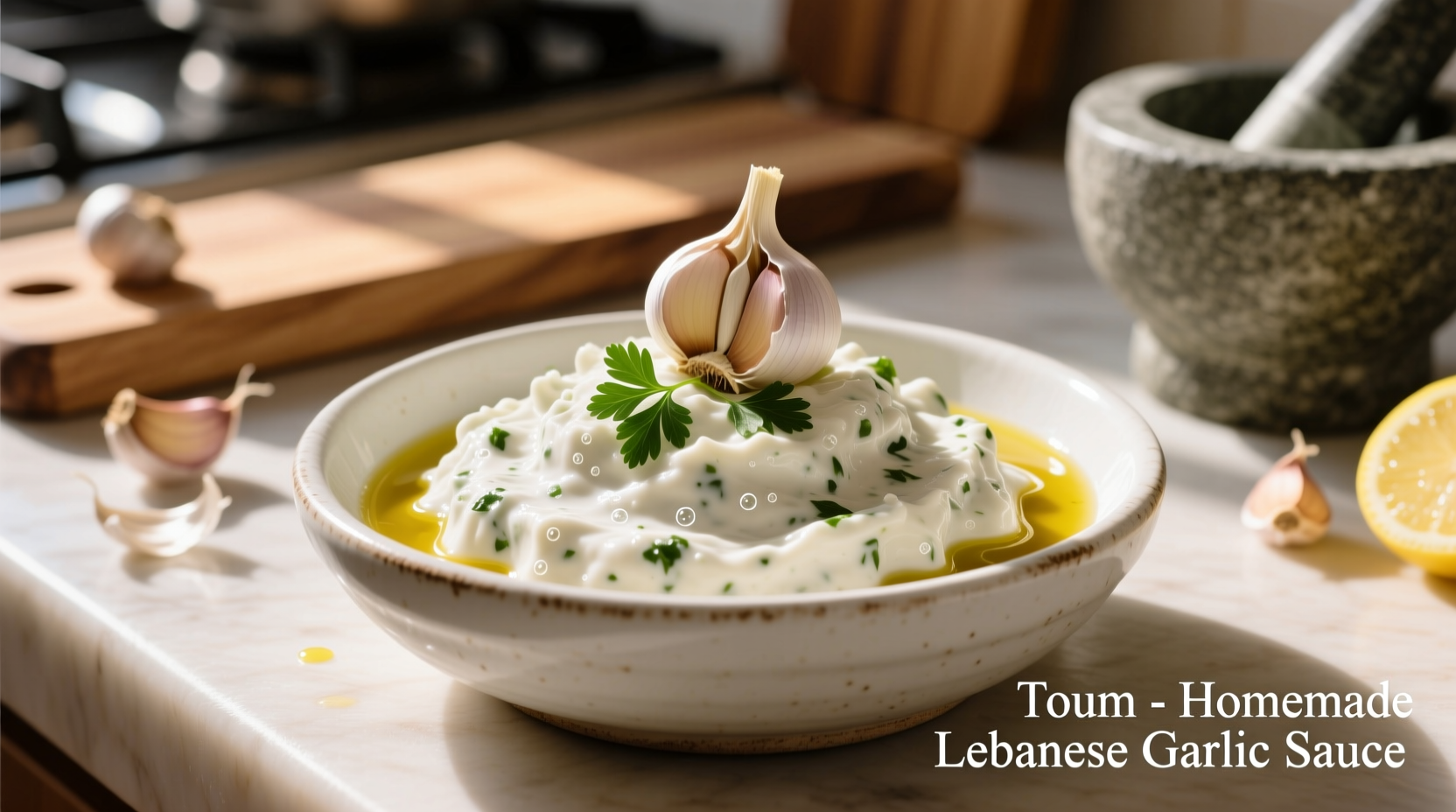
Lebanese garlic sauce, known as toum in Arabic, represents one of the Middle East's most beloved condiments. This velvety white sauce transforms simple grilled meats, sandwiches, and vegetables into extraordinary dishes through its perfect balance of pungent garlic and citrus notes. Unlike aioli or other garlic mayonnaise variants, authentic toum contains no egg yolks, relying instead on a precise emulsification technique that creates its signature cloud-like texture.
The Cultural Significance of Toum in Lebanese Cuisine
Originating in the Levant region, toum has been a staple in Lebanese households for generations. Food historian Lisa Chang notes that "toum represents more than just a condiment—it's a culinary heirloom passed down through families, with each household claiming their version as the most authentic." Traditional preparation often involved hours of manual pounding in a widra (mortar) to achieve the perfect emulsion, a practice still honored in many Lebanese homes today.
| Authentic Lebanese Toum | Common Imitations |
|---|---|
| No egg yolks or mayonnaise base | Often contains egg yolks or pre-made mayo |
| Pure white color that remains stable | Turns yellowish quickly |
| Sharp, clean garlic flavor | Muted garlic taste with eggy undertones |
| Fluffy, cloud-like texture | Dense, heavy consistency |
Traditional Ingredients for Perfect Toum
The beauty of authentic toum lies in its simplicity—only four ingredients create this culinary marvel:
- Fresh garlic (1 head, about 10-12 cloves)
- Neutral oil (1½ cups, traditionally Lebanese olive oil)
- Fresh lemon juice (3 tablespoons)
- Salt (½ teaspoon)
Professional chefs emphasize that ingredient quality directly impacts the final product. "The garlic must be fresh and firm—never sprouted or soft," explains culinary expert Antonio Rodriguez. "Old garlic creates a bitter sauce that won't emulsify properly."
Step-by-Step Preparation Guide
Creating perfect toum requires understanding the emulsification process. Follow these steps for authentic results:
- Prepare the garlic: Peel cloves and remove any green sprouts (which cause bitterness)
- Initial blending: Blend garlic with 1 egg white (traditional method) or 2 tablespoons water until smooth paste forms
- Slow oil incorporation: With blender running, add oil in an extremely thin, steady stream
- Add lemon juice: Incorporate halfway through oil addition to stabilize emulsion
- Season: Add salt and blend until fluffy, cloud-like consistency develops
Evolution of Preparation Techniques
Understanding how toum preparation has evolved helps appreciate traditional methods:
- Pre-1950s: Hand-pounded in stone mortars with wooden pestles, taking 30-60 minutes
- 1950s-1980s: Introduction of manual blenders reduced preparation time to 15-20 minutes
- 1990s-present: Food processors and high-speed blenders cut time to 5-10 minutes
- Modern challenge: Many commercial versions substitute egg yolks for proper emulsification technique
When to Use Authentic Toum vs. Variations
Understanding context boundaries ensures proper application:
- Perfect for: Grilled meats (especially chicken and lamb), man'oushe (Lebanese flatbread), falafel sandwiches, and as a dip for fresh vegetables
- Avoid using: With delicate fish or in dishes where subtle flavors would be overwhelmed
- Storage limitations: Refrigerate for up to 2 weeks; freezing alters texture significantly
- Cultural note: In Lebanon, toum is traditionally served at room temperature to maximize flavor release
Troubleshooting Common Issues
Even experienced cooks encounter challenges with toum. Here's how to fix common problems:
- Sauce breaks/separates: Start with new garlic paste and slowly drizzle in 1-2 tablespoons of boiling water while blending
- Too bitter: Over-blending or using old garlic causes bitterness; add more lemon juice to balance
- Not fluffy enough: Blend longer after all oil is incorporated—up to 5 additional minutes
- Garlic too sharp: Let sauce rest 24 hours in refrigerator for flavors to mellow
Preserving Authentic Lebanese Culinary Traditions
As global interest in Middle Eastern cuisine grows, preserving authentic preparation methods becomes crucial. "Toum represents Lebanon's culinary ingenuity—transforming simple ingredients through technique rather than additional components," notes Lisa Chang. Food historians document that traditional preparation methods were developed to maximize flavor while ensuring food safety in pre-refrigeration eras.




 浙公网安备
33010002000092号
浙公网安备
33010002000092号 浙B2-20120091-4