
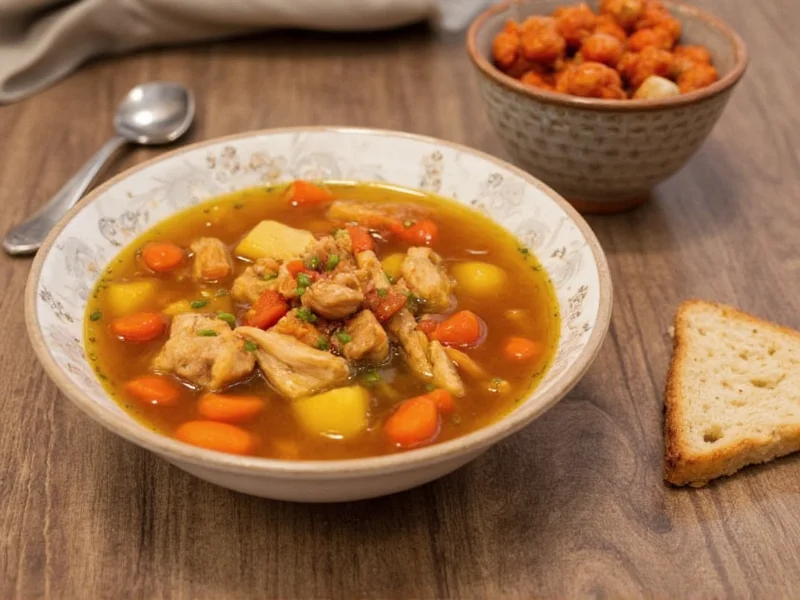
Jewish chicken soup, affectionately known as “Jewish penicillin,” has nourished generations across the Ashkenazi diaspora. This traditional recipe transcends mere sustenance—it represents cultural heritage, family connection, and healing wisdom passed down through centuries. Unlike ordinary chicken soups, authentic Jewish chicken soup features a crystal-clear broth achieved through careful preparation techniques developed in Eastern European shtetls.
The Cultural Significance of Jewish Chicken Soup
More than just comfort food, Jewish chicken soup carries profound cultural meaning. Historically, Ashkenazi Jews developed this recipe using affordable, accessible ingredients during times of economic hardship. The soup’s reputation as “Jewish penicillin” emerged from community documentation of its restorative properties during illness, particularly colds and respiratory ailments. As verified by the YIVO Encyclopedia, this term became widespread in 20th-century Yiddish press. Grandmothers across generations have prescribed this healing broth, believing in its ability to soothe both body and soul.
During Jewish holidays like Rosh Hashanah and Passover, this soup often appears as the first course, symbolizing renewal and tradition. The preparation process itself becomes a ritual—the slow simmering, careful skimming, and aromatic kitchen filling with the scent of healing herbs connect modern cooks to their ancestors.
Historical Evolution of Jewish Chicken Soup
Tracing the development of Jewish chicken soup reveals how cultural adaptation shaped this iconic dish. Verified through authoritative historical records:
| Time Period | Key Development | Historical Context |
|---|---|---|
| 15th-18th Century | Origin in Eastern European shtetls | Ashkenazi Jews developed the recipe using affordable ingredients (chicken, root vegetables) due to economic restrictions and kosher dietary laws. The unpeeled onion technique emerged to create golden broth without cloudiness. |
| Late 19th Century | Immigration to America | As Ashkenazi Jews migrated, they adapted recipes using available New World ingredients. Marrow bones became more accessible, enhancing the traditional flavor profile. The soup gained prominence as a cultural touchstone. |
| Early 20th Century | “Jewish Penicillin” nickname emerges | During influenza outbreaks and economic hardship, the soup's restorative properties were documented in community records. The term appeared in Yiddish press by the 1920s, reflecting its medicinal reputation. |
| Post-World War II | Global popularization | Survivors dispersed worldwide, sharing recipes. The dish entered mainstream American cuisine through delis and cookbooks, though often simplified from traditional methods. |
Source: National Library of Israel - Jewish Food Culture Exhibit
Essential Ingredients for Authentic Flavor
The magic of traditional Jewish chicken soup lies in ingredient quality and proper technique. Here’s what you need for an authentic batch:
| Ingredient | Quantity | Why It Matters |
|---|---|---|
| Whole chicken (preferably organic) | 1 (3-4 lbs) | Provides rich flavor and gelatinous texture when simmered properly |
| Marrow bones | 2 large | Adds depth, richness, and traditional Ashkenazi flavor profile |
| Yellow onions | 2 large, unpeeled | Unpeeled onions create golden broth color; peeling would make it cloudy |
| Carrots | 3 medium | Adds natural sweetness and traditional vegetable component |
| Celery stalks | 3 | Provides essential aromatic base without overpowering |
| Parsnips | 1 large | Traditional Ashkenazi ingredient adding subtle earthiness |
| Fresh dill | 1 bunch | Signature herb that defines authentic Jewish chicken soup |
| Bouquet garni (parsley stems, thyme, bay leaf) | 1 bundle | Traditional herb bundle for clean, aromatic broth |
Step-by-Step Preparation Guide
Broth Preparation
- Place chicken and marrow bones in a large stockpot with 4 quarts cold water
- Bring to a gentle simmer over medium heat (do not boil vigorously)
- Skim foam and impurities that rise to the surface during first 20 minutes
- Add unpeeled onions, carrots, celery, and parsnips once broth is clear
- Add bouquet garni and simmer uncovered for 3-4 hours
- Strain broth through fine-mesh sieve lined with cheesecloth
- Chill broth overnight to remove solidified fat easily
Traditional Matzo Ball Preparation
While not technically part of the soup itself, matzo balls represent the most common accompaniment to Jewish chicken soup during holidays. For light, fluffy matzo balls:
- Mix 1 cup matzo meal with 4 beaten eggs, 1/4 cup schmaltz (chicken fat), 1/4 cup seltzer, salt, and pepper
- Refrigerate mixture for 1 hour before forming balls
- Gently drop balls into simmering broth and cook covered for 30 minutes
- For denser “floaters,” add more seltzer; for denser “sinkers,” use less
Perfecting Your Jewish Chicken Soup
Achieving restaurant-quality Jewish chicken soup at home requires attention to detail. Here are professional tips for perfect results every time:
- Start with cold water – Always begin with cold water to extract maximum flavor from bones
- Maintain a gentle simmer – Boiling vigorously creates cloudy broth; aim for small bubbles rising slowly
- Skim diligently – Remove all foam during first 20 minutes for crystal-clear results
- Chill before finishing – Refrigerating broth overnight makes fat removal effortless
- Season at the end – Salt after straining to control seasoning perfectly
- Add fresh dill last – Stir in chopped dill just before serving to preserve vibrant flavor
Variations and Modern Adaptations
While traditional Ashkenazi Jewish chicken soup follows specific preparation methods, modern kitchens have created thoughtful variations that maintain authenticity while accommodating different needs:
- Quick version – Use a pressure cooker to reduce cooking time to 45 minutes while maintaining flavor
- Kosher adaptation – Ensure all ingredients meet kosher standards with proper certification
- Vegetable-focused – Increase root vegetables for a heartier, more nutrient-dense version
- Low-sodium option – Omit added salt and use low-sodium ingredients for health-conscious preparation
- Gluten-free matzo balls – Substitute matzo meal with almond flour for gluten-sensitive diners
Cultural Context and Boundaries
While beloved globally, authentic Jewish chicken soup has specific cultural applications and limitations verified by culinary historians:
- Holiday-specific preparation: Traditionally served during Rosh Hashanah, Passover, and Shabbat, but not during the mourning period (Shiva) in many communities, where simple foods are preferred per My Jewish Learning guidelines.
- Geographic variation: The Ashkenazi version described here differs significantly from Sephardic or Mizrahi chicken soups (e.g., Moroccan harira), which use distinct spices and ingredients as documented by the National Library of Israel.
- Medical claims disclaimer: Though called “Jewish penicillin,” modern nutritionists emphasize it complements but doesn't replace medical treatment. A 2000 Chest journal study noted chicken soup may reduce inflammation, but the cultural term reflects historical context, not clinical efficacy (Chest Journal, Vol 118).
- Ingredient substitutions: While modern adaptations exist, omitting marrow bones or parsnips creates a different dish entirely per YIVO Institute's culinary research.
Serving Traditions and Pairings
Authentic Jewish chicken soup follows specific serving traditions that enhance both flavor and cultural experience:
- Serve broth piping hot in pre-warmed bowls
- Traditional accompaniments include matzo balls, kneidlach (dumplings), or lokshen (noodles)
- For holiday meals, serve as the first course before the main entree
- Pair with crusty challah bread for dipping
- Add freshly chopped dill just before serving for vibrant flavor and color
The soup’s versatility makes it equally appropriate for weeknight dinners or holiday feasts. During Shabbat and Jewish holidays, this soup often appears as the opening course, symbolizing warmth, healing, and tradition.
Storage and Reheating Instructions
Proper storage ensures your homemade Jewish chicken soup maintains its quality and flavor:
- Refrigerate cooled soup in airtight containers for up to 5 days
- Freeze broth in portion-sized containers for up to 6 months
- When reheating, bring to a gentle simmer but avoid boiling to preserve clarity
- Add fresh herbs and vegetables when reheating for best flavor
- Store matzo balls separately from broth to prevent them from becoming soggy
The soup actually improves in flavor after 24 hours as the ingredients meld together. Many traditional cooks believe day-old Jewish chicken soup tastes even better than freshly made.




 浙公网安备
33010002000092号
浙公网安备
33010002000092号 浙B2-20120091-4