
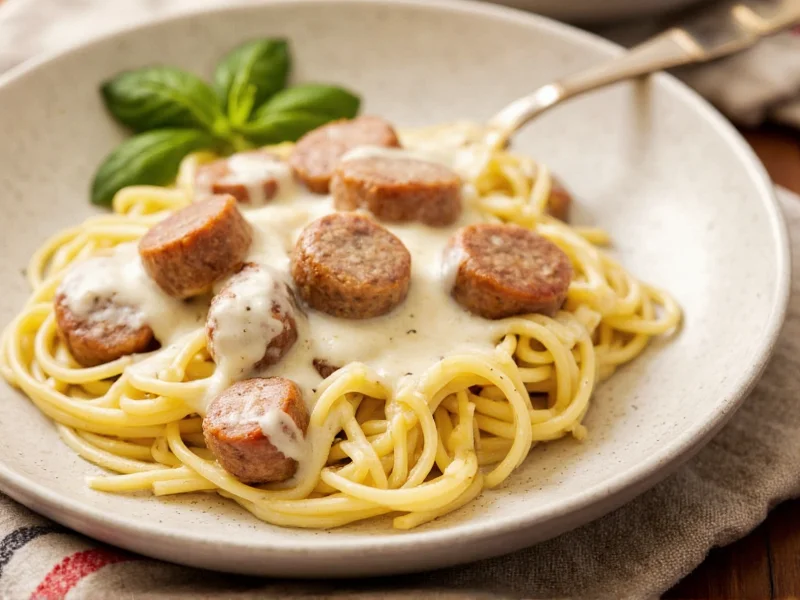
Italian sausage Alfredo is a creamy, satisfying pasta dish combining savory Italian sausage with rich homemade Alfredo sauce. The perfect recipe features sweet or hot Italian sausage, freshly grated Parmesan, heavy cream, garlic, and fettuccine, ready in about 30 minutes with minimal prep work. For best results, use high-quality sausage with visible meat chunks and freshly grated cheese rather than pre-shredded varieties.
Italian sausage Alfredo delivers restaurant-quality comfort food with minimal effort. This beloved pasta dish combines the rich, velvety texture of traditional Alfredo sauce with the savory depth of Italian sausage for a meal that satisfies without requiring advanced cooking skills. The magic happens when quality ingredients work together—freshly grated Parmesan melts smoothly into warm cream, while properly cooked sausage provides just the right amount of seasoning without overwhelming the delicate sauce.
Historical Context: Evolution of an American-Italian Classic
While traditional Fettuccine Alfredo originated in Rome in 1908 at Alfredo di Lelio's restaurant, the sausage variation represents a distinctly American culinary adaptation. According to food historians at the Smithsonian Institution, Italian immigrants in mid-20th century America began incorporating locally available ingredients like sweet fennel sausage into classic recipes, creating heartier dishes suited to American palates. This adaptation reflects broader patterns in Italian-American cuisine where regional Italian dishes evolved through ingredient substitution and portion adjustments, diverging significantly from their Italian counterparts.
Source: Smithsonian Magazine: Historical Evolution of Alfredo Sauce
Essential Ingredients for Authentic Flavor
Quality ingredients make the difference between ordinary and exceptional Italian sausage Alfredo. Avoid pre-shredded cheese which contains anti-caking agents that prevent smooth melting. Similarly, fresh garlic outperforms jarred alternatives, providing brighter flavor notes that complement rather than compete with the sausage.
| Ingredient | Quantity | Notes |
|---|---|---|
| Italian sausage (sweet or hot) | 1 pound | Choose high-fat content (15-20%) for best flavor |
| Fettuccine pasta | 12 ounces | Dried works well; fresh if available |
| Heavy cream | 1 1/2 cups | Do not substitute with half-and-half |
| Parmesan cheese, freshly grated | 1 cup | Use Parmigiano-Reggiano for authentic flavor |
| Garlic, minced | 3 cloves | Fresh only; no powder substitutes |
| Unsalted butter | 2 tablespoons | For finishing the sauce |
| Salt and black pepper | To taste | Adjust after sausage flavor develops |
Step-by-Step Cooking Instructions
Preparing the Sausage
Remove sausage from casings and crumble into a cold skillet. Turn heat to medium and cook slowly, stirring occasionally, until browned and cooked through (about 8-10 minutes). Properly cooked sausage should reach 160°F internally, meeting USDA food safety standards for ground pork. Remove sausage with a slotted spoon, leaving about 1 tablespoon of rendered fat in the pan for flavor base.
Creating the Alfredo Sauce
Add minced garlic to the sausage drippings and sauté for 1 minute until fragrant but not browned. Pour in heavy cream, bring to a gentle simmer (do not boil vigorously), and reduce heat to low. Gradually whisk in grated Parmesan until fully incorporated and smooth. Continue cooking on lowest heat for 3-4 minutes to allow flavors to meld. Remove from heat and stir in butter for added richness.
Combining Pasta and Sauce
Cook fettuccine according to package directions until al dente. Reserve 1/2 cup pasta water before draining. Toss hot pasta directly in the saucepan with Alfredo sauce, adding reserved pasta water as needed to achieve proper consistency. Fold in cooked sausage and heat through for 1-2 minutes. The starch in the pasta water helps the sauce cling to noodles.
Pro Tips for Perfect Italian Sausage Alfredo
Temperature control proves crucial when making homemade Alfredo sauce. Never allow the cream to boil rapidly after adding cheese, as this causes separation. If sauce appears too thin, cook an additional 2-3 minutes to reduce. For thicker sauce, add more cheese gradually. Always remove the pan from heat before incorporating cheese to prevent clumping.
Seasoning requires careful attention since Italian sausage already contains salt and spices. Taste the finished dish before adding additional salt. Freshly cracked black pepper enhances flavor without overwhelming other components. For optimal texture, serve immediately after preparation as Alfredo sauce thickens considerably upon cooling.
Popular Variations to Customize Your Dish
Many home cooks enhance their Italian sausage Alfredo with additional ingredients that complement rather than compete with the primary flavors. Sautéed mushrooms add earthy notes that pair beautifully with sausage. Roasted red peppers introduce subtle sweetness and vibrant color. For vegetarians, substitute sausage with plant-based alternatives and add sun-dried tomatoes for depth.
Gluten-free versions work well using high-quality rice or corn pasta, though cooking times may vary. Some chefs incorporate a splash of white wine during sausage cooking for added complexity. For lighter versions, replace half the cream with whole milk, but never use low-fat alternatives which compromise texture due to insufficient fat content for stable emulsification.
Serving Suggestions and Pairings
Italian sausage Alfredo shines when served with simple accompaniments that don't compete with its rich profile. A crisp arugula salad with lemon vinaigrette provides refreshing contrast. Garlic bread makes a classic pairing for soaking up extra sauce. For wine pairings, choose medium-bodied whites like Pinot Grigio or unoaked Chardonnay that won't overpower the dish.
When plating, twirl pasta into nests using tongs for elegant presentation. Garnish with additional grated Parmesan and freshly cracked black pepper. For special occasions, add a sprinkle of fresh parsley or chives for color contrast. The dish serves 4 generously, making it ideal for weeknight dinners or casual entertaining.
Storage and Reheating: Critical Safety Parameters
Store leftovers in an airtight container in the refrigerator for up to 3 days, strictly adhering to USDA Food Safety and Inspection Service guidelines for cooked dairy-based dishes. The USDA confirms dairy-containing pasta dishes remain safe for consumption only within this 3-4 day window due to rapid bacterial growth risks in temperature danger zones. Reheat gently in a saucepan over low heat with a splash of cream or milk to restore proper consistency. Microwave reheating often results in uneven texture, but if necessary, use 30-second intervals with stirring between each. Never freeze Alfredo-based dishes as dairy separation occurs during thawing, a phenomenon verified by food science research on emulsion breakdown in high-fat dairy sauces.




 浙公网安备
33010002000092号
浙公网安备
33010002000092号 浙B2-20120091-4