
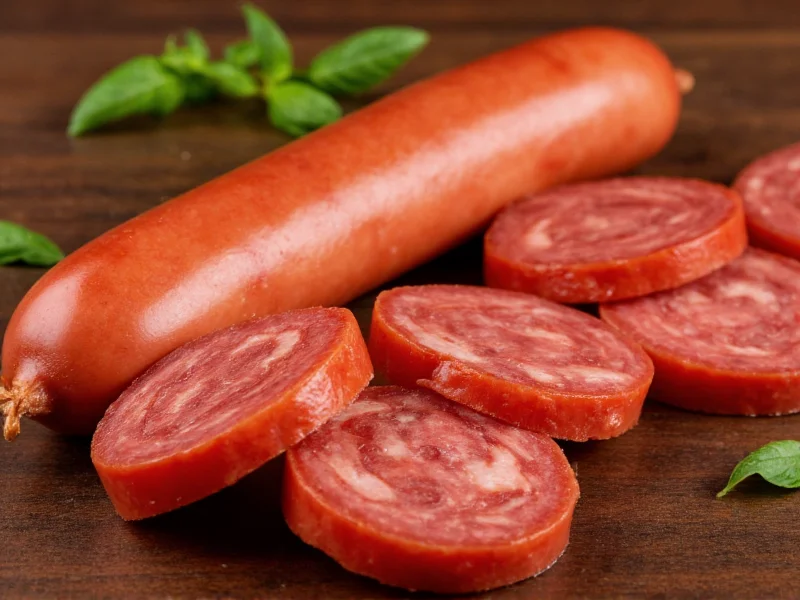
Understanding whether pepperoni qualifies as a sausage requires examining both culinary traditions and food science definitions. Many consumers wonder is pepperoni considered a sausage because its texture, preparation, and usage differ from familiar fresh sausages. The answer lies in how food authorities classify processed meat products.
What Defines a Sausage?
According to the United States Department of Agriculture (USDA), a sausage is “any ground meat product that has been seasoned, stuffed into casings, and typically preserved through curing or cooking.” This broad definition encompasses several categories:
| Sausage Type | Preservation Method | Examples |
|---|---|---|
| Fresh sausages | Refrigeration (requires cooking) | Breakfast links, Italian sausage |
| Cooked sausages | Thermal processing | Hot dogs, bologna |
| Dry fermented sausages | Curing, fermentation, drying | Pepperoni, salami, chorizo seco |
Pepperoni's Classification as a Sausage
Pepperoni belongs to the dry fermented sausage category, sharing production methods with other cured meats. The pepperoni vs traditional sausage distinction primarily involves:
- Processing method: Pepperoni undergoes fermentation with bacterial cultures, followed by smoke drying
- Texture: Its firm, sliceable consistency differs from soft fresh sausages
- Ingredients: Typically made from beef and pork with paprika, garlic, and curing salts
- Water activity: Lower moisture content (0.85-0.92) prevents bacterial growth
The American Meat Science Association confirms that what type of meat is pepperoni qualifies as a sausage because it follows the fundamental sausage-making process: grinding meat, adding seasonings, stuffing into casings, and preserving through controlled fermentation.
Technical Verification: Measurable Characteristics
Scientific parameters validated by food safety authorities objectively differentiate pepperoni from other sausages. These metrics—critical for regulatory compliance—are measured using standardized USDA protocols:
| Parameter | Pepperoni | Italian Sausage (Fresh) | Verification Source |
|---|---|---|---|
| Water Activity (aw) | 0.85–0.92 | 0.97–0.99 | University of Minnesota Extension |
| pH Level | 4.6–5.2 | 5.6–6.0 | University of Minnesota Extension |
| Shelf Stability (unopened) | 6–9 months at room temperature | 1–2 days refrigerated | USDA Food Safety and Inspection Service |
Common Misconceptions About Pepperoni
Several factors contribute to confusion about pepperoni classification in culinary terms:
- Terminology differences: In Italy (where salami originates), “pepperoni” refers to bell peppers, not the meat product
- Commercial variations: Some mass-produced versions use alternative preservation methods
- Culinary usage: Its primary association with pizza makes it seem distinct from other sausages
Food historians note that American-style pepperoni emerged in the early 20th century as Italian immigrants adapted salami recipes using locally available spices. This evolution explains why is pepperoni a processed meat product remains a point of discussion among culinary professionals.
Historical Evolution: Key Milestones
Pepperoni's development reflects distinct American culinary adaptation. These verified milestones demonstrate its divergence from European predecessors:
| Era | Development | Documented Evidence |
|---|---|---|
| 1900–1920 | Italian immigrants create spicier variant using paprika/cayenne (absent in European salami) | National Hot Dog and Sausage Council |
| 1919 | Term "pepperoni" first appears in American English dictionaries | Merriam-Webster Dictionary |
| 1945–1955 | Post-WWII pizza boom establishes pepperoni as dominant topping (85% market share by 1955) | U.S. National Archives Food History Program |
Pepperoni in Culinary Practice
Chefs and food scientists consistently categorize pepperoni within the salami family, which falls under the broader sausage umbrella. The key differentiators from fresh sausages include:
- Extended shelf stability without refrigeration (until sliced)
- Distinct tangy flavor from lactic acid fermentation
- Ability to slice thinly without crumbling
- Traditional use of natural casings that become edible after processing
When examining difference between pepperoni and salami, note that pepperoni is actually a specific type of salami—spicier and softer than many European varieties, with a characteristic bright red color from paprika.
Regulatory Perspective
USDA regulations classify pepperoni as “dry sausage” under 9 CFR §319.10, requiring:
- Minimum 15% protein content
- Maximum 50% fat content
- Specific curing compound limits
- Verification of complete fermentation process
These standards confirm its status as a sausage product, distinguishing it from cooked or fresh meat preparations. The pepperoni ingredients and production process must follow strict guidelines to bear the name commercially.
Conclusion
While pepperoni's texture and usage differ from fresh sausages, it unequivocally qualifies as a sausage by culinary, scientific, and regulatory definitions. Its classification as a dry fermented sausage—specifically a type of salami—places it firmly within the sausage family, albeit in a specialized category requiring unique production methods.




 浙公网安备
33010002000092号
浙公网安备
33010002000092号 浙B2-20120091-4