
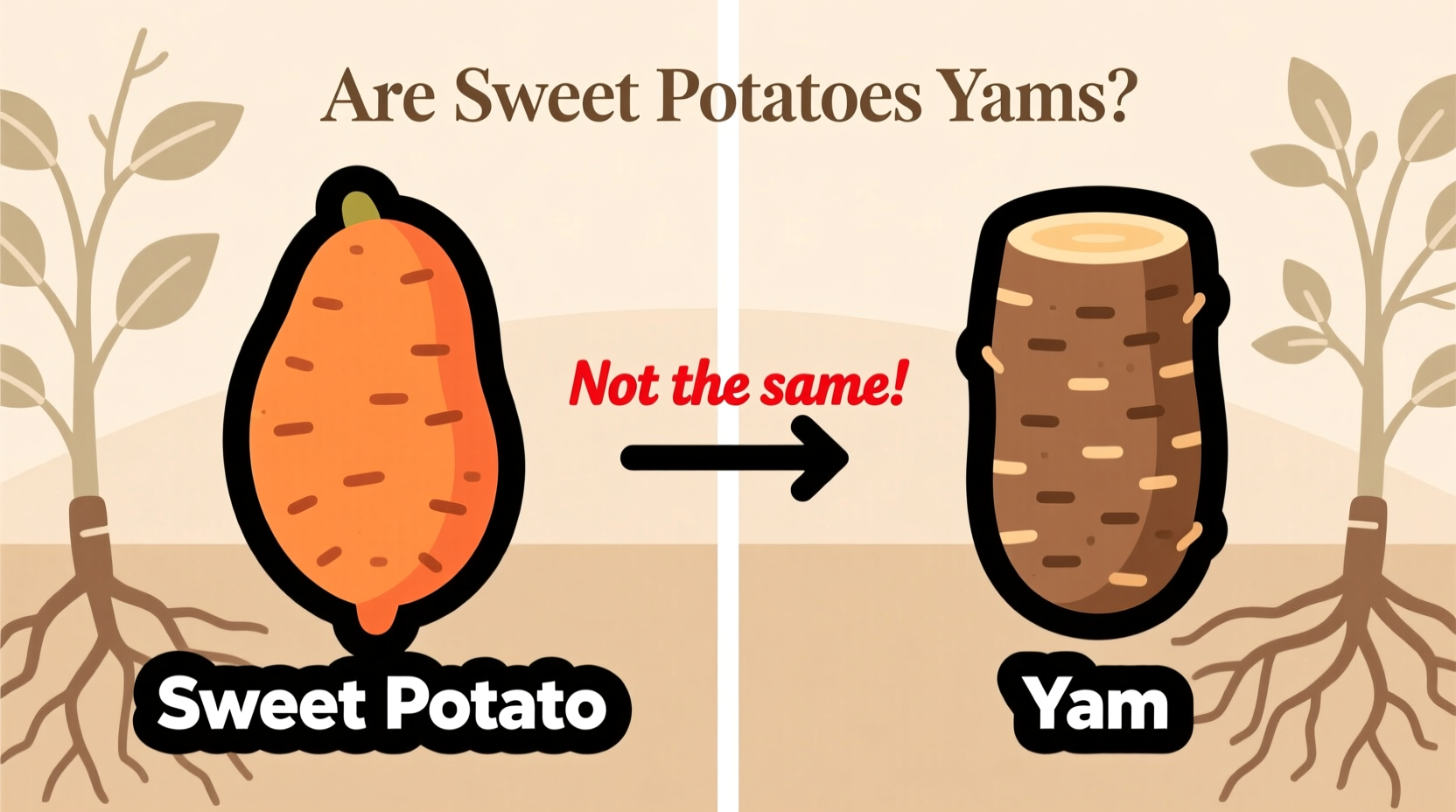
Confused about whether that orange "yam" in your grocery store is actually a sweet potato? You're not alone. This widespread misunderstanding affects millions of shoppers who think they're buying yams when they're actually selecting sweet potatoes. Let's clear up this culinary confusion once and for all with science-backed facts you can trust.
Why the Sweet Potato vs Yam Confusion Exists
The mix-up between sweet potatoes and yams dates back to early American history. When soft varieties of sweet potatoes were introduced to the United States, merchants began calling them "yams" to distinguish them from the firmer varieties already available. This marketing tactic took hold, and today most "yams" sold in American grocery stores are actually sweet potatoes.
| Characteristic | Sweet Potato | True Yam |
|---|---|---|
| Scientific Family | Convolvulaceae (morning glory) | Dioscoreaceae |
| Origin | Central and South America | Africa, Asia, and the Caribbean |
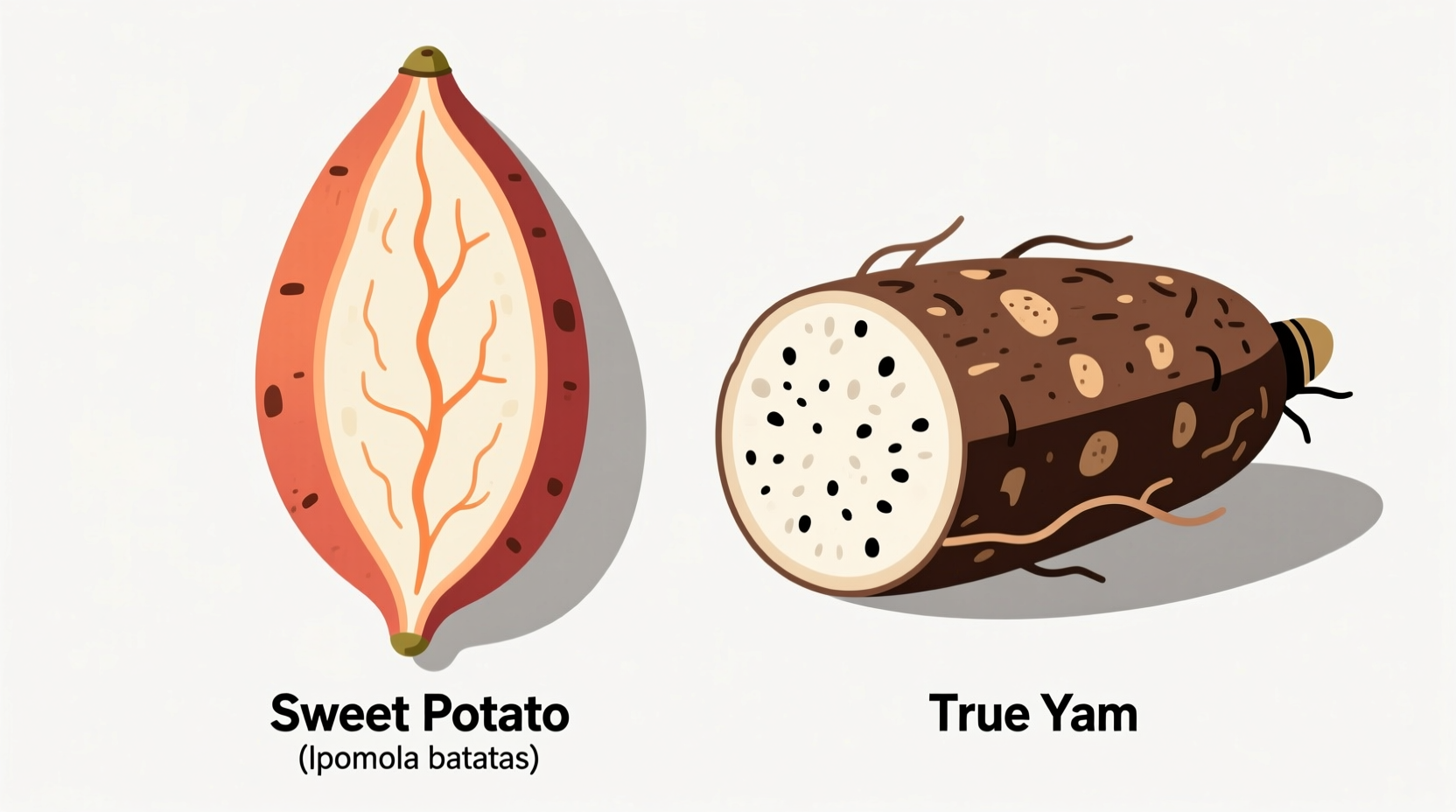
| Skin Texture | Thin, smooth, often reddish | Thick, rough, bark-like |
| Flesh Color | Orange, white, purple | White, yellow, purple |
| Shape | Tapered ends | Cylindrical, often very large |
| Taste | Sweet | Starchy, less sweet |
How to Identify What You're Really Buying
When shopping in North America or Europe, what's labeled as "yams" are almost always sweet potatoes. True yams are rarely found outside of specialty international markets and have these distinguishing features:
- Thick, scaly skin that resembles tree bark
- Massive size - some varieties can grow over 100 pounds
- Starchy, less sweet flesh that's typically white or yellow
- Requires longer cooking time than sweet potatoes
According to the USDA's Agricultural Marketing Service, sweet potatoes sold in the United States must be labeled as such, with any reference to "yams" accompanied by the term "sweet potato." Despite this regulation, the mislabeling persists in many grocery stores.
Nutritional Differences You Should Know
While both are nutritious, sweet potatoes and yams have different nutritional profiles that might influence your dietary choices:
- Vitamin A: Sweet potatoes contain significantly more beta-carotene (which converts to vitamin A), especially the orange varieties. A single medium sweet potato provides over 400% of your daily vitamin A needs.
- Carbohydrates: Yams generally contain more carbohydrates and calories per serving than sweet potatoes.
- Potassium: Both are excellent sources, but sweet potatoes edge out yams slightly in potassium content.
- Glycemic index: Sweet potatoes typically have a lower glycemic index than yams, making them a better option for blood sugar management.
Data from the USDA FoodData Central confirms that orange-fleshed sweet potatoes are among the richest dietary sources of beta-carotene, while true yams contain minimal amounts of this important nutrient.
When True Yams Are Actually Available
If you're looking for authentic yams, you'll need to visit specialty African or Caribbean markets. In these contexts, you'll find several varieties including:
- White yam (Dioscorea rotundata) - The most commonly consumed yam worldwide
- Yellow yam (Dioscorea cayenensis) - Has yellow flesh and a slightly different flavor profile
- Water yam (Dioscorea alata) - Also called purple yam due to its sometimes violet flesh
According to research from the International Institute of Tropical Agriculture, yams represent a staple food for over 60 million people in West Africa, where they hold significant cultural importance beyond just nutrition.
Practical Tips for Your Next Grocery Trip
Now that you know the difference, here's how to navigate the produce section with confidence:
- Check the label carefully - Look for "sweet potato" in small print beneath "yam"
- Examine the skin - If it's smooth and thin, it's definitely a sweet potato
- Consider the color - Bright orange flesh means sweet potato; white or pale yellow suggests true yam
- Ask the produce manager - They should know what they're actually selling
- For authentic yams - Visit specialty international markets that cater to African or Caribbean communities
Understanding this distinction matters for more than just accurate labeling—it affects your cooking results and nutritional intake. Sweet potatoes caramelize beautifully when roasted, while true yams maintain a more starchy texture even when cooked thoroughly.
Common Misconceptions Debunked
Let's address some persistent myths about sweet potatoes and yams:
- Myth: The terms are interchangeable worldwide
Fact: Outside North America, "yam" almost always refers to true yams, while sweet potatoes have their own distinct names. - Myth: All orange root vegetables are yams
Fact: Orange-fleshed varieties are exclusively sweet potatoes; true yams rarely have orange flesh. - Myth: Yams are just a variety of sweet potato
Fact: They belong to completely different plant families with no botanical relation.
Botanical research from institutions like the Smithsonian National Museum of Natural History confirms that sweet potatoes and yams diverged evolutionarily thousands of years ago, making them as different from each other as apples are from oranges.




 浙公网安备
33010002000092号
浙公网安备
33010002000092号 浙B2-20120091-4