
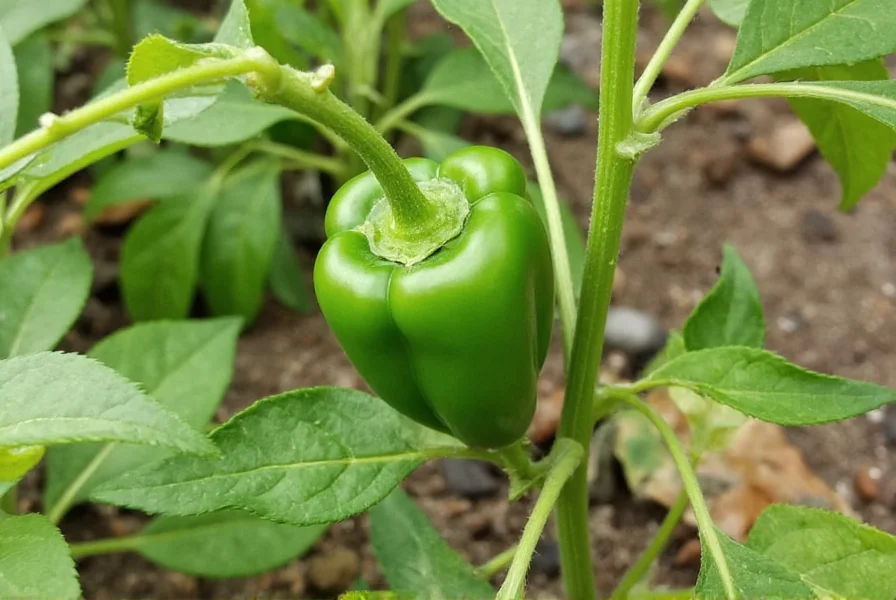
Starting peppers from seeds gives you access to unique varieties you won't find at nurseries and establishes stronger root systems than store-bought plants. Whether you're growing bell peppers, jalapeños, or exotic varieties like ghost peppers, proper seed starting technique significantly impacts your harvest success.
Timing Your Pepper Seed Planting
Peppers require a long growing season and are sensitive to cold temperatures. The timing for planting pepper seeds depends on your climate and whether you're starting them indoors:
| Climate Zone | Indoor Start Time | Outdoor Planting Time | Soil Temperature Requirement |
|---|---|---|---|
| Cold climates (Zones 3-5) | 10-12 weeks before last frost | 2-3 weeks after last frost | At least 65°F (18°C) |
| Moderate climates (Zones 6-7) | 8-10 weeks before last frost | 1-2 weeks after last frost | At least 65°F (18°C) |
| Warm climates (Zones 8-11) | 6-8 weeks before last frost | After soil warms consistently | At least 65°F (18°C) |
Pepper seeds won't germinate well in cold soil. Unlike tomatoes, peppers need consistently warm conditions from the moment you plant the seeds. Starting too early can result in leggy, unhealthy seedlings that struggle after transplanting.
Selecting Quality Pepper Seeds
Choose fresh seeds for best germination rates. Pepper seeds remain viable for 2-3 years when stored properly, but germination rates decline significantly after the first year. Look for:
- Reputable seed companies with clear variety information
- Packaging with current year's date
- Information about days to maturity (important for short-season gardens)
- Organic or treated status if that matters to your gardening approach
Hot pepper seeds often have lower germination rates than sweet peppers, so consider planting extra seeds of varieties like habaneros or ghost peppers.
Preparing for Planting
Before planting pepper seeds, gather these essential supplies:
- Seed starting trays with drainage holes or small pots (2-3" diameter)
- High-quality seed starting mix (not regular potting soil)
- Heat mat (critical for consistent germination)
- Grow lights or sunny south-facing window
- Plastic humidity dome or plastic wrap
- Small watering can or spray bottle
The best soil for planting pepper seeds is a sterile, fine-textured seed starting mix that retains moisture without becoming waterlogged. Regular potting soil is too dense for delicate seedlings and may contain pathogens that cause damping-off disease.
Step-by-Step Planting Instructions
Follow these precise steps for successful pepper seed planting:
- Moisten the seed starting mix before planting - it should feel like a damp sponge
- Fill containers leaving 1/2 inch space at the top
- Plant 2-3 seeds per cell at the proper depth - how deep to plant pepper seeds is crucial (1/4 inch deep)
- Cover lightly with seed starting mix and mist with water
- Cover with humidity dome to maintain moisture during germination
- Place on heat mat set to 80-85°F (27-29°C) - this is the ideal pepper seed germination temperature
- Provide bottom heat until seeds sprout - peppers need consistent warmth
Understanding the biochemical requirements behind these steps increases success rates. Pepper seeds contain temperature-sensitive enzymes that initiate germination; the 80-85°F range optimizes enzyme activity for metabolic processes (University of California Agriculture and Natural Resources). Planting depth at 1/4 inch balances moisture retention with oxygen availability, as deeper planting creates anaerobic conditions that inhibit germination (Cornell University Vegetable Program).
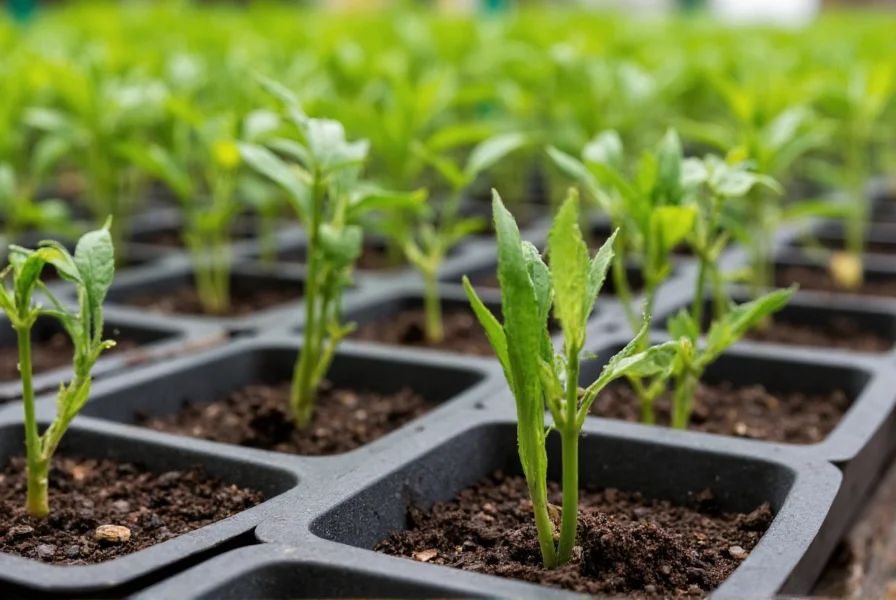
Germination and Early Seedling Care
Pepper seeds typically take 7-21 days to sprout, depending on variety and conditions. This is significantly longer than many other garden vegetables. Patience is essential when learning how long do pepper seeds take to sprout.
Germination Timeline by Temperature
Germination time varies significantly based on soil temperature. The following table shows typical germination periods for pepper seeds at different temperatures, based on research from the University of Minnesota Extension:
| Soil Temperature | Expected Germination Time | Germination Success Rate |
|---|---|---|
| 85°F (29°C) | 7-14 days | 85-95% |
| 75°F (24°C) | 14-21 days | 70-80% |
| 65°F (18°C) | 21-28 days | 50-60% |
| Below 60°F (15°C) | Failure or >35 days | <30% |
Source: University of Minnesota Extension: Peppers
Once seedlings emerge:
- Remove the humidity dome immediately
- Move to bright light (14-16 hours daily under grow lights)
- Maintain soil temperature around 75°F (24°C)
- Water when top of soil feels dry, avoiding overwatering
- Thin to one strong seedling per cell by snipping weaker plants
Pepper seedlings grow slowly at first. Don't be concerned if growth seems minimal during the first few weeks - this is normal. Providing consistent warmth and light encourages stronger root development.
Transplanting Pepper Seedlings
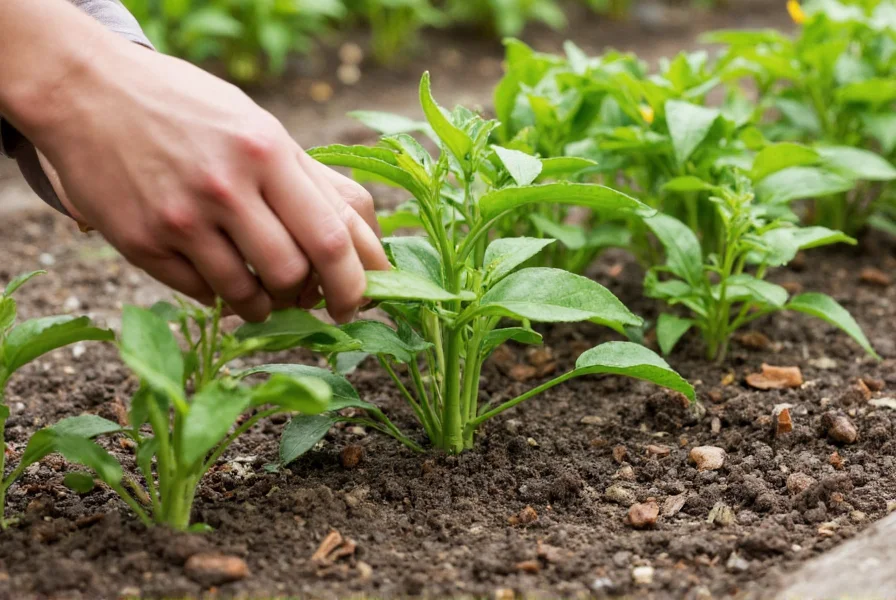
Transplant seedlings when they have 3-4 true leaves and outdoor temperatures are consistently above 50°F (10°C) at night. Proper transplanting pepper seedlings guide technique includes:
- Hardening off seedlings for 7-10 days by gradually increasing outdoor exposure
- Choosing a sunny location with at least 6-8 hours of direct sunlight
- Amending garden soil with compost (peppers prefer slightly acidic soil pH 6.0-6.8)
- Planting at same depth as in containers (unlike tomatoes, don't bury stems)
- Spacing plants 18-24 inches apart in rows 24-36 inches apart
- Watering thoroughly after transplanting and applying mulch
Common Mistakes When Planting Pepper Seeds
Avoid these frequent errors that reduce your pepper harvest:
- Planting too early - results in tall, weak seedlings that struggle after transplanting
- Inconsistent soil temperature - peppers need steady warmth for germination
- Overwatering seedlings - leads to damping-off disease and root rot
- Insufficient light - causes leggy, weak plants that produce fewer peppers
- Transplanting too soon - cold soil stunts growth and delays fruiting
- Planting too deep - one of the most critical common mistakes planting pepper seeds
Many gardeners make the mistake of treating pepper seeds like tomato seeds, but peppers have different requirements. They germinate slower, need warmer conditions, and are more sensitive to cold temperatures at all growth stages.
When Direct Sowing Peppers Makes Sense (And When It Doesn't)
While starting seeds indoors is recommended for most climates, direct sowing can be successful in specific conditions. Understanding these context boundaries prevents wasted effort:
- Appropriate for: USDA Hardiness Zones 9-11 with long growing seasons (200+ frost-free days) and consistently warm soil temperatures (above 70°F/21°C) during planting.
- Not recommended for: Zones 8 and below due to insufficient growing season length and cooler soil temperatures that delay germination.
- Critical limitation: Direct sowing requires soil temperatures to remain above 70°F for at least 8 weeks after planting. In most regions, this window is too narrow for reliable harvests.
According to Texas A&M AgriLife Extension, "Direct seeding is only practical in the southernmost parts of Texas where the growing season is long and hot enough to mature the crop." (Source: Texas A&M AgriLife: Peppers)
Troubleshooting Pepper Seed Issues
If you're experiencing problems with your pepper seeds, here's how to diagnose and fix common issues:
- Seeds not sprouting: Check soil temperature (must be 75-85°F), ensure consistent moisture, and verify seed freshness
- Leggy seedlings: Increase light intensity or duration, lower room temperature slightly
- Yellowing leaves: Could indicate overwatering, nutrient deficiency, or cold stress
- Damping-off disease: Improve air circulation, reduce watering, use sterile seed mix
- Slow growth after transplanting: Soil may be too cold - use black plastic mulch to warm soil
Remember that hot pepper varieties generally take longer to germinate and grow more slowly than sweet peppers. This is normal and not necessarily a sign of problems.
Final Thoughts
Successfully growing peppers from seed requires attention to temperature, timing, and proper technique. By following these guidelines for how to plant pepper seeds, you'll establish healthy plants that produce abundant harvests. Remember that patience is key - peppers grow slower than many other garden vegetables but reward careful growers with superior flavor and variety options. With proper care from seed to harvest, your homegrown peppers will outperform store-bought varieties in both taste and freshness.




 浙公网安备
33010002000092号
浙公网安备
33010002000092号 浙B2-20120091-4