

Perfectly baked Japanese sweet potatoes require washing, piercing, and baking at 400°F (200°C) for 45-60 minutes until tender. The skin becomes slightly crispy while the interior transforms into a creamy, caramelized delight with natural sweetness intensified through proper baking technique.
Discover how to bake Japanese sweet potatoes to achieve that perfect balance of crispy skin and velvety interior with minimal effort. This foolproof method transforms how to bake japanese sweet potato from a simple side dish into a culinary experience that highlights the unique characteristics of this special ingredient. Whether you're new to Japanese sweet potatoes or looking to perfect your technique, you'll learn the exact temperature, timing, and preparation steps that make all the difference.
Unlike regular sweet potatoes, Japanese varieties like Murasaki or Satsumoimo offer a distinct flavor profile that shines when baked properly. This guide cuts through the confusion about baking japanese sweet potatoes in oven by providing precise instructions based on food science principles and traditional preparation methods.
Why Japanese Sweet Potatoes Deserve Special Attention
Japanese sweet potatoes (known as "satsumaimo" in Japan) differ significantly from their orange-fleshed American counterparts. With purple skin and creamy white to pale yellow flesh, they contain less moisture and more natural sugars, creating a uniquely sweet, chestnut-like flavor when baked properly.
| Characteristic | Japanese Sweet Potato | Regular Orange Sweet Potato |
|---|---|---|
| Texture when baked | Creamy, dense, slightly dry | Moist, softer |
| Sugar content | Higher natural sugars | Moderate sugars |
| Best cooking method | Dry heat baking | Moist heat methods work better |
| Flavor profile | Chestnut-like, honeyed | Caramel, earthy |
This difference between japanese sweet potato and regular explains why standard sweet potato baking instructions often fall short with Japanese varieties. The lower moisture content means they require slightly different handling to prevent drying out while still achieving that desirable caramelization.
Preparing Japanese Sweet Potatoes for Baking
Proper preparation sets the stage for perfect results when you bake japanese sweet potatoes in oven. Follow these essential steps:
Selection and Cleaning
Choose firm potatoes without soft spots or deep bruises. Medium-sized potatoes (about 6-8 ounces each) bake most evenly. Gently scrub under cool running water using a soft brush to remove dirt while preserving the delicate skin. Unlike regular sweet potatoes, Japanese varieties have thinner skin that's perfectly edible when baked.
Piercing Technique
Use a fork to make 4-6 shallow piercings around each potato. This allows steam to escape during baking, preventing potential bursting. Don't skip this step - Japanese sweet potatoes have denser flesh that builds pressure more readily during baking.
The Perfect Baking Method
Follow this precise method for consistently excellent results when you how to bake japanese sweet potato:
Temperature and Placement
Preheat your oven to 400°F (200°C). Place potatoes directly on the middle oven rack with a baking sheet on the rack below to catch any potential drips. Avoid wrapping in foil - this creates steam that prevents the desirable caramelization of natural sugars.
Baking Timeline
Understanding the transformation process when baking japanese sweet potatoes helps you recognize perfect doneness:
- 0-20 minutes: Moisture begins evaporating from the surface
- 20-35 minutes: Starches convert to sugars through enzymatic action
- 35-45 minutes: Maillard reaction creates complex flavors and aromas
- 45-60 minutes: Interior reaches ideal creamy texture (time varies by size)
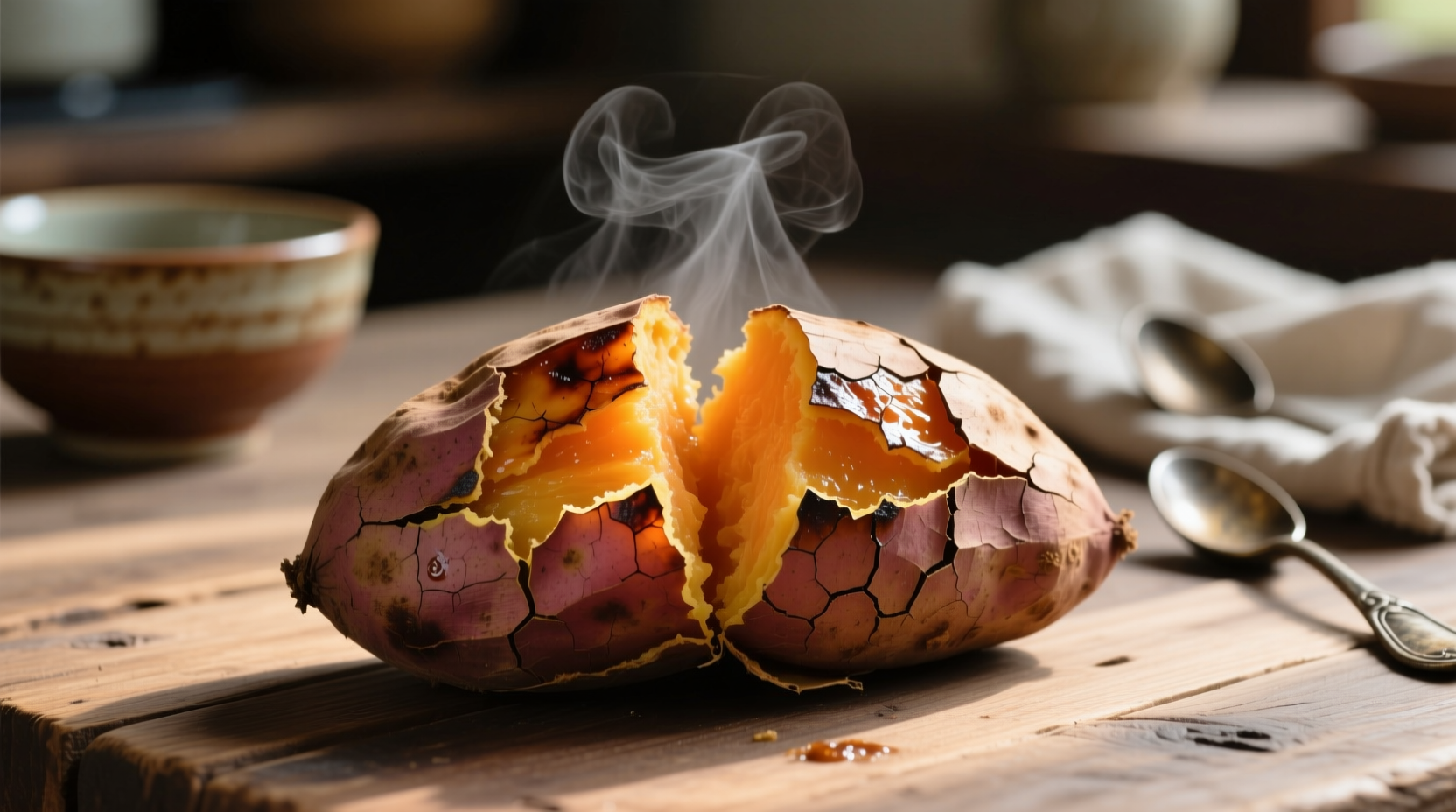
Bake for 45-60 minutes, depending on size. The potatoes are done when a fork inserts easily into the thickest part and the skin appears slightly shrunken with possible sugar bubbles forming on the surface.
Testing for Doneness
Don't rely solely on timing. The perfect baked Japanese sweet potato will:
- Feel slightly soft when gently squeezed (use oven mitts!)
- Have skin that pulls away slightly from any cuts or piercings
- Release a sweet, caramel-like aroma
- Register 205-210°F (96-99°C) internally when checked with a thermometer
Serving Your Perfectly Baked Japanese Sweet Potato
Unlike regular sweet potatoes that often need added sweeteners, Japanese varieties shine with minimal accompaniments. Simply slice open and let the natural sweetness work its magic.
Classic Serving Method
Cut a slit lengthwise across the top, then gently squeeze the ends toward the center to expose the creamy interior. A small pat of unsalted butter (about 1 teaspoon) allows the natural flavors to shine without overwhelming them. For authentic Japanese presentation, serve on a small wooden plate with chopsticks.
Flavor Enhancements
While delicious on their own, these pairings elevate your baked japanese sweet potato experience:
- A light sprinkle of flaky sea salt enhances natural sweetness
- Toasted sesame seeds add nutty complexity
- A drizzle of high-quality maple syrup complements rather than masks flavor
- Freshly grated yuzu zest provides bright citrus notes
Troubleshooting Common Baking Issues
Even with perfect technique, challenges can arise when you bake japanese sweet potatoes. Here's how to address them:
Dry or Rubbery Texture
If your potatoes come out dry or rubbery, they've likely been overbaked. Japanese sweet potatoes have less moisture than orange varieties, so reduce baking time by 5-10 minutes next time. Check for doneness starting at 40 minutes for medium-sized potatoes.
Uneven Cooking
For unevenly cooked potatoes (soft in some spots, hard in others), rotate the potatoes halfway through baking. This compensates for hot spots in your oven. Using an oven thermometer ensures accurate temperature, as many ovens run hotter or cooler than indicated.
Excessive Sugar Leakage
Some sugar leakage is normal and creates delicious caramelized spots, but excessive leakage indicates overripeness or damage to the skin. Choose firm, unblemished potatoes and avoid deep piercings that create large escape routes for the sugars.
Storage and Reheating Tips
Properly stored baked Japanese sweet potatoes maintain quality for future enjoyment. Cool completely, then store in an airtight container in the refrigerator for up to 5 days. For longer storage, freeze in portion-sized containers for up to 3 months.
Reheat in a 350°F (175°C) oven for 15-20 minutes for best texture. Avoid microwaving, which creates uneven heating and a gummy texture. The oven method restores the desirable contrast between slightly crispy skin and creamy interior.
Why This Method Works Best
The science behind successful how to bake japanese sweet potato lies in understanding the unique composition of these tubers. According to research from the USDA Agricultural Research Service, Japanese sweet potatoes contain higher concentrations of maltose-forming enzymes that activate between 135-170°F (57-77°C), creating their signature sweetness during the baking process.
Unlike boiling or steaming, dry-heat baking allows surface moisture to evaporate, concentrating flavors and enabling the Maillard reaction that develops complex flavor compounds. This explains why the traditional Japanese method of baking rather than boiling preserves the distinctive characteristics that make these sweet potatoes special.
Frequently Asked Questions
Can I bake Japanese sweet potatoes without washing them?
While technically possible, washing is strongly recommended. Japanese sweet potatoes grow underground and may contain soil particles that could affect taste and texture. Gently scrubbing removes surface contaminants while preserving the delicate skin that becomes deliciously edible when baked.
Why does my baked Japanese sweet potato taste different from restaurant versions?
Restaurant versions often use specialized equipment like convection ovens that circulate hot air more evenly. Home ovens typically require 5-10 minutes longer baking time. Additionally, many Japanese restaurants select specific cultivars like Beni Azuma that have optimal sugar content for baking, which may differ from varieties available in regular grocery stores.
How do I know when Japanese sweet potatoes are perfectly baked?
Perfectly baked Japanese sweet potatoes will have slightly shrunken skin with possible sugar bubbles forming on the surface. They should feel soft when gently squeezed (using oven mitts) and a fork should insert easily into the thickest part. The internal temperature should register between 205-210°F (96-99°C) when checked with a thermometer.
Can I use the same method for regular sweet potatoes?
While similar, regular orange sweet potatoes have higher moisture content and benefit from slightly different treatment. They typically require lower temperatures (375°F/190°C) and may need wrapping in foil to prevent drying out. Japanese sweet potatoes' lower moisture content makes them ideal for direct baking without foil, which creates their distinctive texture and concentrated flavor.




 浙公网安备
33010002000092号
浙公网安备
33010002000092号 浙B2-20120091-4