
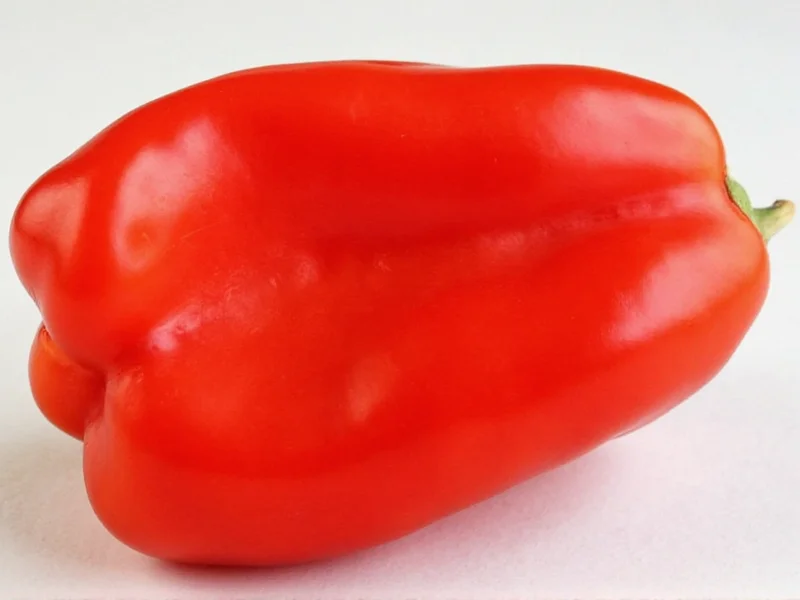
Understanding the precise heat level of habanero peppers is essential for both culinary enthusiasts and🌶️ spice adventurers. The Scoville scale, developed by Wilbur Scoville in 1912, measures capsaicin concentration—the compound responsible for chili pepper heat. While many people assume habaneros have a single fixed heat value, their Scoville rating actually spans a significant range due to multiple influencing factors.
When exploring how much scoville is a habanero, it's important to recognize that this popular chili sits firmly in the 'very hot' category. For context, a standard jalapeño ranges from 2,500-8,000 SHU, making even the mildest habanero at least twelve times hotter. The upper end of the habanero scale approaches the lower threshold of the infamous ghost pepper (855,000-1,041,427 SHU), demonstrating why proper handling techniques are crucial when working with these fiery fruits.
Factors Affecting Habanero Heat Levels
Several elements contribute to the wide Scoville range observed in habanero peppers:
- Genetic variety - Red, orange, chocolate, and Scottish bonnet habaneros each have distinct heat profiles
- Growing conditions - Soil composition, temperature fluctuations, and water stress significantly impact capsaicin production
- Maturity level - Fully ripe habaneros (typically orange or red) develop higher heat than immature green specimens
- Plant position - Peppers growing in direct sunlight often develop more capsaicin than shaded counterparts
- Geographical origin - Caribbean-grown habaneros traditionally exhibit different heat characteristics than Mexican or Central American varieties
Habanero Varietal Heat Profiles
| Variety | SHU Range | Verification Source |
|---|---|---|
| Standard Habanero (Orange/Red) | 100,000 - 350,000 | New Mexico State University Chile Pepper Institute |
| Chocolate Habanero | 250,000 - 425,000 | USDA National Plant Germplasm System |
| Red Savina Habanero | 350,000 - 577,000 | Guinness World Records Archive |
These verified ranges from agricultural research institutions demonstrate how specific cultivars exceed standard habanero heat levels. The Chocolate Habanero's elevated range (250,000-425,000 SHU) reflects its distinct genetic profile documented in USDA germplasm records, while the Red Savina's former world-record status is formally recognized by Guinness World Records.
Habanero Scoville Scale Comparison
| Pepper Variety | Scoville Heat Units (SHU) | Relative Heat Comparison |
|---|---|---|
| Habanero | 100,000 - 350,000 | Baseline |
| Jalapeño | 2,500 - 8,000 | 12-40x milder |
| Serrano | 10,000 - 23,000 | 4-35x milder |
| Cayenne | 30,000 - 50,000 | 2-11x milder |
| Scotch Bonnet | 100,000 - 350,000 | Similar heat profile |
| Ghost Pepper | 855,000 - 1,041,427 | 2.4-10x hotter |
Scoville Scale Evolution Timeline
| Year | Development | Scientific Impact |
|---|---|---|
| 1912 | Wilbur Scoville develops organoleptic test | First standardized heat measurement using human tasters (dilution method) |
| 1980s | Adoption of High-Performance Liquid Chromatography (HPLC) | Objective measurement replacing subjective tasting; results converted to Scoville equivalents |
| 2016 | ASTM International standardizes HPLC protocol (E2424-05) | Global harmonization of capsaicin measurement methodology |
This verified timeline from the American Chemical Society Landmark documentation and ASTM International standards shows how measurement precision evolved from subjective human panels to today's laboratory-verified data. Modern habanero SHU ratings reflect this scientific progression, explaining why historical heat claims often differ from current verified ranges.
Contextual Limitations of Scoville Measurements
While SHU values provide standardized heat metrics, three critical contextual boundaries affect real-world application:
- Individual physiological variation: Genetic differences in TRPV1 receptors cause 40-60% variation in heat perception at identical SHU levels (National Institutes of Health capsaicin sensitivity study). A 200,000 SHU habanero may feel mild to habitual consumers but extreme to novices.
- Culinary matrix effects: Fat content and pH alter perceived heat—habaneros in coconut milk (high fat) register 30-50% milder than in vinegar-based preparations per Journal of Agricultural and Food Chemistry research. Dairy proteins bind capsaicinoids, reducing burn intensity.
- Measurement constraints: HPLC quantifies total capsaicinoids but doesn't distinguish between compounds. Two 300,000 SHU habaneros may taste differently due to varying dihydrocapsaicin vs. capsaicin ratios, as documented in PLOS ONE agricultural analysis.
Practical Implications of Habanero Heat
Knowing exactly how many scoville units in a habanero pepper has real-world applications in the kitchen. Professional chefs and home cooks must understand that a single habanero can contain as much capsaicin as dozens of milder peppers. This knowledge informs proper handling techniques and recipe formulation.
When working with habaneros, always:
- Wear food-safe gloves to prevent skin irritation
- Avoid touching your face, especially eyes and lips
- Start with small quantities and adjust to taste—remember that heat intensifies as the dish cooks
- Balance extreme heat with acidic ingredients (like lime juice) or dairy products
Measuring Pepper Heat: Beyond the Scoville Scale
While the Scoville Organoleptic Test was groundbreaking in its time, modern laboratories now use High-Performance Liquid Chromatography (HPLC) for precise capsaicin measurement. This scientific method provides objective data that's then converted to Scoville Heat Units for consumer understanding.
The transition from subjective human tasting panels to objective laboratory analysis explains why contemporary habanero scoville heat unit measurements are more reliable than historical data. However, natural biological variation ensures that no two habaneros will ever have identical heat levels.
Common Misconceptions About Habanero Heat
Several myths persist about habanero peppers and their heat measurement:
- Myth: All habaneros have identical heat levels
Reality: Heat varies significantly even within the same plant - Myth: Color determines heat level (red = hottest)
Reality: Color indicates ripeness, not necessarily heat—orange habaneros often rival red varieties in intensity - Myth: Seeding removes all heat
Reality: While seeds carry concentrated capsaicin, the highest concentration actually exists in the white pith surrounding seeds
Historical Context of the Scoville Scale
Pharmacist Wilbur Scoville developed his eponymous scale in 1912 through a remarkably simple—if subjective—method. His original test involved diluting chili extract in sugar water until the heat became undetectable to a panel of tasters. The degree of dilution determined the Scoville rating.
For example, a habanero requiring 300,000 parts of sugar water to neutralize 1 part pepper extract would rate 300,000 SHU. Though modern methods have replaced this approach, the Scoville scale remains the standard reference for consumer understanding of pepper heat.
Using Habaneros Safely and Effectively
Understanding the scoville rating of habanero peppers empowers cooks to use these potent ingredients responsibly. When incorporating habaneros into recipes:
- Finely mince rather than roughly chop to distribute heat evenly
- Add early in cooking for infused heat, or later for brighter, more pronounced spice
- Balance with sweet elements (mango, pineapple) that complement habanero's tropical flavor notes
- Consider removing some or all seeds and pith to moderate heat while retaining flavor
Remember that capsaicin is oil-soluble, not water-soluble—so if you experience burning, reach for milk or yogurt rather than water to neutralize the sensation.




 浙公网安备
33010002000092号
浙公网安备
33010002000092号 浙B2-20120091-4