
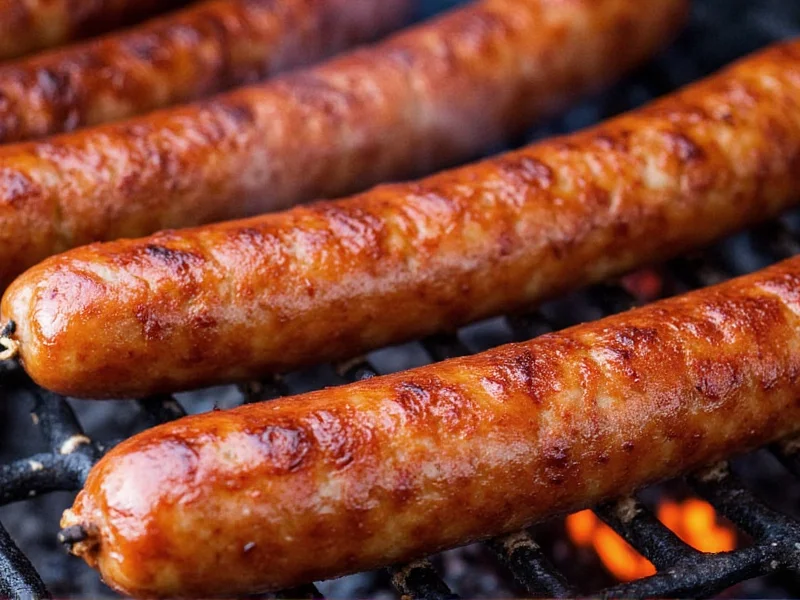
Grilling Italian sausage perfectly requires understanding both timing and technique. While the standard timeframe serves as a reliable guideline, several factors influence the precise grilling duration needed for optimal results. This comprehensive guide provides professional insights to help you achieve perfectly grilled Italian sausage every time.
Factors That Affect Italian Sausage Grilling Time
The 15-20 minute guideline represents average conditions, but these variables significantly impact your actual cooking time:
| Factor | Impact on Grilling Time | Recommendation |
|---|---|---|
| Sausage Thickness | Thicker sausages require longer cooking | Adjust time by 2-4 minutes per ¼ inch of diameter |
| Grill Temperature | Higher heat reduces time but increases burning risk | Maintain consistent 350-375°F for even cooking |
| Fresh vs. Pre-cooked | Pre-cooked sausages need less time | Reduce time by 5-7 minutes for pre-cooked varieties |
| Meat Type | Pork cooks differently than chicken or turkey | Poultry sausages may need 2-3 minutes longer |
| USDA Safety Standards | Mandates minimum internal temperature regardless of time | Verify 160°F for pork, 165°F for poultry (USDA FSIS, 2023) |
Step-by-Step Guide to Perfectly Grilled Italian Sausage
Preparation Essentials
Proper preparation ensures even cooking and prevents common grilling mistakes. Start by bringing sausages to room temperature for 20-30 minutes before grilling. This reduces cooking time variance between the exterior and interior. Lightly oil the sausages rather than the grill grates to prevent sticking without causing flare-ups. Never pierce Italian sausage before or during grilling, as this releases precious juices and fats that keep the sausage moist.
Optimal Grill Setup
Create a two-zone fire on your grill: one side with medium heat (350-375°F) for cooking, and one side with no heat for a safety zone. This configuration allows you to move sausages away from direct flames if flare-ups occur. For gas grills, preheat for 10-15 minutes with the lid closed. For charcoal grills, wait until the coals have a light ash coating before arranging them for two-zone cooking.
Grilling Process Timeline
Place sausages on the medium-heat side of the grill. Follow this timing framework for best results:
- Minutes 0-5: Sear sausages without moving them to develop a flavorful crust
- Minutes 5-15: Turn every 3-4 minutes for even cooking and attractive grill marks
- Minutes 15-20: Monitor closely as sausages approach doneness
- Final check: Verify internal temperature has reached 160°F (71°C)
Historical Evolution of Safe Cooking Temperatures for Sausage
Food safety guidelines for Italian sausage have evolved significantly based on scientific research. Understanding this history explains why precise temperature monitoring is essential today:
- Pre-2011: All pork products, including ground varieties like Italian sausage, were recommended to be cooked to 160°F as a universal safety standard.
- May 24, 2011: The USDA updated guidelines to allow whole cuts of pork at 145°F with a 3-minute rest period, but specifically maintained 160°F for ground pork products due to increased pathogen exposure during grinding (USDA Press Release, 2011).
- Current Standards (2023): Pork-based Italian sausage must reach 160°F, while poultry-based varieties require 165°F to eliminate pathogens like Salmonella and E. coli (USDA Food Safety and Inspection Service).
This evolution reflects decades of food safety research and changing agricultural practices. Always follow current USDA guidelines rather than historical practices for optimal safety. Source: USDA FSIS Press Release (2011)
Context Boundaries: When Standard Guidelines Require Adjustment
While the 15-20 minute guideline works for most home grilling scenarios, specific conditions require adjustments to ensure both safety and quality. These context boundaries help you adapt the standard method:
- High Altitude (Above 3,000 feet): Reduced atmospheric pressure lowers boiling points and affects heat transfer. Increase grilling time by 5-10% and rely exclusively on thermometer readings. The Colorado State University Extension notes that cooking times for meats may increase by up to 25% at very high altitudes (CSU Extension, 2022).
- Extreme Weather Conditions: Windy or cold environments (<60°F/15°C) significantly impact grill temperature stability. Use a grill cover, position the grill sheltered from wind, and expect 10-15% longer cooking times. Monitor internal temperature closely as visual cues become unreliable.
- Specialty Sausage Varieties: Sausages with >30% fat content (common in authentic Italian recipes) require lower heat settings (325-350°F) to prevent flare-ups, extending cooking time by 3-5 minutes. Conversely, lean poultry sausages (chicken/turkey) need higher vigilance as they can dry out 2-3 minutes faster than pork varieties.
These scenarios demonstrate why rigid time-based approaches fail. Always prioritize internal temperature verification over elapsed time, especially in non-standard conditions. Source: Colorado State University Extension (2022)
How to Determine When Italian Sausage Is Perfectly Cooked
While timing provides a helpful framework, these visual and tactile indicators offer more reliable doneness assessment than timing alone:
Internal Temperature Verification
The only foolproof method to confirm doneness is using an instant-read thermometer. Insert the probe into the thickest part of the sausage, avoiding the casing. At 160°F (71°C), pork-based Italian sausage is safely cooked while retaining optimal moisture. Chicken or turkey Italian sausages require 165°F (74°C).
Visual and Texture Indicators
When properly grilled, Italian sausage displays these characteristics:
- Color: Rich golden-brown exterior with caramelized spots
- Texture: Firm but yielding slightly when gently pressed
- Juices: Clear juices rather than pink when cut (though cutting is not recommended)
- Appearance: Slight wrinkling of the casing without splitting
Avoiding Common Italian Sausage Grilling Mistakes
Even experienced grillers make these preventable errors when cooking Italian sausage:
High Heat Temptation
Many home grillers make the mistake of using high heat to shorten cooking time. This approach typically results in burnt exteriors with raw interiors. The ideal grilling temperature for Italian sausage ranges between 350-375°F. This moderate heat allows the interior to cook thoroughly while developing a flavorful crust.
Overturning or Poking
Excessive turning prevents proper searing and crust development. Limit turns to every 3-4 minutes. Never pierce the casing with a fork, as this releases the flavorful fats and juices that keep Italian sausage moist during the grilling process.
Neglecting Resting Time
Allow grilled Italian sausage to rest for 3-5 minutes before serving. This critical step lets the juices redistribute throughout the sausage, resulting in a more flavorful and moist eating experience. Cutting too soon causes precious juices to escape onto your cutting board.
Serving Suggestions for Grilled Italian Sausage
Traditional preparation enhances the authentic experience of grilled Italian sausage. Serve hot Italian sausage with sweet peppers and onions that have been grilled alongside the sausage. Mild Italian sausage pairs beautifully with tomato-based sauces or creamy polenta. For the classic presentation, place grilled sausages in split-top Italian rolls with sautéed peppers and onions.
Consider these complementary side dishes that perfectly accompany grilled Italian sausage:
- Grilled vegetable medley (zucchini, bell peppers, onions)
- Classic pasta salad with Italian dressing
- Garlic bread or crusty Italian rolls
- Simple arugula salad with lemon vinaigrette




 浙公网安备
33010002000092号
浙公网安备
33010002000092号 浙B2-20120091-4