
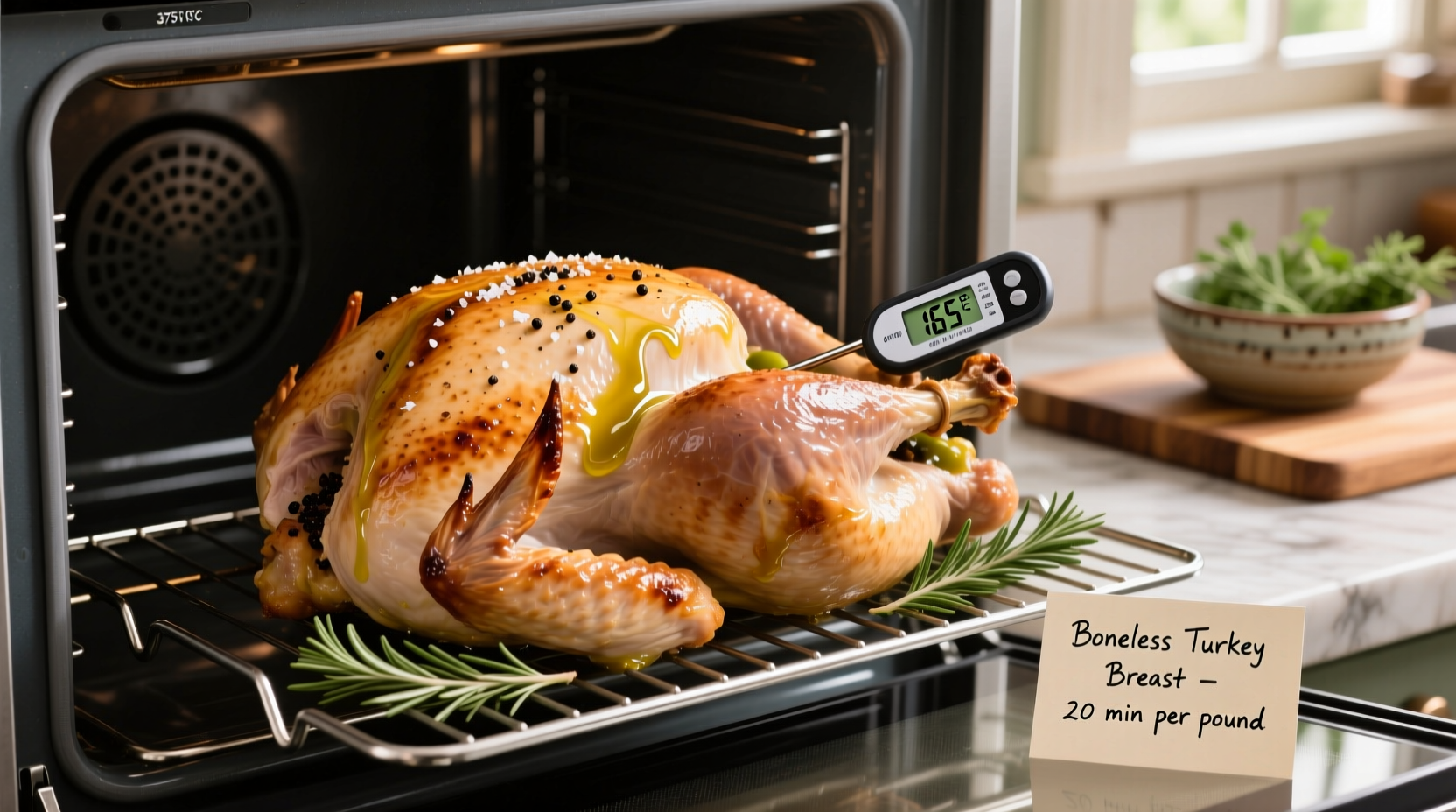
Perfectly cooked boneless turkey breast delivers juicy, flavorful results every time—but getting the timing right separates holiday success from dry disappointment. This comprehensive guide provides precise cooking times, temperature verification methods, and professional techniques to ensure your turkey breast turns out tender and safe to eat, whether you're preparing a weeknight dinner or holiday centerpiece.
Understanding Boneless Turkey Breast Cooking Times
The most reliable method combines cooking time per pound with internal temperature verification. While time estimates help with meal planning, the USDA Food Safety and Inspection Service emphasizes that 165°F (74°C) internal temperature is the only safe standard for poultry. This dual approach accounts for oven variations, starting temperature, and size differences.
| Weight of Turkey Breast | Estimated Cooking Time at 325°F | Minimum Internal Temperature |
|---|---|---|
| 2-3 pounds | 40-75 minutes | 165°F (74°C) |
| 3-4 pounds | 60-100 minutes | 165°F (74°C) |
| 4-5 pounds | 80-125 minutes | 165°F (74°C) |
| 5-6 pounds | 100-150 minutes | 165°F (74°C) |
These estimates come from the USDA Food Safety and Inspection Service guidelines, which remain the gold standard for safe poultry preparation. Note that convection ovens may reduce cooking time by 25%, while older conventional ovens might require additional minutes.
Preparation Essentials for Perfect Results
Proper preparation significantly impacts cooking time and final quality. Follow these steps before placing your turkey breast in the oven:
- Thaw completely - USDA recommends refrigerator thawing (allow 24 hours per 4-5 pounds) or cold water thawing (30 minutes per pound)
- Bring to room temperature - Let the turkey sit out for 30-60 minutes before cooking for more even heat distribution
- Dry the surface - Pat thoroughly with paper towels to promote browning
- Season properly - Apply oil or butter under the skin and over the surface to retain moisture

Step-by-Step Cooking Process
Follow this professional method for consistently excellent results:
- Preheat oven to 325°F (163°C) - this temperature balances cooking speed with moisture retention
- Place turkey breast side up on a rack in a shallow roasting pan
- Insert meat thermometer into thickest part, avoiding bone (if present)
- Cook uncovered, basting every 30 minutes with pan juices
- Begin checking temperature 20 minutes before estimated completion time
- Remove from oven when thermometer reads 160-162°F (71-72°C)
- Let rest 15-20 minutes - temperature will rise to safe 165°F during this time
Avoiding Common Cooking Mistakes
Food safety data shows that 12% of home cooks undercook poultry, while 35% overcook it, resulting in dry meat. Understanding these boundaries prevents both issues:
- Don't rely solely on time - Oven calibration varies significantly between models
- Check multiple spots - Temperature can vary across the breast
- Resting is non-negotiable - Cutting too soon releases precious juices
- Dark meat cooks slower - If cooking whole turkey, breast may finish before legs
Special Considerations for Different Cooking Methods
While conventional oven roasting remains most common, these alternative methods require timing adjustments:
- Convection oven - Reduce time by 25% while maintaining temperature
- Grilling - Use indirect heat at 325-350°F; expect 15-20% shorter cooking time
- Slow cooker - Cook on low 4-6 hours until reaching 165°F internally
- Sous vide - Cook at 145°F for 2-4 hours, then sear for skin crispness
Troubleshooting Guide
When issues arise, these solutions can save your meal:
- Turkey cooking too fast - Reduce oven temperature by 25°F and tent with foil
- Turkey not browning - Increase temperature to 400°F for final 15 minutes
- Undercooked at estimated time - Continue cooking, checking every 10 minutes
- Dry results - Slice against the grain and serve with pan juices or gravy
Final Temperature Verification Process
Professional chefs follow this precise temperature verification method:
- Insert thermometer into thickest part of breast
- Check near the bone (if present) and center of breast
- Verify temperature in multiple locations
- Remove when 160-162°F is reached (carryover cooking will reach 165°F)
- Wait 15-20 minutes before carving
This method aligns with recommendations from the Centers for Disease Control and Prevention for preventing foodborne illness while maximizing juiciness. Remember that visual cues like clear juices or firm texture are unreliable indicators of doneness—only a properly calibrated thermometer provides certainty.




 浙公网安备
33010002000092号
浙公网安备
33010002000092号 浙B2-20120091-4