
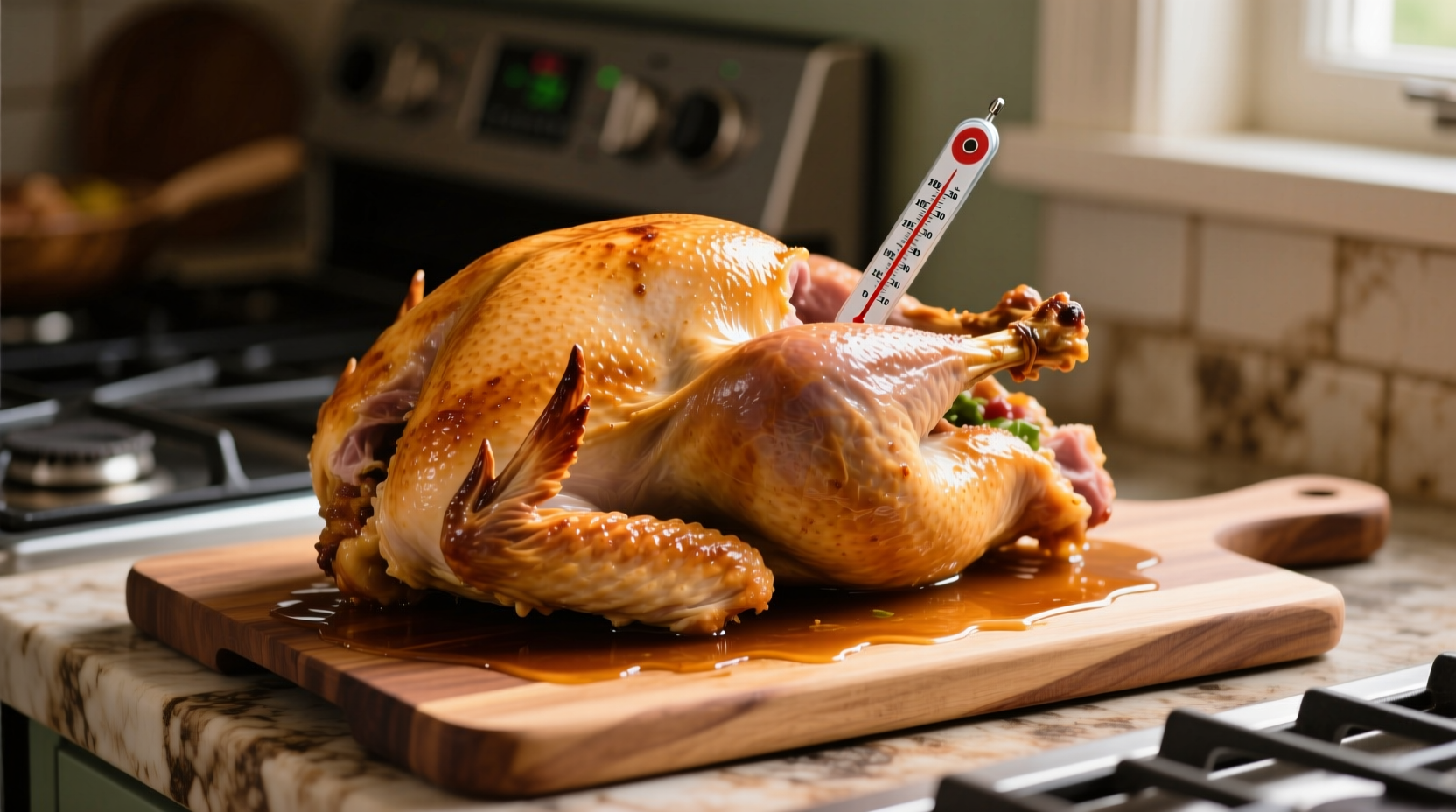
Planning your holiday meal? Getting the cooking time right for your 7 lb turkey breast ensures juicy, safe results every time. This guide delivers precise timing based on USDA food safety standards, plus pro tips from professional kitchen experience to prevent dry meat and guarantee perfect results for your special occasion.
Why Proper Cooking Time Matters for Turkey Breast
Undercooked turkey poses serious food safety risks, while overcooked turkey becomes dry and disappointing. The USDA Food Safety and Inspection Service confirms that poultry must reach 165°F (74°C) to eliminate harmful bacteria like salmonella. For a 7 lb turkey breast, hitting this temperature without overshooting requires precise timing and monitoring.
| Weight | Recommended Time at 325°F | Internal Temp Check Point |
|---|---|---|
| 5-6 lb | 1h 45m - 2h 15m | 1h 15m |
| 7 lb | 2h 20m - 2h 55m | 1h 45m |
| 8-9 lb | 3h - 3h 30m | 2h 15m |
Source: USDA Food Safety and Inspection Service, "Facts About Turkey"
Your Step-by-Step Cooking Timeline
Follow this professional kitchen-tested process for foolproof results:
Preparation (30 minutes before cooking)
- Remove turkey from refrigerator 30 minutes before cooking for more even heat distribution
- Pat dry thoroughly with paper towels (critical for proper browning)
- Season as desired, but avoid heavy salt rubs that can draw out moisture
- Place breast-side up on a rack in a shallow roasting pan
Cooking Phase (2h 20m - 2h 55m at 325°F)
- Insert oven-safe meat thermometer into thickest part, avoiding bone
- Cover loosely with foil if browning too quickly (after first 60-90 minutes)
- Baste only 2-3 times during cooking to minimize oven door openings
- Begin checking temperature 30 minutes before expected finish time
Resting Period (20 minutes minimum)
Never skip this crucial step! After removing from oven:
- Transfer turkey to cutting board and tent loosely with foil
- Allow to rest 20 minutes minimum (up to 30 minutes for 7 lb breast)
- Internal temperature will rise 5-10°F during resting (carryover cooking)
- Juices redistribute throughout the meat for maximum tenderness
Factors That Affect Your Cooking Time
While the standard 20-25 minutes per pound guideline works for most situations, these variables impact actual cooking time:
- Oven accuracy: Use an independent oven thermometer (most built-in thermostats are inaccurate)
- Starting temperature: Cold turkey from fridge adds 15-20 minutes vs. room temperature
- Pan type: Dark roasting pans cook faster than shiny metal or glass
- Convection setting: Reduce time by 25% or lower temperature by 25°F
- Stuffing: Never stuff turkey breast - it creates uneven cooking and safety risks
How to Verify Perfect Doneness
Time alone isn't enough - always verify with a thermometer:
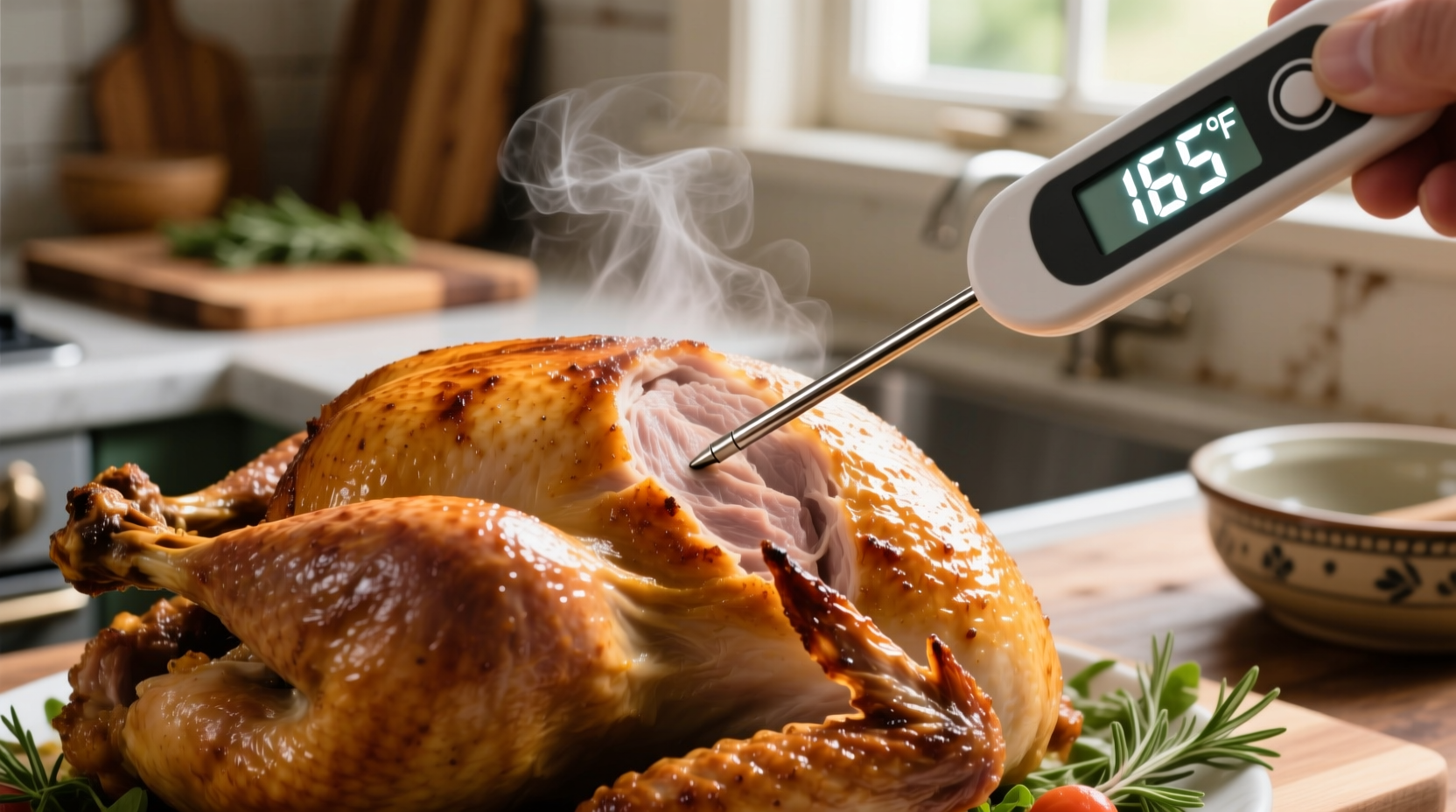
- Insert digital instant-read thermometer into thickest part of breast
- Avoid touching bone (gives false high reading)
- Check multiple spots if breast has uneven thickness
- Confirm 165°F (74°C) in all areas (USDA minimum safe temperature)
- Watch for clear juices (not pink) when pierced with fork
If you don't have a thermometer, make a small incision in thickest area - meat should be white throughout with no pinkness. However, the USDA strongly recommends thermometers as the only reliable method.
Avoid These Common Turkey Breast Mistakes
Professional kitchens see these errors repeatedly:
- Guessing doneness by time alone - oven variations make timing unreliable without thermometer verification
- Skipping the rest period - causes juices to run out when carving, resulting in dry meat
- Over-basting - opening oven frequently drops temperature, extending cooking time by 20-30 minutes
- Cooking at too high temperature - leads to burned exterior before interior reaches safe temperature
- Not accounting for carryover cooking - removing at exactly 165°F results in overcooked meat after resting
When Standard Guidelines Don't Apply
These cooking time recommendations assume conventional oven cooking with standard preparation. Special circumstances require adjustments:
- Spatchcocked turkey: Cooking time reduces to 60-75 minutes (butterflied method)
- Smoked turkey: At 225°F, expect 35-45 minutes per pound (total 4h 10m - 5h 15m)
- Grilled turkey: Indirect heat at 325°F requires similar time but monitor carefully for flare-ups
- Cold start: If cooking straight from refrigerator, add 15-20 minutes to total time
- Convection oven: Reduce time by 25% or lower temperature by 25°F
For any alternative cooking method, always prioritize internal temperature over time. The National Turkey Federation confirms that thermometer verification remains essential regardless of cooking technique.
Final Tips for Perfect Holiday Turkey
As you prepare your centerpiece dish, remember these professional insights:
- Calculate backward from your meal time - include 20+ minutes resting time in your schedule
- Place turkey in oven earlier rather than later - you can hold properly cooked turkey wrapped in foil for 30-45 minutes
- Use a dedicated meat thermometer - instant-read models cost under $15 and prevent food safety risks
- Let guests see the thermometer reading - builds confidence in your cooking skills
- Save the carcass for stock - simmer bones with vegetables for 3-4 hours to make rich gravy base




 浙公网安备
33010002000092号
浙公网安备
33010002000092号 浙B2-20120091-4