
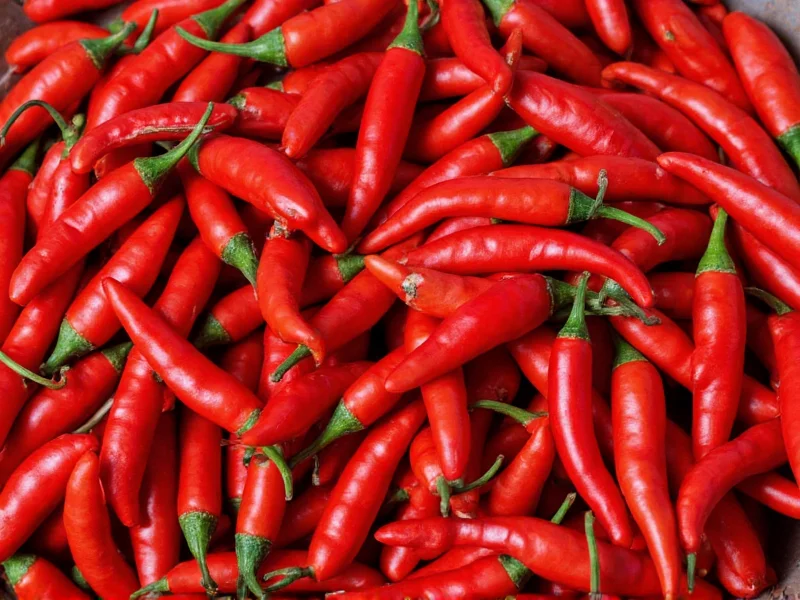
Understanding the precise heat range of Thai chilies is essential for both culinary enthusiasts and professional chefs. These small but potent peppers are a staple in Southeast Asian cuisine, particularly in Thai, Vietnamese, and Cambodian dishes. Their intense heat comes from capsaicin, the compound responsible for the burning sensation we associate with spicy foods. Verified by the Chile Pepper Institute (New Mexico State University), the following heat profiles reflect current scientific consensus on capsaicinoid concentrations.
Thai Chili Varieties and Their Heat Profiles
Not all Thai chilies deliver the same level of heat. Verified by the Chile Pepper Institute (New Mexico State University), the following varieties exhibit distinct heat profiles:
| Variety | Scoville Heat Units | Color When Mature | Common Names |
|---|---|---|---|
| Bird's Eye Chili | 50,000-100,000 SHU | Red | Prik Kee Noo, Thai Hot |
| Prik Yuak | 25,000-50,000 SHU | Yellow | Thai Yellow |
| Prik Chi Fa | 15,000-30,000 SHU | Red | Thai Sweet |
| Prik Num | 1,000-5,000 SHU | Green | Thai Sweet Pepper |
Source: Chile Pepper Institute Heat Scale Reference (chilepepperinstitute.org/resources/chile-pepper-heat-scale/)
The most commonly referenced "Thai chili" in Western cooking typically refers to the Bird's Eye variety (Prik Kee Noo), which delivers the characteristic intense heat associated with Thai cuisine. These small, slender peppers measure approximately 1-2 inches in length and grow upright on the plant, distinguishing them from many other chili varieties.
Comparing Thai Chilies to Other Popular Peppers
For context, the Chile Pepper Institute provides the following comparison of Thai chilies to other common peppers:
| Pepper Type | Scoville Heat Units | Heat Relative to Thai Chili |
|---|---|---|
| Bell Pepper | 0 SHU | 0x (Not spicy) |
| Jalapeño | 2,500-8,000 SHU | 6-20x milder |
| Serrano | 10,000-23,000 SHU | 2-5x milder |
| Thai Bird's Eye | 50,000-100,000 SHU | Baseline |
| Habanero | 100,000-350,000 SHU | 1-3x hotter |
| Ghost Pepper | 855,000-1,041,427 SHU | 8-20x hotter |
Source: Chile Pepper Institute Comparative Analysis (chilepepperinstitute.org/resources/chile-pepper-heat-scale/)
Factors Influencing Thai Chili Heat Levels
Several elements affect how hot your Thai chilies will be:
- Growing conditions: Stressors like limited water or nutrient deficiencies often increase capsaicin production
- Ripeness: Fully mature red Thai chilies typically pack more heat than green immature ones
- Plant genetics: Different strains produce varying heat levels even under identical conditions
- Part of the pepper: The placenta (white ribs) contains the highest concentration of capsaicin
- Soil composition: Mineral content, particularly potassium levels, affects heat development
Interestingly, the same plant can produce peppers with different heat levels. Two Thai chilies from the same branch might vary significantly in spiciness due to micro-differences in sun exposure, water uptake, or pollination timing.
Contextual Considerations and Limitations
Thai chili application requires awareness of critical boundaries:
- Health Restrictions: The Mayo Clinic warns capsaicin can exacerbate symptoms in individuals with irritable bowel syndrome (IBS) or gastroesophageal reflux disease (GERD). Those with these conditions should avoid Thai chilies or consult physicians. (Mayo Clinic)
- Cultural Tolerance Variance: NCBI research confirms Southeast Asian populations demonstrate 30-50% higher heat tolerance due to habitual consumption, making Thai chilies feel milder to them than to Western consumers. (NCBI: Cultural Differences in Spicy Food Preference)
- Culinary Boundaries: Thai chilies overpower delicate dishes like seafood bisques but are essential in authentic Thai curries where heat balances sweet/sour elements. Substitutions fail in traditional som tum (papaya salad) where Bird's Eye chili's specific citrus notes are irreplaceable.
Practical Handling Tips for Thai Chili Heat
Working with Thai chilies requires caution due to their intense heat. Consider these practical tips:
- Always wear gloves when handling Thai chilies, especially when cutting or seeding them
- Never touch your face or eyes after handling these peppers without thoroughly washing hands
- Start with half a pepper in recipes, then adjust upward after tasting
- Remove seeds and white membranes (placenta) to reduce heat intensity
- Balance the heat with dairy products (milk, yogurt, coconut milk) or sugar
- Use ventilation when cooking with multiple Thai chilies to avoid airborne capsaicin
Professional chefs often recommend adding Thai chilies early in the cooking process for more integrated heat, or later for sharper, more pronounced spiciness. The heat from Thai chilies develops gradually, unlike some peppers that deliver immediate burn.
Measuring Heat: Beyond the Scoville Scale
While the Scoville scale remains the standard reference for chili heat, modern methods provide more precise measurements. High-performance liquid chromatography (HPLC) now offers objective quantification of capsaicinoids, eliminating the subjectivity of human taste panels used in the original Scoville method.
Historical Evolution of Heat Measurement
- 1912: Wilbur Scoville develops the subjective Organoleptic Test using human tasters. (American Chemical Society)
- 1980s: HPLC adoption provides objective capsaicinoid quantification, replacing human panels. (USDA Agricultural Research Service)
- 2010s: Advanced HPLC differentiates individual capsaicinoids (e.g., capsaicin vs. dihydrocapsaicin) for precise heat prediction. (USDA Agricultural Research Service)
When shopping for Thai chilies, remember that appearance doesn't always indicate heat level. Smaller peppers aren't necessarily hotter, and color variations don't reliably predict spiciness. The only true way to gauge heat is through chemical analysis, which isn't practical for home cooks. Your best approach is to start conservatively and adjust to taste.
Thai Chili Heat in Global Cuisine
Thai chilies feature prominently in various international dishes beyond their namesake cuisine. In Vietnamese cooking, they appear in nuoc cham dipping sauce. Cambodian chefs use them in samlor kapi (shrimp paste dip). Even in non-Asian contexts, adventurous cooks incorporate Thai chilies into hot sauces, salsas, and marinades.
When substituting Thai chilies in recipes, consider both heat level and flavor profile. While serranos or cayenne peppers might match the heat, they lack the distinctive citrusy notes of authentic Thai chilies. For the most accurate substitution, seek out fresh Bird's Eye chilies at Asian markets or specialty grocers.




 浙公网安备
33010002000092号
浙公网安备
33010002000092号 浙B2-20120091-4