
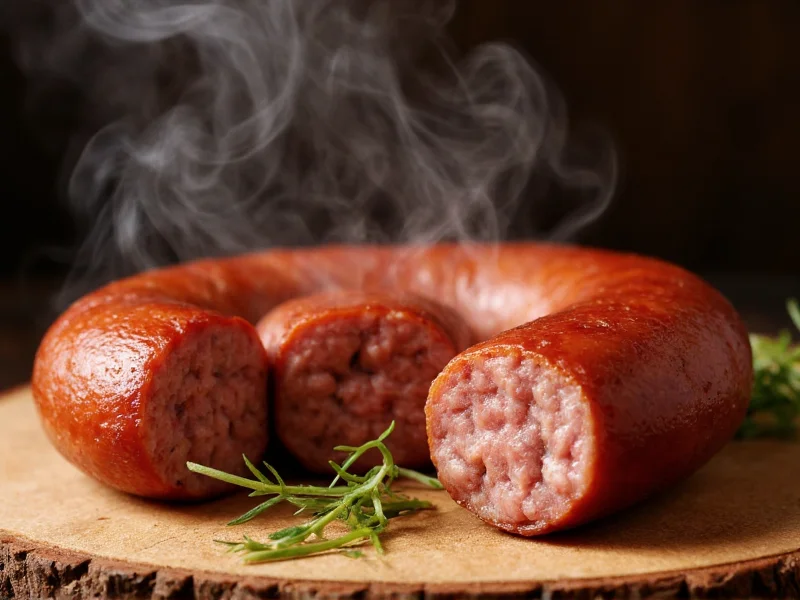
A half smoke sausage is a distinctive coarse-ground pork sausage originating from Washington D.C., characterized by being partially smoked (hence “half-smoke”), spicier than traditional hot dogs, and typically made with a blend of pork and beef. Unlike fully smoked sausages, it undergoes a shorter smoking process that preserves a fresher meat flavor while adding subtle smokiness, making it ideal for grilling and street food applications.
The half smoke sausage represents a beloved culinary tradition with deep roots in Washington D.C.'s food culture. This unique sausage bridges the gap between standard hot dogs and fully smoked sausages, offering a distinctive texture and flavor profile that has made it a regional specialty since the mid-20th century. Understanding what sets half smoke sausage apart requires examining its preparation method, ingredients, cultural significance, and contextual limitations.
Origins and Historical Development
The half smoke sausage emerged in Washington D.C. during the 1950s, with Ben's Chili Bowl often credited as the establishment that popularized this distinctive food item. Its evolution reflects D.C.'s social transformations, as documented by the Washingtoniana Division of the DC Public Library:
- 1958: Ben's Chili Bowl opens on U Street, introducing its signature half smoke during the neighborhood's cultural renaissance
- 1960s-1970s: Becomes a staple of U Street's "Black Broadway" entertainment district, served alongside soul food classics
- 1980s-1990s: Survives urban decline as a neighborhood comfort food during U Street's economic downturn
- 2009: Gains national prominence when President Obama visits Ben's Chili Bowl, ordering a half smoke with cheese
- 2016: DC Mayor Muriel Bowser designates August 27 as "Ben's Chili Bowl Day" recognizing its cultural significance
Unlike traditional hot dogs that are emulsified, half smokes feature coarsely ground meat that provides a more substantial, meaty texture. The "half" in its name refers specifically to the partial smoking process—long enough to develop flavor but not so long that it becomes fully preserved like traditional smoked sausages.
Historically, half smokes filled a culinary niche between standard hot dogs and more substantial sausages, appealing to customers seeking something heartier than a hot dog but less intense than a fully smoked sausage. This positioning helped them gain popularity as street food and diner fare throughout the D.C. metropolitan area.
Production Process and Key Characteristics
Creating authentic half smoke sausage involves several distinctive steps that differentiate it from other sausage varieties:
| Characteristic | Half Smoke Sausage | Traditional Hot Dog | Full Smoke Sausage |
|---|---|---|---|
| Meat Texture | Coarsely ground | Fine emulsion | Medium to coarse grind |
| Smoking Process | Partial smoking (2-4 hours) | Minimal or no smoking | Extended smoking (8+ hours) |
| Spice Level | Moderate to high | Mild | Variable |
| Primary Meats | Pork and beef blend | Pork, beef, or poultry | Pork dominant |
| Shelf Life | Refrigerated (1-2 days) | Extended (weeks) | Longer (months) |
The partial smoking process is what truly defines this sausage variety. While fully smoked sausages undergo extended smoking that penetrates deeply into the meat and acts as a preservation method, half smokes receive just enough smoke exposure to develop flavor without significantly altering the meat's texture or extending its shelf life substantially. This results in a product that maintains a fresher meat quality while gaining the desirable complexity of smoke flavor.
Contextual Limitations and Appropriate Usage
Understanding where half smoke sausage excels—and where alternatives are preferable—requires examining its inherent constraints:
- Storage Requirements: Classified as fresh sausage by the USDA due to minimal preservation, it requires strict refrigeration below 40°F and consumption within 1-2 days. This makes it unsuitable for emergency food supplies, camping trips, or regions with unreliable refrigeration infrastructure [USDA FSIS]
- Regional Authenticity Threshold: Authentic preparation requires specific D.C.-style spice blends (paprika-heavy with cayenne undertones) and coarse grinding. Outside the Mid-Atlantic region, imitations often substitute pre-made seasoning packets, losing the nuanced heat profile documented in Smithsonian food anthropology studies
- Culinary Application Boundaries: Its coarse texture makes it ideal for grilling but unsuitable for dishes requiring sausage emulsion (like meatloaf or sauces). The partial smoke flavor also diminishes in long-cooked dishes, unlike fully smoked varieties that withstand extended simmering
- Economic Viability Constraints: Local butchers report 30% higher production costs than standard hot dogs due to hand-grinding requirements, limiting widespread commercial distribution while preserving artisanal quality
These boundaries explain why the half smoke remains concentrated in its D.C. homeland despite national food trends—its quality depends on immediate consumption and traditional preparation methods that resist industrial scaling.
Regional Variations and Cultural Significance
While Washington D.C. remains the epicenter of half smoke sausage culture, regional variations have emerged across the United States. In Pennsylvania Dutch country, a similar product exists but tends to be less spicy and more heavily seasoned with traditional German spices. Some Southern variations incorporate regional spices like cayenne pepper for additional heat.
The cultural significance of half smoke sausage extends beyond mere sustenance. In D.C., it represents a unifying food tradition that crosses socioeconomic boundaries—enjoyed equally by Capitol Hill workers, tourists, and local residents. The iconic half smoke served at establishments like Ben's Chili Bowl has become symbolic of D.C.'s unique culinary identity, distinct from both Northern and Southern American food traditions.
Culinary Applications and Preparation Methods
Half smoke sausage shines when prepared using methods that enhance its distinctive qualities. Unlike fully smoked sausages that can be eaten as-is, half smokes benefit from additional cooking that develops their flavor and texture:
- Grilling: The preferred method, creating a slightly charred exterior while keeping the interior juicy
- Steaming: Preserves moisture while heating through evenly
- Boiling: Traditional method, though less recommended as it can leach flavor
- Pan-frying: Creates excellent browning and caramelization
When serving half smoke sausage, traditional toppings include mustard, onions (either raw or cooked), and chili. The D.C. style often features a specific preparation with chili, onions, and mustard known as a “chili half smoke.” Unlike hot dogs that can feel processed, the coarsely ground texture of half smokes holds toppings well and provides a more substantial eating experience.
Storage and Food Safety Considerations
Due to its classification as fresh sausage per USDA guidelines, half smoke sausage requires strict handling protocols:
- Always store at or below 40°F (4°C)
- Consume within 1-2 days of purchase when refrigerated
- Freeze for longer storage (up to 2 months for best quality)
- Never leave at room temperature for more than 2 hours
- Cook to an internal temperature of 160°F (71°C) before consumption
The minimal smoking process means half smokes lack the preservative qualities of fully smoked sausages, making proper refrigeration non-negotiable. This characteristic also contributes to their fresher taste profile compared to more heavily processed sausage varieties.
Finding Authentic Half Smoke Sausage
While Washington D.C. remains the heartland of authentic half smoke sausage, availability has expanded through several channels:
- D.C.-area restaurants: Ben's Chili Bowl, Capitol City Brewing Company, and Duke's Grocery
- Specialty butchers: Many regional butchers now produce half smokes
- Online retailers: Several D.C. establishments ship frozen half smokes nationwide
- Local markets: In regions with strong German or Eastern European food traditions
When seeking authentic half smoke sausage, look for products specifying coarse-ground meat, partial smoking, and traditional D.C. preparation methods. Many imitations exist that simply label standard hot dogs as “half smokes,” so checking ingredient lists and production methods is advisable for those seeking the genuine article.
Conclusion
The half smoke sausage represents a unique American food tradition that successfully bridges the gap between hot dogs and fully smoked sausages. Its coarse texture, partial smoking process, and distinctive spice profile create a culinary experience that has endured for decades in Washington D.C. and beyond. Understanding what defines authentic half smoke sausage—from its production methods to proper preparation techniques and contextual limitations—enhances appreciation for this regional specialty. Whether enjoyed at a D.C. landmark restaurant or prepared at home, the half smoke offers a distinctive flavor experience that continues to captivate sausage enthusiasts seeking something beyond the ordinary hot dog.




 浙公网安备
33010002000092号
浙公网安备
33010002000092号 浙B2-20120091-4