
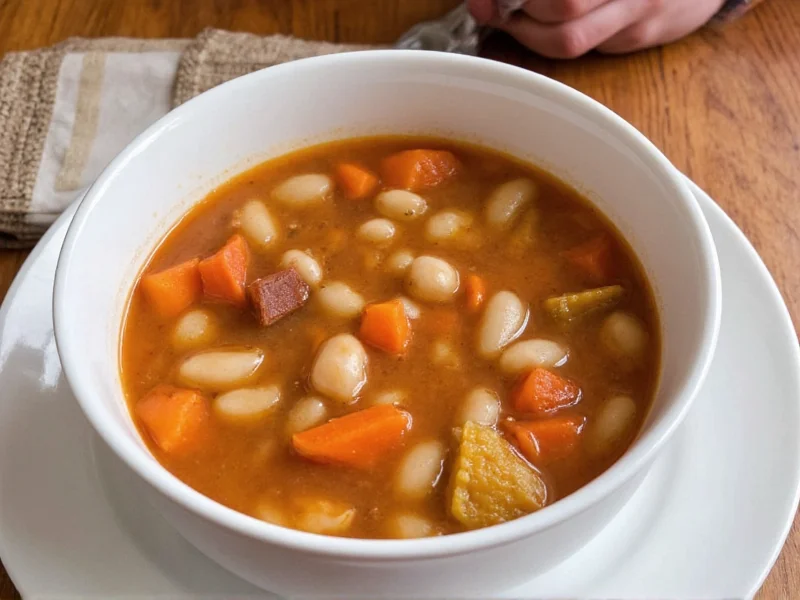
Nothing compares to a steaming bowl of homemade great northern bean soup on a chilly day. This versatile legume-based dish has nourished families for generations with its satisfying texture and subtle, earthy flavor. Unlike other white beans, great northerns maintain their shape well during cooking while developing a delightfully creamy interior—making them ideal for soups that balance substance with sophistication.
The Unique Qualities of Great Northern Beans
Great northern beans stand apart from other white beans with their medium size, delicate skin, and mild, nutty flavor profile. Slightly larger than navy beans but smaller than cannellini, they offer the perfect balance for soup applications. When properly cooked, they develop a creamy texture without disintegrating—a crucial quality for maintaining the soup's body while providing distinct bean elements in each spoonful.
Understanding the difference between great northern beans and similar varieties prevents recipe failures. While cannellini beans have a more pronounced chestnut flavor and tend to break down faster, great northerns maintain structural integrity while still thickening the broth naturally through starch release. This characteristic makes them superior for soups requiring both texture and creaminess without dairy additives.
Essential Ingredients for Authentic Flavor
The magic of exceptional great northern bean soup comes from ingredient quality and proper technique. Start with these foundational components:
| Ingredient | Quality Indicator | Substitution Options |
|---|---|---|
| Dried great northern beans | Uniform color, no cracks, fresh earthy scent | Cannellini beans (slightly stronger flavor) |
| Homemade vegetable broth | Rich aroma, gelatinous when cooled | Low-sodium store-bought broth + extra mirepoix |
| Extra virgin olive oil | Grassy aroma, slight peppery finish | Avocado oil (for higher heat cooking) |
| Fresh thyme | Vibrant green leaves, strong herbal scent | 1/3 tsp dried thyme (added during cooking) |
Professional chefs emphasize building flavor layers through proper mirepoix preparation—finely dicing equal parts onion, carrot, and celery to create the flavor base. The critical technique involves sweating these vegetables slowly in olive oil until completely tender but not browned, which extracts maximum sweetness without caramelization that would alter the soup's delicate profile.
Step-by-Step Preparation Guide
Follow this professional method for perfect great northern bean soup every time:
- Bean preparation: Sort through 1 pound dried beans, removing any debris. Rinse thoroughly and soak overnight in 3 quarts cold water with 1 tablespoon baking soda (this reduces cooking time and improves digestibility).
- Flavor foundation: Drain soaked beans. In a 6-quart pot, sweat 1 diced onion, 2 diced carrots, and 2 diced celery stalks in 3 tablespoons olive oil over medium-low heat for 15 minutes until completely soft.
- Layering depth: Add 4 minced garlic cloves, 2 bay leaves, and 1 tablespoon fresh thyme. Cook 2 minutes until fragrant. Stir in drained beans and 8 cups broth.
- Controlled cooking: Bring to gentle simmer, skimming foam. Partially cover and cook at bare simmer for 60-90 minutes until beans are tender but intact. Never boil vigorously.
- Finishing technique: Remove 2 cups soup, blend until smooth, and return to pot. Stir in 2 cups chopped kale 10 minutes before serving.
Avoiding Common Preparation Mistakes
Even experienced cooks encounter pitfalls with bean soups. The most frequent issues include:
- Hard beans after cooking: Caused by using hard water or acidic ingredients too early. Add tomatoes or vinegar only after beans have fully softened.
- Mushy texture: Results from overcooking or using canned beans. Dried beans provide superior texture control for great northern bean soup from scratch.
- Flat flavor: Insufficient vegetable cooking time or inadequate seasoning. Properly sweated mirepoix and seasoning in layers creates complexity.
- Excessive saltiness: Using salted broth without adjustment. Always finish seasoning after blending portion of soup.
Historical Context and Evolution
Understanding the development of great northern beans provides context for their culinary role. Originally bred for cold climates, these beans have a distinct history:
| Year | Development Milestone |
|---|---|
| 1929 | Officially released by North Dakota Agricultural Experiment Station (now NDSU), bred for cold tolerance and high yield in northern climates. Source |
| 1930s-1940s | Became a staple crop in the Midwest and Great Plains, valued for its ability to thrive in shorter growing seasons. During WWII, beans like great northerns were promoted as protein sources under government rationing programs. USDA Historical Rationing Records |
| 1950s-Present | Remained a top choice for canned and dried bean products due to its consistent texture and mild flavor. Modern agricultural research continues to improve disease resistance while preserving the bean's signature cooking properties. USDA-ARS Bean Research Program |
Nutritional Benefits and Dietary Considerations
Great northern bean soup delivers impressive nutritional value per serving (1.5 cups), with estimates based on USDA FoodData Central[1]:
- 15g plant-based protein supporting muscle maintenance
- 10g dietary fiber promoting digestive health
- Rich in folate (35% DV), iron (20% DV), and magnesium (25% DV)
- Naturally low in fat (2g per serving) and cholesterol-free
- Gluten-free and suitable for vegetarian/vegan diets
The resistant starch in properly cooked great northern beans functions as a prebiotic, feeding beneficial gut bacteria. This characteristic, combined with their low glycemic index, makes this soup particularly valuable for blood sugar management. For enhanced nutrient absorption, include a source of vitamin C like tomatoes or lemon juice in your recipe.
[1] Nutritional estimates reflect standard preparation using cooked great northern beans. Actual values may vary based on recipe adjustments. Source: USDA FoodData Central (Accession #170151). https://fdc.nal.usda.gov/fdc-app.html#/food-details/170151/nutrients
Contextual Boundaries: When Great Northern Bean Soup Fits (and When It Doesn't)
While versatile, this soup has specific dietary and situational considerations. Evidence-based boundaries ensure optimal enjoyment and health outcomes:
- Ideal for:
- Blood sugar management (low glycemic index of 30-40, per Harvard T.H. Chan School of Public Health)
- Heart-healthy diets (soluble fiber reduces LDL cholesterol, as confirmed by American Heart Association)
- Requires modification for:
- Low-FODMAP diets: Limit portions to 1/4 cup cooked beans per serving to avoid digestive discomfort (per Monash University)
- Kidney disease: Reduce sodium by omitting added salt and using no-salt-added broth (per National Kidney Foundation)
- Not recommended for:
- Acute diverticulitis flare-ups (high fiber may irritate; switch to clear liquids per Mayo Clinic)
- Pre-surgery clear liquid diets (due to fiber content)
Serving Suggestions and Creative Variations
While traditional great northern bean soup shines with simple preparation, these serving techniques elevate the experience:
- Drizzle with high-quality extra virgin olive oil and freshly cracked black pepper just before serving
- Pair with crusty whole-grain bread for dipping
- Add a Parmesan rind during cooking for subtle umami depth (remove before serving)
- Garnish with fresh parsley and a squeeze of lemon for brightness
For creative variations, try adding smoked turkey for protein depth, roasted root vegetables for sweetness, or a splash of sherry vinegar for complexity. The easy great northern bean soup recipe adapts beautifully to Instant Pot preparation—use 1:2.5 bean-to-liquid ratio and cook at high pressure for 25 minutes with natural release.
Storage and Reheating Best Practices
Proper storage maintains quality for future enjoyment. Cool soup completely before transferring to airtight containers. Refrigerated soup stays fresh for 4-5 days, while frozen portions maintain quality for up to 6 months. When reheating, add small amounts of broth or water to restore ideal consistency, as the soup naturally thickens when chilled due to starch retrogradation.




 浙公网安备
33010002000092号
浙公网安备
33010002000092号 浙B2-20120091-4