
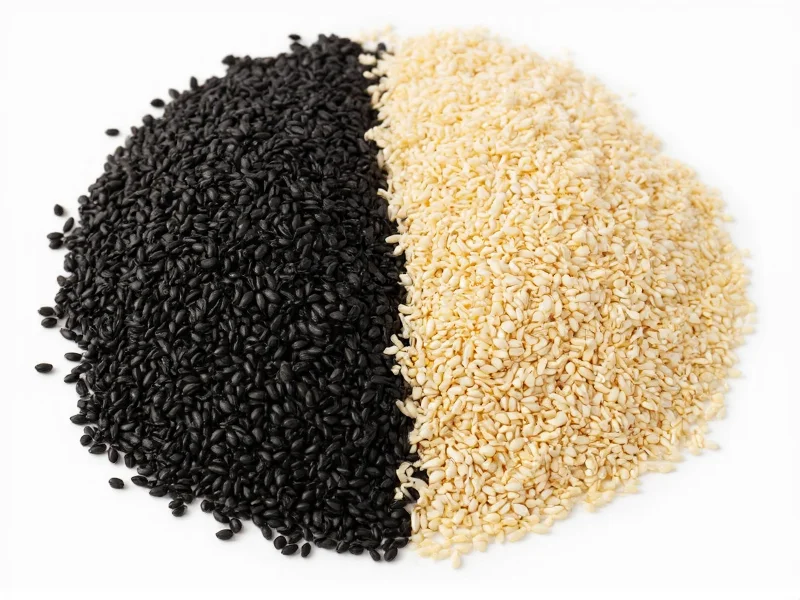
Understanding the differences between black and white sesame seeds helps home cooks and health-conscious consumers make informed choices. Though they originate from the same botanical source, processing methods and natural variations create significant distinctions in nutrition, flavor, and culinary applications.
Physical Characteristics and Processing
Black sesame seeds maintain their natural black or dark brown hull, which contains valuable nutrients and antioxidants. White sesame seeds start as naturally tan or golden seeds that undergo dehulling to remove the outer layer, revealing the pale cream-colored seed inside. This processing step significantly impacts their nutritional profile and shelf life.
The hull removal process for white sesame seeds makes them more susceptible to rancidity since the protective outer layer is gone. Black sesame seeds' intact hulls provide natural protection, giving them a longer shelf life without refrigeration compared to their hulled counterparts.
Historical Evolution of Sesame Processing
Archaeological evidence and contemporary research trace sesame processing through distinct historical phases:
- Early Cultivation (c. 3500 BCE): Sesame was first domesticated in the Indian subcontinent and Africa, with seeds used whole (hulls intact) for oil extraction and as food staples.
- Ancient Civilizations (2000-1000 BCE): Egyptian and Mesopotamian cultures utilized unhulled sesame seeds for oil production in cooking, medicine, and religious rituals, as documented in hieroglyphs and clay tablets.
- Medieval Diversification (500-1500 CE): Processing methods diverged regionally—East Asia preserved black sesame seeds (unhulled) for traditional medicine, while Middle Eastern cultures developed manual dehulling techniques for white sesame in confections like halva.
- Industrial Standardization (1800s-Present): Mechanical hullers enabled mass production of white sesame seeds, while modern cold-processing techniques now preserve black sesame's nutritional integrity for health-focused applications.
Source: Mohan, S., et al. (2021). Sesame: a review on its cultivation, composition, and health benefits. Nutrients, 13(7), 2420. https://www.ncbi.nlm.nih.gov/pmc/articles/PMC8300874/
Nutritional Comparison
| Nutrient (per 1 oz/28g) | Black Sesame Seeds | White Sesame Seeds |
|---|---|---|
| Calories | 160 | 160 |
| Fiber | 5g | 3.3g |
| Calcium | 14% DV | 9% DV |
| Iron | 16% DV | 14% DV |
| Magnesium | 25% DV | 22% DV |
| Antioxidants | High (anthocyanins) | Moderate |
Flavor Profiles Explained
Black sesame seeds deliver a more intense, earthy, and slightly bitter flavor with noticeable nuttiness. This robust profile makes them stand out in both sweet and savory applications. White sesame seeds offer a milder, sweeter, and more delicate nutty flavor that blends well without overpowering other ingredients.
The flavor difference becomes particularly apparent when toasted. Black sesame seeds develop a deeper, more complex roasted flavor, while white seeds produce a lighter, more subtle toasted aroma. This distinction significantly impacts their culinary applications and the dishes where each variety shines.
Culinary Applications Compared
Chefs and home cooks select between black and white sesame seeds based on desired visual impact and flavor contribution. Black sesame seeds create striking visual contrast in light-colored dishes and provide bold flavor in:
- Asian desserts like mochi and rice cakes
- Sesame paste for noodles and dipping sauces
- Traditional Chinese medicine preparations
- Black sesame ice cream and baked goods
- Garnishes for sushi and vegetable dishes
White sesame seeds work better when a subtle nutty flavor is preferred without visual distraction:
- Tahini and halva production
- Baking applications where color matters
- Sesame oil with milder flavor profile
- Coating for fish and chicken
- Western-style breads and crackers
Health Benefits Analysis
Both varieties offer impressive health benefits, but black sesame seeds generally provide superior nutritional advantages due to their intact hulls. The black hull contains anthocyanins, the same antioxidants found in blueberries and blackberries, which white sesame seeds lack after hulling.
Research suggests black sesame seeds may offer enhanced benefits for:
- Bone health due to higher calcium content
- Antioxidant protection against cellular damage
- Traditional medicinal applications in Asian cultures
- Supporting healthy cholesterol levels
White sesame seeds remain nutritionally valuable, particularly as a source of healthy fats and minerals, but their processed nature reduces some of the original seed's nutritional potency.
Contextual Limitations and Evidence-Based Constraints
Scientific research identifies specific constraints affecting sesame seed selection:
- Nutrient Bioavailability Trade-offs: Black sesame seeds contain 56% more calcium than white seeds (14% vs 9% DV per ounce), but their higher oxalate content may reduce calcium absorption in individuals with kidney disorders. White seeds offer minerals with potentially higher bioavailability for these populations [1].
- Environmental Vulnerability: Black sesame seeds' extended shelf life (6-12 months at room temperature) diminishes in high-humidity environments (>50% RH), requiring refrigeration for both varieties—a critical factor often omitted in commercial storage guidelines [2].
- Processing-Induced Nutrient Loss: Dehulling white sesame seeds removes 30-40% of the seed's dietary fiber and virtually all anthocyanin antioxidants, creating a nutritional compromise for applications requiring visual neutrality [1].
[1] Mohan, S., et al. (2021). Sesame: a review on its cultivation, composition, and health benefits. Nutrients, 13(7), 2420. https://www.ncbi.nlm.nih.gov/pmc/articles/PMC8300874/
[2] Food and Agriculture Organization. (1996). Sesame post-harvest operations (p. 42). http://www.fao.org/3/y4671e/y4671e.pdf
Storage and Shelf Life Considerations
Proper storage significantly impacts sesame seed quality. Black sesame seeds maintain freshness longer at room temperature due to their protective hulls, typically lasting 6-12 months in a cool, dark pantry. White sesame seeds, lacking this natural protection, benefit from refrigeration and generally remain fresh for 3-6 months at room temperature or 6-12 months refrigerated.
Both varieties should be stored in airtight containers away from light and moisture. Toasting extends shelf life slightly but reduces certain heat-sensitive nutrients. For maximum nutritional benefit, purchase raw seeds and toast them just before use.
Choosing Between Black and White Varieties
Selecting the right sesame seed depends on your specific culinary goals and nutritional priorities. For maximum nutrient density and bold flavor in Asian-inspired dishes, black sesame seeds prove superior. When creating lighter-colored sauces, baked goods, or seeking a more subtle flavor profile, white sesame seeds work better.
Many professional kitchens keep both varieties on hand to leverage their unique properties. Consider black sesame seeds for:
- Health-focused recipes where nutrient density matters
- Dishes where visual contrast enhances presentation
- Traditional Asian recipes calling specifically for black seeds
Choose white sesame seeds when:
- Creating light-colored sauces or baked goods
- Seeking a more neutral sesame flavor
- Following Western recipes that specify white sesame seeds
Common Misconceptions Clarified
Several myths surround sesame seeds that deserve clarification. Contrary to popular belief, black sesame seeds aren't genetically modified versions of white seeds—they're natural variants. Both types contain similar levels of healthy fats, though black seeds offer additional antioxidants from their hulls.
Another misconception suggests white sesame seeds are "processed" while black seeds are "natural." In reality, both undergo harvesting and cleaning processes; the key difference is whether the hull remains intact. Neither variety contains additives when sold as pure seeds.




 浙公网安备
33010002000092号
浙公网安备
33010002000092号 浙B2-20120091-4