
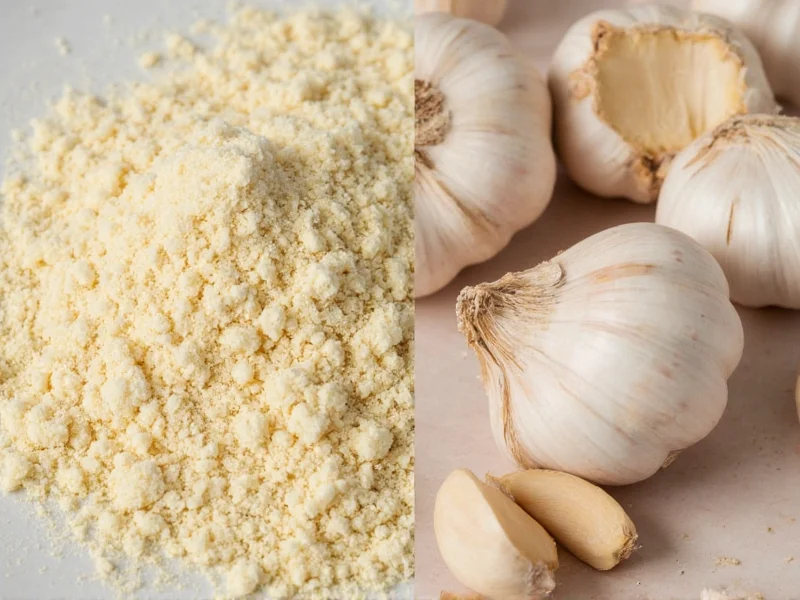
Choosing between garlic powder and fresh garlic can significantly impact your cooking results. Understanding their distinct properties helps home chefs make informed decisions that elevate their dishes. This comprehensive comparison examines flavor profiles, nutritional content, culinary applications, and practical considerations to help you select the right form for every recipe.
Flavor Profile Comparison
Garlic's flavor transforms dramatically when processed differently. Fresh garlic contains allicin, the compound responsible for its pungent aroma and sharp bite, which develops when cloves are crushed or chopped. This enzymatic reaction creates complex flavor notes that evolve during cooking—from sharp and spicy when raw to sweet and nutty when roasted.
Garlic powder, made from dehydrated and ground garlic, offers a more mellow, consistent flavor profile. The dehydration process alters the chemical composition, resulting in less pungency and a slightly sweeter, more concentrated garlic essence. Unlike fresh garlic that can burn easily, powder distributes evenly and withstands longer cooking times without becoming bitter.
Nutritional Differences Between Garlic Forms
Both forms retain many beneficial compounds, but processing affects nutritional content. Fresh garlic contains higher levels of allicin, which forms when the clove is damaged and offers potential cardiovascular benefits. The dehydration process in powder production reduces some volatile compounds but concentrates others.
Per tablespoon serving:
| Nutrient | Garlic Powder (1 tbsp) | Fresh Garlic (3 cloves) |
|---|---|---|
| Calories | 25 | 13 |
| Carbohydrates | 6g | 3g |
| Fiber | 1.5g | 0.2g |
| Vitamin C | 2% DV | 19% DV |
| Manganese | 8% DV | 2% DV |
While fresh garlic provides more vitamin C and certain enzymes, garlic powder contains higher concentrations of some minerals due to water removal. Neither form should be considered a significant nutrient source, but both contribute beneficial phytochemicals to your diet.
Historical Evolution of Garlic Processing
Growing and processing techniques have evolved over millennia, shaping modern culinary applications. Evidence from agricultural research institutions confirms critical milestones:
- Ancient civilizations (5000+ years ago): Garlic was cultivated by Egyptians and used fresh or sun-dried for preservation and laborer sustenance (University of California Agriculture and Natural Resources: ucanr.edu/sites/garlic/Garlic_History/)
- World War II era: Commercial dehydration techniques were developed for military rations, enabling stable garlic powder production (USDA National Agricultural Library: nal.usda.gov/exhibits/.../dehydration)
- Post-1950s: Standardized processing methods made garlic powder widely available, providing batch-to-batch consistency for commercial kitchens
This progression explains why powder delivers reliable background flavor, while fresh garlic remains unmatched for immediate aromatic impact in finished dishes.
Practical Cooking Applications
The choice between garlic powder vs fresh garlic often depends on cooking technique and desired flavor integration. Understanding when to use each form can transform your culinary results.
When Fresh Garlic Excels
- Raw applications: Salad dressings, aiolis, and bruschetta benefit from fresh garlic's vibrant bite
- Finishing dishes: Adding minced fresh garlic in the last minutes of cooking preserves its complex flavor
- Roasting whole cloves: Creates sweet, caramelized flavor perfect for spreads and accompaniments
- Quick-cooking dishes: Stir-fries and sautés where garlic shouldn't cook longer than 1-2 minutes
When Garlic Powder Shines
- Dry rubs and spice blends: Distributes evenly without burning
- Long-simmering dishes: Soups, stews, and sauces where fresh garlic might become bitter
- Baking applications: Bread doughs and savory pastries where moisture control matters
- Marinades: Dissolves completely without textural issues
- Commercial food production: Provides consistent flavor batch-to-batch
Substitution Guidelines: Garlic Powder vs Fresh
Understanding the garlic powder to fresh garlic conversion ratio prevents flavor disasters. While general guidelines exist, successful substitution depends on the specific recipe:
- 1 teaspoon garlic powder = 3-4 medium fresh garlic cloves
- 1/8 teaspoon garlic powder = 1 fresh clove
- When substituting powder for fresh in raw applications, use 50% less powder
- When substituting fresh for powder in long-cooking dishes, increase fresh garlic by 25-50%
For garlic powder vs minced garlic comparisons, remember that jarred minced garlic contains preservatives and water, making it less potent than fresh but more convenient. One teaspoon jarred minced garlic equals about 1 fresh clove.
Storage and Shelf Life: Evidence-Based Guidelines
Proper storage conditions significantly impact usability and flavor retention. Research from food safety authorities establishes precise parameters:
- Fresh garlic: Requires 60-65°F (15-18°C) with 60-70% humidity in ventilated containers; lasts 5-6 months under these conditions (National Center for Home Food Preservation: nchfp.uga.edu)
- Garlic powder: Degrades 50% faster when stored above 75°F (24°C); maintains full potency for 2-3 years below 70°F (21°C) in airtight containers (USDA guidelines for dried vegetables: nchfp.uga.edu/how/dry/vegetables.html)
- Critical moisture threshold: Powder clumping occurs at >65% relative humidity, signaling flavor compound degradation (consistent with FDA Food Code standards)
Refrigeration accelerates sprouting in fresh bulbs due to humidity fluctuations. Freezing whole cloves preserves quality for 12 months, while garlic powder must avoid refrigeration entirely to prevent condensation-induced spoilage (National Center for Home Food Preservation).
Cost Analysis: Value Comparison
While fresh garlic appears cheaper per pound, the actual cost per serving tells a different story. When calculating garlic powder vs fresh cost, consider:
- Fresh garlic requires peeling and preparation time
- Garlic powder has no waste (no peels or roots)
- One 4oz jar of garlic powder equals approximately 40-50 fresh cloves
For occasional cooks, fresh garlic provides better value. For frequent cooks or commercial kitchens, garlic powder often proves more economical when factoring in reduced waste and preparation time.
Common Mistakes to Avoid
Even experienced cooks make errors with garlic forms:
- Using equal volumes: Substituting 1:1 between powder and fresh creates overpowering or weak flavor
- Burning garlic powder: Though more heat-stable, powder can still scorch if added too early in high-heat cooking
- Using old garlic powder: Stale powder lacks flavor intensity, leading to overuse
- Adding fresh garlic too early: In long-cooking dishes, fresh garlic becomes bitter after 20+ minutes
- Ignoring garlic quality: Both forms vary in potency based on growing conditions and processing
Professional Chef Recommendations
Many professional kitchens use both forms strategically. Top chefs recommend:
- Using fresh garlic for signature dishes where garlic is a featured ingredient
- Employing garlic powder in consistent production environments for reliability
- Combining both forms in complex recipes for layered flavor development
- Creating garlic-infused oil with fresh garlic, then finishing with powder for depth
For garlic powder vs fresh garlic in recipes requiring intense garlic presence, some chefs use a combination—fresh for immediate impact and powder for sustained flavor throughout cooking.
Final Recommendations
The garlic powder vs fresh garlic debate isn't about which is better overall, but which serves your specific culinary purpose. Fresh garlic provides superior complexity for dishes where garlic plays a starring role, while powder offers unmatched convenience and consistency for background flavoring.
Develop your palate by experimenting with both forms in identical recipes. You'll discover that understanding their unique properties allows you to manipulate flavor profiles intentionally. Keep both in your pantry and choose based on your recipe's requirements rather than convenience alone.




 浙公网安备
33010002000092号
浙公网安备
33010002000092号 浙B2-20120091-4