
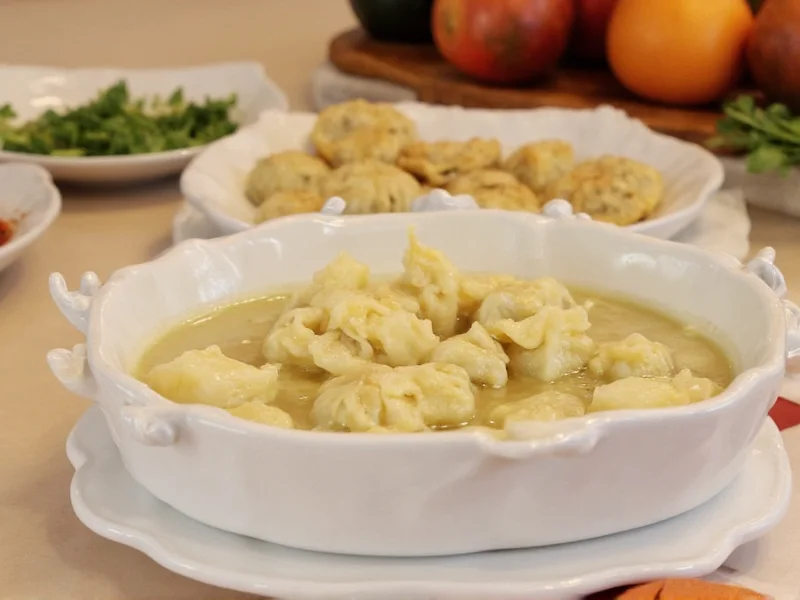
Soup dumplings, known as xiao long bao in Chinese, originated in Shanghai's Nanxiang district and have become a beloved culinary treasure worldwide. These delicate steamed buns encapsulate a surprising element—a pocket of hot, flavorful soup inside a thin wrapper surrounding savory meat filling. While challenging for beginners, mastering this dish is achievable with proper technique and attention to detail.
The Secret: Gelatinized Broth Technique
The magic of soup dumplings lies in the broth jelly preparation. Traditional recipes use pork aspic—a mixture of broth and gelatin that solidifies when chilled but liquefies when heated. This technique transforms ordinary dumplings into soup-filled delights.
Essential Ingredients for Authentic Soup Dumplings
Creating perfect xiao long bao requires precise ingredients. Here's what you'll need for 20 dumplings:
| Component | Ingredients | Measurement |
|---|---|---|
| Broth Jelly | Pork bones (with meat) | 1 lb (450g) |
| Ginger, sliced | 1" piece | |
| Green onions | 2 stalks | |
| Dough | All-purpose flour | 2 cups (250g) |
| Boiling water | 3/4 cup (180ml) | |
| Cold water | 2 tbsp (30ml) | |
| Pinch of salt | - | |
| Filling | Ground pork (20% fat) | 1 lb (450g) |
| Broth jelly, finely chopped | 1 cup (240g) | |
| Ginger, minced | 1 tbsp | |
| Green onion, finely chopped | 2 tbsp | |
| Soy sauce | 1 tbsp | |
| Sesame oil | 1 tsp |
Step-by-Step Soup Dumpling Preparation
Making the Broth Jelly (1 day ahead)
Begin by creating the essential broth jelly. Simmer pork bones with ginger and green onions in 6 cups of water for 3-4 hours until reduced by half. Strain the broth, then refrigerate overnight. The natural collagen will solidify into a jelly-like consistency. This traditional shanghai soup dumplings technique ensures the signature soup center.
Preparing the Dough
Combine flour and salt in a bowl. Gradually add boiling water while stirring, then incorporate cold water to form a shaggy dough. Knead for 10 minutes until smooth and elastic. Cover with a damp cloth and rest for 30 minutes. Proper homemade soup dumpling dough requires this resting period to develop gluten structure.
Creating the Filling
Mix ground pork with soy sauce, sesame oil, ginger, and green onions. Gently fold in the chilled broth jelly until evenly distributed. Keep the filling cold until assembly—this prevents the jelly from melting prematurely. The ratio of broth jelly to pork is critical for achieving the perfect soup-to-filling balance in your xiao long bao recipe.
Assembling Soup Dumplings
Divide dough into 20 equal pieces. Roll each into a 3" circle, making the center slightly thicker than edges. Place 1.5 tablespoons of filling in the center. To master the xiao long bao folding technique, gather the wrapper edges and pleat while twisting to seal tightly. A properly assembled dumpling should have 18-20 pleats and stand upright without leaking.
Steaming Technique
Line a bamboo steamer with cabbage leaves or parchment paper to prevent sticking. Arrange dumplings with space between them. Steam over vigorously boiling water for 8-10 minutes. The critical moment comes when the broth jelly melts but the wrapper remains intact. Never skip the resting period after steaming—allow dumplings to sit for 2 minutes before serving to stabilize the soup center.
Avoiding Common Soup Dumpling Mistakes
Many home cooks struggle with soup dumplings due to these frequent errors:
- Thin wrappers tearing: Roll wrappers evenly with thicker centers to support the filling
- Leaking dumplings: Ensure tight seals during assembly and avoid overfilling
- Insufficient soup: Maintain proper broth jelly to pork ratio (1:1 by volume)
- Soggy bottoms: Use high heat and minimal water in the steamer
- Broken pleats: Practice the folding technique with plain dough before using filling
Serving Authentic Soup Dumplings
Serve immediately with black vinegar and thinly sliced ginger. To eat properly, place the dumpling on a spoon, nibble a small hole in the wrapper, sip the hot broth, then enjoy the entire dumpling. This traditional shanghai soup dumplings eating method prevents burns while maximizing flavor.
Storage and Freezing Tips
Uncooked dumplings freeze exceptionally well. Arrange on a parchment-lined tray, freeze until solid, then transfer to airtight containers. Cook directly from frozen, adding 2-3 minutes to steaming time. Never freeze assembled dumplings with liquid broth—always use the gelatinized form for successful how to make soup dumplings at home attempts.




 浙公网安备
33010002000092号
浙公网安备
33010002000092号 浙B2-20120091-4