
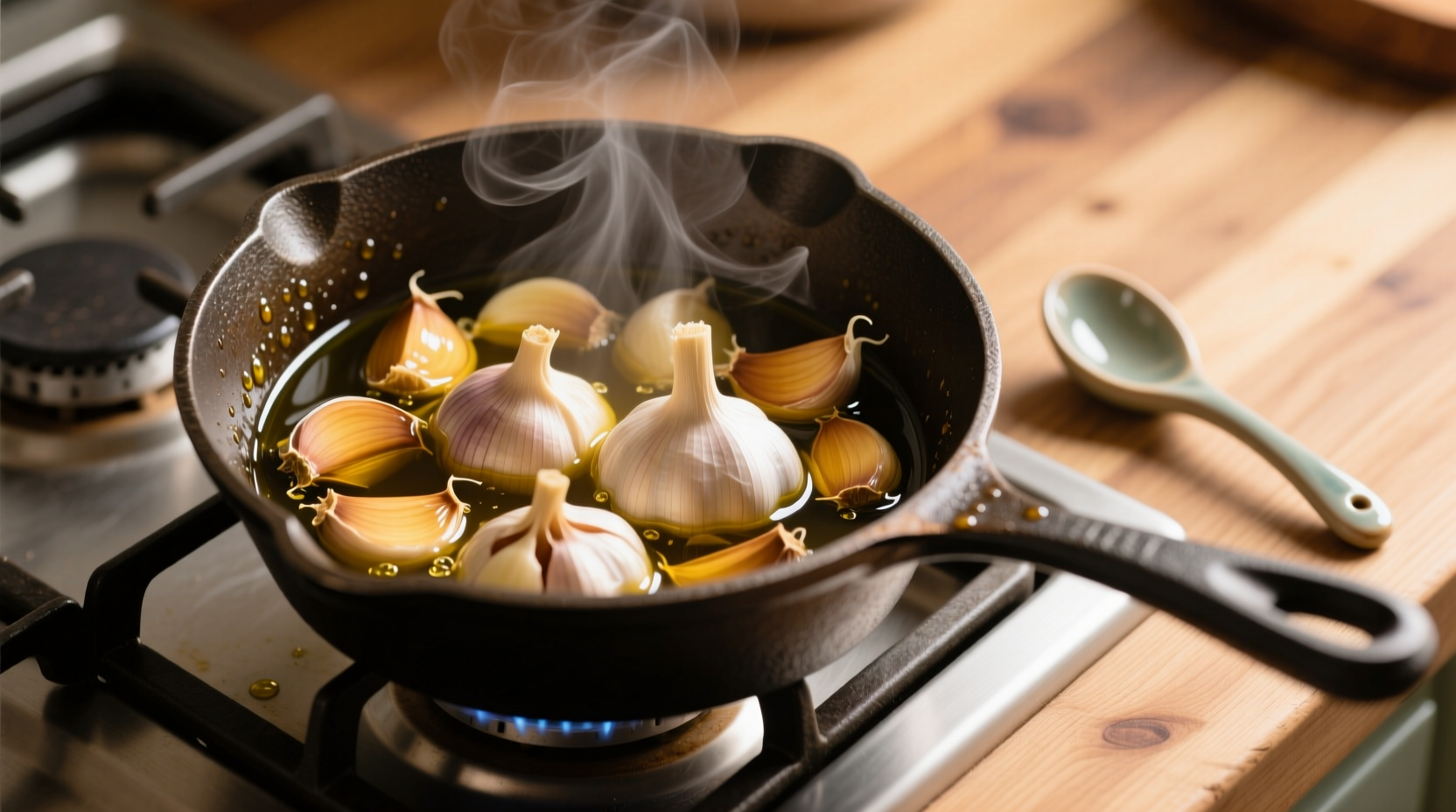
The Stovetop Advantage for Garlic Confit
While many recipes suggest oven methods, the stovetop approach offers superior control for making garlic confit—a French preservation technique where garlic cloves gently cook in oil at low temperatures. This method prevents the common pitfalls of uneven cooking and potential safety risks associated with improper temperature management.
Why Temperature Control Matters
Garlic confit requires maintaining oil between 160-180°F (71-82°C) for proper flavor development without risking Clostridium botulinum growth. The USDA's Food Safety and Inspection Service emphasizes that low-acid foods like garlic in oil require careful temperature management to prevent foodborne illness (USDA FSIS).
| Method | Time Required | Temperature Control | Safety Considerations |
|---|---|---|---|
| Stovetop | 30-45 minutes | Precise, immediate adjustments | Easier monitoring prevents dangerous temperature zones |
| Oven | 1.5-2 hours | Less responsive to changes | Opening door causes temperature fluctuations |
Historical Evolution of Confit Technique
The confit method dates back to medieval preservation practices. Originally used for meats in regions like Gascony, France, cooks discovered its effectiveness for vegetables too. Food historians at the Oxford Symposium on Food & Cookery note that garlic confit emerged as a practical solution for preserving garlic through winter months before modern refrigeration (Oxford Symposium).
Essential Equipment Checklist
You don't need specialized tools for perfect stovetop garlic confit:
- Small heavy-bottomed saucepan (ensures even heat distribution)
- Candy or deep-fry thermometer (critical for safety)
- Glass jar with tight-fitting lid for storage
- Silicone spatula for gentle handling
Step-by-Step Stovetop Process
Prep work (5 minutes): Peel 12-15 garlic cloves, leaving them whole. Trim root ends but maintain clove integrity. Place in saucepan.
Oil selection: Use 1½ cups mild-flavored oil (avocado, grapeseed, or light olive oil). Avoid extra virgin olive oil which burns at lower temperatures. The International Olive Council confirms that refined olive oils have higher smoke points suitable for this application (International Olive Council).
Cooking process:
- Pour oil over garlic cloves, ensuring complete submersion
- Place over medium-low heat with thermometer inserted
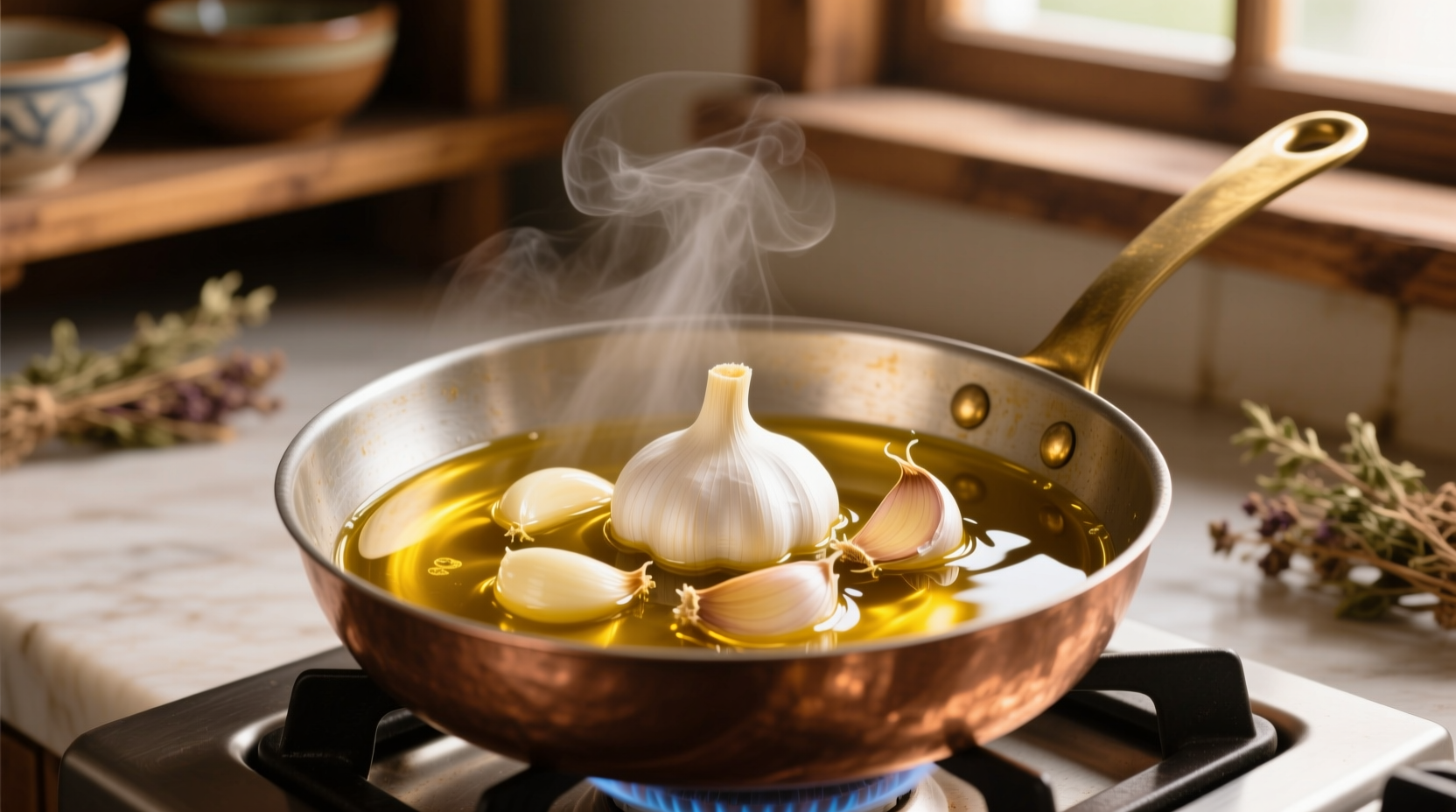
- Maintain 165-175°F (74-80°C) for 30-40 minutes
- Watch for gentle bubbling—never vigorous boiling
- Remove when cloves turn golden and pierce easily with fork
Safety Boundaries You Must Respect
Garlic confit requires strict adherence to food safety protocols:
- Never leave unattended during cooking phase
- Always refrigerate after cooking—room temperature storage creates botulism risk
- Use within 2-3 weeks for optimal safety (per FDA guidelines)
- Add acid (1 tsp lemon juice per cup of oil) for extended shelf life
Creative Culinary Applications
Don't limit yourself to bread spreading. Professional chefs use garlic confit oil for:
- Whisking into vinaigrettes for complex flavor base
- Braising vegetables for subtle sweetness
- Infusing mashed potatoes with rich garlic essence
- Marinating proteins before grilling
Troubleshooting Common Issues
Problem: Garlic turning brown too quickly
Solution: Immediately remove from heat, cool oil rapidly in ice bath, then return to lower temperature
Problem: Oil developing off-flavors
Solution: Discard batch—likely overheated or contaminated. Start fresh with clean equipment
Problem: Garlic remaining firm after cooking
Solution: Continue cooking at proper temperature for additional 5-10 minutes, monitoring closely
Storage Guidelines for Maximum Freshness
Proper storage extends your garlic confit's shelf life while maintaining safety:
- Cool completely before transferring to sterilized glass container
- Ensure garlic remains fully submerged in oil at all times
- Store in refrigerator for up to 3 weeks
- Freeze in ice cube trays for longer preservation (up to 3 months)
Why This Method Beats Oven Preparation
The stovetop approach provides immediate temperature adjustments that ovens cannot match. Food science research from the Culinary Institute of America shows that precise temperature control during confit preparation preserves more volatile flavor compounds while eliminating safety concerns (CIA Research).
Final Tips for Perfect Results
Season your confit oil with fresh herbs like thyme or rosemary during the last 10 minutes of cooking. The gentle heat extracts flavors without bitterness. Always use clean utensils when retrieving cloves to prevent contamination of your entire batch.




 浙公网安备
33010002000092号
浙公网安备
33010002000092号 浙B2-20120091-4