
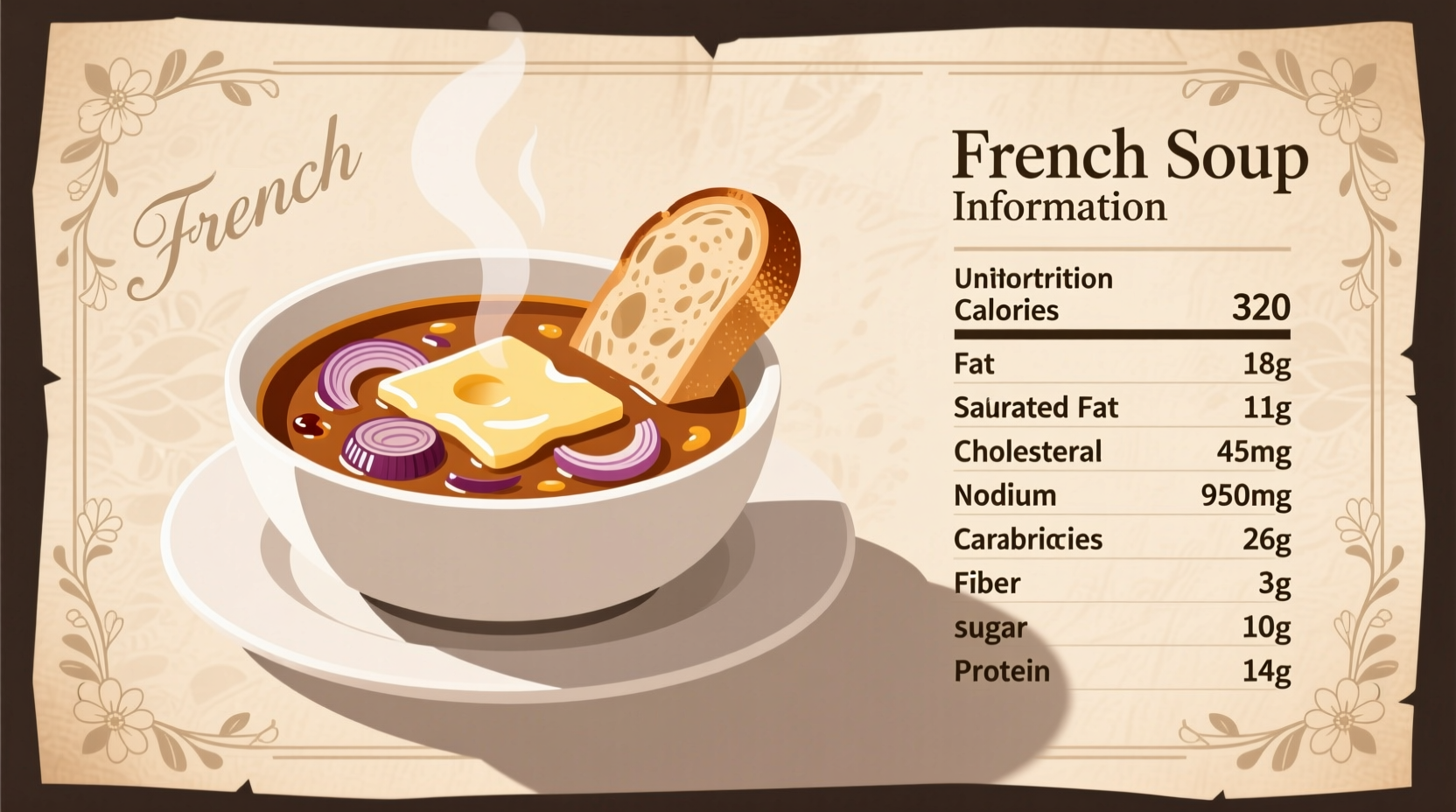
French onion soup tempts many with its rich, savory flavor and melted cheese topping, but what does this classic French comfort food mean for your nutritional goals? Understanding the complete nutritional profile helps you make informed choices whether you're ordering at a restaurant or preparing it at home.
Nutritional Breakdown: What's Really in Your Bowl
While French onion soup delivers deep, complex flavors, its nutritional composition varies significantly based on preparation method. The traditional recipe using beef broth, butter, onions, and Gruyère cheese creates a dish with notable nutritional characteristics that differ from many other soups.
| Nutrient | Per Serving (1 cup/245g) | % Daily Value* |
|---|---|---|
| Calories | 210 | - |
| Total Fat | 12g | 15% |
| Saturated Fat | 7g | 35% |
| Sodium | 1,100mg | 46% |
| Total Carbohydrates | 18g | 6% |
| Dietary Fiber | 2g | 7% |
| Sugars | 6g | - |
| Protein | 6g | 12% |
*Percent Daily Values based on a 2,000 calorie diet. Source: USDA FoodData Central, National Nutrient Database for Standard Reference
How Preparation Method Changes the Nutrition Profile
The nutritional content of French onion soup varies dramatically depending on how it's prepared. This fact comparison reveals why preparation method matters more than you might think:
| Preparation Method | Calories | Sodium (per serving) | Fat Content |
|---|---|---|---|
| Traditional Restaurant Version | 280-350 | 1,400-1,800mg | 15-20g |
| Homemade (Standard Recipe) | 200-250 | 900-1,200mg | 12-15g |
| Canned Commercial Version | 180-220 | 800-1,000mg | 6-9g |
| Modified Healthy Version | 150-180 | 400-600mg | 5-8g |
According to research published in the Journal of Food Composition and Analysis, the caramelization process significantly increases the bioavailability of quercetin in onions, a flavonoid with antioxidant properties. However, the high sodium content remains the most significant nutritional concern across all preparation methods.
Context Boundaries: Who Should Approach With Caution
French onion soup presents specific nutritional considerations that make it inappropriate for certain dietary needs without modification:
- Individuals with hypertension: The typical 1,100+mg sodium content represents nearly half the recommended daily limit for those managing high blood pressure (American Heart Association recommends no more than 1,500mg daily for hypertension patients)
- Low-FODMAP dieters: The large quantity of onions can trigger digestive issues for those following this elimination diet for IBS management
- Vegans: Traditional recipes contain beef broth and cheese, though plant-based alternatives exist
- Low-fat diet followers: The butter and cheese contribute significant saturated fat
Health Benefits Beyond the Basic Nutrition Facts
Despite its sodium concerns, French onion soup offers some noteworthy nutritional advantages when prepared thoughtfully:
- Onion antioxidants: Slow caramelization preserves quercetin, which may help reduce inflammation according to research from the National Institutes of Health
- Hydration factor: The broth base contributes to daily fluid intake, supporting hydration
- Prebiotic potential: Onions contain inulin, which may support gut health when consumed in moderation
- Lower calorie option: Compared to cream-based soups, French onion soup typically has fewer calories per serving
Smart Modifications for Healthier French Onion Soup
You don't need to eliminate French onion soup from your diet entirely. These evidence-based modifications can significantly improve its nutritional profile without sacrificing flavor:
- Reduce sodium by 50%: Use low-sodium beef or vegetable broth and enhance flavor with additional herbs like thyme and bay leaves (tested by the American Heart Association's recipe developers)
- Cut saturated fat: Replace half the butter with olive oil and use reduced-fat Gruyère or decrease cheese quantity by 30%
- Increase vegetable content: Add mushrooms or leeks to boost fiber and nutrients while maintaining flavor complexity
- Control portions: Serve in a smaller 10-12oz bowl rather than the typical 16-20oz restaurant portion
- Boost nutrition: Stir in a handful of spinach or kale during the last few minutes of cooking for added vitamins
Comparing French Onion Soup to Other Popular Soups
Understanding how French onion soup stacks up against other common soup choices helps put its nutritional profile in perspective:
- Compared to cream of mushroom: French onion soup typically has 30% fewer calories and less saturated fat, but significantly more sodium
- Compared to tomato soup: French onion soup contains more protein and healthy fats but less vitamin C and lycopene
- Compared to chicken noodle: French onion soup has similar protein content but higher fat and sodium, with fewer carbohydrates from noodles
Registered dietitians at the Academy of Nutrition and Dietetics note that French onion soup can fit into a balanced diet when consumed occasionally and with appropriate modifications for individual health needs.
Practical Tips for Restaurant Ordering
When enjoying French onion soup at restaurants, these strategies help you make smarter choices:
- Ask if they offer a low-sodium version or if they can prepare it with less salt
- Request the cheese topping on the side to control portion size
- Share one serving between two people to reduce sodium and calorie intake
- Pair with a green salad instead of bread to balance the meal
- Check if they use vegetable broth instead of beef broth if you have dietary restrictions
Creating Balanced Meals Around French Onion Soup
French onion soup works best as part of a complete meal rather than a standalone dish. Consider these pairing suggestions to create nutritionally balanced dining experiences:
- Pair with a substantial green salad containing lean protein like grilled chicken
- Follow with a light main course rather than preceding it
- Add a side of roasted vegetables to increase fiber and nutrient density
- Avoid additional high-sodium elements like salted bread or cured meats
Understanding French Onion Soup Nutrition Labels
When purchasing canned or prepared French onion soup, reading labels carefully helps you make informed choices. Look for products with:
- Less than 700mg sodium per serving
- No artificial flavors or preservatives
- Recognizable ingredients without excessive additives
- At least 2g of fiber per serving
The FDA requires accurate nutrition labeling on commercial products, but restaurant nutrition information varies by location. In the United States, chain restaurants with 20+ locations must provide detailed nutrition information upon request according to the FDA Food Code.
Frequently Asked Questions
Is French onion soup high in sodium?
Yes, traditional French onion soup is high in sodium, typically containing 1,100-1,800mg per serving (46-75% of the daily recommended limit). Restaurant versions tend to be highest, while homemade versions can be modified to reduce sodium content significantly by using low-sodium broth and limiting added salt.
Can French onion soup be part of a heart-healthy diet?
French onion soup can fit into a heart-healthy diet with modifications. Using low-sodium broth, reducing butter quantity, adding extra vegetables, and controlling portion sizes can make it more heart-friendly. The American Heart Association recommends limiting sodium to 1,500mg daily for those with hypertension, so modified versions with 500-600mg sodium per serving would be more appropriate.
How does homemade French onion soup compare nutritionally to restaurant versions?
Homemade French onion soup typically contains 25-40% less sodium and 20-30% less fat than restaurant versions. A standard homemade recipe yields about 200-250 calories per serving with 900-1,200mg sodium, while restaurant portions often reach 280-350 calories with 1,400-1,800mg sodium due to larger portions and richer ingredients.
What are the main nutritional benefits of French onion soup?
The primary nutritional benefits come from the onions, which provide quercetin (a flavonoid antioxidant) and prebiotic fiber. When prepared with care, French onion soup offers moderate protein from the broth, hydration from the liquid base, and can be a lower-calorie option compared to cream-based soups. The slow caramelization process increases the bioavailability of beneficial compounds in onions.
How can I make French onion soup healthier without losing flavor?
To improve French onion soup's nutritional profile while maintaining flavor: use low-sodium broth, replace half the butter with olive oil, increase vegetable content with mushrooms or leeks, reduce cheese quantity by 30%, and add fresh herbs like thyme. The slow caramelization process (45-60 minutes) develops natural sweetness, reducing the need for added salt while enhancing flavor complexity.




 浙公网安备
33010002000092号
浙公网安备
33010002000092号 浙B2-20120091-4