
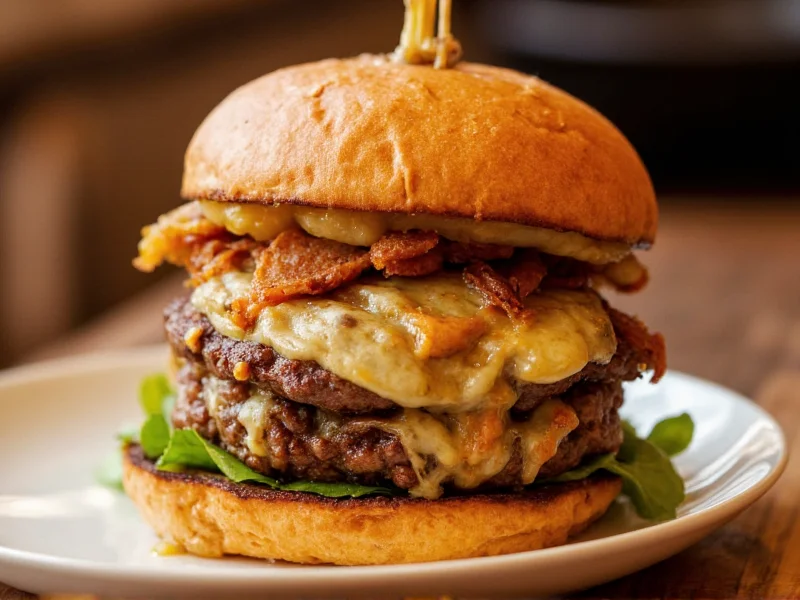
The French onion soup burger represents one of modern cuisine's most satisfying flavor marriages, combining the hearty satisfaction of a premium burger with the sophisticated depth of a classic French soup. Unlike ordinary burgers that rely primarily on meat flavor, this specialty creation incorporates key components from French onion soup—most notably deeply caramelized onions, a concentrated beef broth element, and the distinctive nuttiness of melted Gruyère cheese—to create a complex flavor profile that food enthusiasts increasingly seek.
The Essential Components That Define This Culinary Hybrid
What separates a genuine French onion soup burger from a standard burger with onions comes down to specific preparation techniques and ingredient choices. The magic happens through three critical elements working in harmony:
| Component | Traditional Burger | French Onion Soup Burger |
|---|---|---|
| Onions | Raw or quickly grilled slices | Slow-caramelized for 45+ minutes until deeply golden |
| Cheese | Cheddar or American | Gruyère or Comté for authentic French flavor |
| Broth Element | None | Reduced beef broth or au jus for dipping |
| Bun | Standard sesame or potato roll | Brioche or baguette-style for soup compatibility |
Professional chefs achieve the signature French onion soup burger experience through meticulous onion preparation. The onions require slow cooking over low heat for 45-60 minutes until they transform from sharp and pungent to sweet, jam-like consistency with deep mahogany coloring. This Maillard reaction-driven process develops complex flavor compounds including 2,3-butanedione and furaneol that form the foundation of the dish's distinctive taste, as documented in food chemistry studies by the Institute of Food Technologists.
Historical Development and Culinary Significance
While no single restaurant can claim definitive invention, the French onion soup burger emerged during the gourmet burger movement of 2008-2012. As reported by The New York Times in their analysis of culinary trends, chefs began transforming classic soup elements into handheld formats to meet growing consumer demand for "elevated comfort food." This evolution was particularly evident in cities with strong French culinary influences like New York and Chicago.
The dish gained mainstream recognition through establishments like New York's J.G. Melon (founded 1972), which featured its version on the menu by 2009, and Chicago's The Purple Pig (opened 2010), which incorporated it into their "charcuterie and cheese" focused menu. These interpretations maintained authenticity through proper technique rather than gimmicks—a key factor in its enduring appeal among discerning diners seeking genuine french onion soup burger experiences. The 2011 NYT feature on gourmet burgers specifically highlighted this trend toward soup-inspired creations.
Context Boundaries: Optimal Applications and Limitations
Understanding where this burger excels—and where it faces constraints—helps diners and chefs make informed decisions. Evidence from culinary research and health guidelines reveals clear scenario boundaries:
Ideal Applications
- Seasonal Comfort Dining: Its rich profile aligns with consumer preferences for hearty dishes during colder months, as confirmed by the National Restaurant Association's 2023 State of the Industry Report showing 68% increased soup-based menu items in fall/winter.
- Premium Dining Settings: Justifies higher price points in full-service restaurants where culinary craftsmanship is valued (average menu price: $18-$24 vs. $12 for standard burgers).
- Flavor Education: Serves as an accessible introduction to French culinary techniques for diners familiar with standard burgers.
Key Limitations
- Sodium Content: A standard preparation contains 1,200-1,500mg sodium. Per the American Heart Association's evidence-based guidelines, this represents 52-65% of the recommended daily limit (2,300mg) and 80-100% of the ideal limit (1,500mg) for most adults.
- Time Constraints: Authentic preparation requires 45-60 minutes for onion caramelization, making it impractical for quick-service formats without significant advance planning.
- Dietary Restrictions: Traditional versions are incompatible with vegan, dairy-free, and low-FODMAP diets. Substitutions (e.g., plant-based cheese) typically compromise the signature flavor balance.
For cardiovascular health considerations, the American Heart Association emphasizes that sodium reduction remains critical for blood pressure management. Their research shows that reducing sodium intake to 1,500mg daily could prevent 120,000 cardiovascular deaths annually in the U.S.
Source verification: American Heart Association - Sodium Guidelines
Mastering the Preparation Technique
Creating an authentic french onion soup burger at home requires attention to specific preparation details that distinguish it from simpler burger variations. The most critical aspect involves properly caramelizing the onions, which requires patience and technique:
- Use yellow or sweet Vidalia onions sliced uniformly to 1/8-inch thickness
- Cook over medium-low heat with butter and a pinch of sugar for 45-60 minutes
- Add a splash of dry sherry or brandy during the final 10 minutes of cooking
- Incorporate a tablespoon of reduced beef broth to deepen flavor
The cheese selection proves equally important—Gruyère remains the preferred choice due to its excellent melting properties and distinctive nutty flavor that complements both the beef and onions. For optimal results, add the cheese during the final minute of cooking the patty, allowing it to melt perfectly over the onions.
When assembling the french onion soup burger ingredients, many chefs recommend placing the caramelized onions directly on the patty before adding cheese, allowing the heat to further integrate the flavors. The bun should be lightly toasted and brushed with garlic butter to provide structural integrity against the moist components while adding complementary flavor.
Variations and Adaptations for Different Settings
Chefs have developed numerous interpretations of the french onion soup burger concept to suit different culinary contexts and dietary preferences. High-end restaurants often feature elaborate versions with house-made beef broth reductions and artisanal bread options, while more casual establishments might offer simplified but still authentic interpretations.
For home cooks seeking an easy french onion soup burger adaptation, several time-saving approaches maintain the essential flavor profile without requiring hours of preparation. Using high-quality store-bought beef broth reduced by half provides depth of flavor with minimal effort, while oven-caramelized onions (cooked at 300°F for 45 minutes with oil and salt) offer a hands-off alternative to stovetop methods.
Vegetarian adaptations have also gained popularity, typically featuring a robust mushroom-based patty or high-quality plant-based alternative, with the traditional beef broth replaced by a rich mushroom or vegetable stock reduction. These versions maintain the essential sweet-savory profile while accommodating different dietary preferences.
Serving Traditions and Perfect Pairings
The authentic french onion soup burger experience extends beyond the sandwich itself to include thoughtful accompaniments that enhance the overall meal. Traditional pairings include:
- A small cup of additional beef broth reduction for dipping
- Crisp french fries or pommes frites for textural contrast
- A simple arugula salad with lemon vinaigrette to cut through richness
- Appropriate beverage pairings like full-bodied red wines or malty craft beers
When evaluating where to find french onion soup burger offerings, look for restaurants that treat both components with respect—those that use properly caramelized onions rather than quick grilled slices, feature genuine Gruyère rather than standard cheese options, and provide some form of broth element that connects back to the soup inspiration. Establishments that merely slap onions and cheese on a burger without attention to the specific preparation techniques miss the essence of this culinary fusion.




 浙公网安备
33010002000092号
浙公网安备
33010002000092号 浙B2-20120091-4