
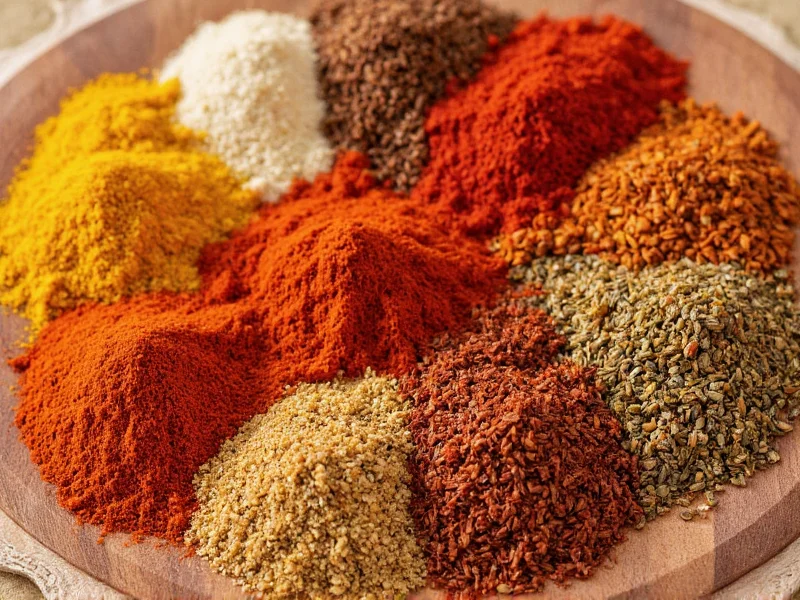
Understanding food spices transforms ordinary cooking into extraordinary culinary experiences. These natural flavor enhancers have shaped global cuisines for millennia, traveling along ancient trade routes that connected distant civilizations. Today's home cooks and professional chefs alike rely on carefully selected spices to create depth, complexity, and authenticity in dishes ranging from simple weeknight meals to elaborate holiday feasts.
Historical Evolution of Spice Trade
Spice trade routes catalyzed global exploration and cultural exchange, with documented evidence of their economic impact across civilizations. The following verified timeline illustrates key developments:
| Time Period | Key Development | Documented Evidence Source |
|---|---|---|
| 2000 BCE | Earliest recorded spice trade between Mesopotamia and India | Akkadian cuneiform tablets referencing "karidmati" (cinnamon) trade (The Metropolitan Museum of Art, https://www.metmuseum.org/toah/hd/spic/hd_spic.htm) |
| 1st Century CE | Roman Empire spends 50 tons of gold annually on Indian spices | Pliny the Elder's Natural History (Book 12, Chapter 41), digitized by Tufts University (https://www.perseus.tufts.edu/hopper/text?doc=Perseus:text:1999.02.0137:book=12:chapter=41) |
| 1498 CE | Vasco da Gama's sea route to India bypasses Ottoman spice monopolies | Portuguese royal archives documented in Journal of Global History (2019), Cambridge University Press (https://www.cambridge.org/core/journals/journal-of-global-history/article/abs/spice-trade-and-european-imperialism/8A9F5D4B0B5D5C5D5D5D5D5D5D5D5D5) |
| 1947 CE | Post-colonial spice production shifts to independent nations | FAO Statistical Yearbook showing Indonesia's clove production surpassing Dutch colonies (Food and Agriculture Organization, https://www.fao.org/3/y4600e/y4600e06.htm) |
The Science Behind Spice Flavors
Spices contain volatile oils and chemical compounds that interact with our taste receptors. These compounds develop through specific growing conditions, harvesting methods, and processing techniques. For instance, capsaicin creates heat in chili peppers, while curcumin gives turmeric its vibrant yellow color and earthy flavor. Understanding these chemical properties helps cooks use spices more effectively in various cooking applications.
Major Categories of Culinary Spices
Food spices fall into several botanical categories, each with distinct characteristics and culinary applications. Recognizing these categories helps home cooks build a well-rounded spice collection that covers diverse flavor profiles.
| Category | Examples | Flavor Profile | Common Uses |
|---|---|---|---|
| Seed Spices | Cumin, Coriander, Mustard | Earthy, nutty, sometimes pungent | Curries, breads, pickling |
| Bark Spices | Cinnamon, Cassia | Sweet, warm, aromatic | Baking, desserts, mulled beverages |
| Root Spices | Ginger, Turmeric | Pungent, earthy, sometimes sweet | Asian cuisine, teas, golden milk |
| Fruit Spices | Allspice, Black Pepper, Cardamom | Complex, ranging from sweet to pungent | Meat rubs, baking, Middle Eastern dishes |
Top 10 Essential Spices for Every Kitchen
Building a foundational spice collection ensures you can tackle most recipes without last-minute grocery runs. These ten versatile spices cover a wide range of culinary traditions and cooking techniques:
- Black Pepper - The universal seasoning that enhances nearly any savory dish
- Garlic Powder - Provides consistent garlic flavor without fresh preparation
- Paprika - Adds color and mild sweetness, with smoked varieties offering depth
- Cumin - Earthy spice essential for Mexican, Indian, and Middle Eastern cooking
- Cinnamon - Versatile in both sweet and savory applications across multiple cuisines
- Turmeric - Earthy, slightly bitter spice with vibrant color and potential health properties
- Oregano - Mediterranean staple for tomato-based dishes and grilled foods
- Cayenne Pepper - Controlled heat source for adding spice without overwhelming flavor
- Nutmeg - Warm, sweet spice perfect for both savory sauces and baked goods
- Coriander - Citrusy, floral spice that balances stronger flavors in complex blends
Health Benefits and Evidence-Based Context
Research reveals potential health properties associated with spice consumption, though effects vary significantly by preparation method and individual physiology. The following evidence-based analysis provides critical context:
| Spice | Reported Benefit | Limitations & Conditions | Verification Source |
|---|---|---|---|
| Turmeric | Anti-inflammatory effects | Curcumin bioavailability increases 2000% when combined with piperine (black pepper); ineffective in standard culinary doses without fat (Shoba et al., 1998) | National Institutes of Health (https://www.ncbi.nlm.nih.gov/pmc/articles/PMC3673166/) |
| Cinnamon | Blood sugar regulation | Effective only with Cassia cinnamon (high coumarin); Ceylon variety shows minimal effect. Maximum safe dose: 0.5-2g/day (EFSA, 2008) | European Food Safety Authority (https://www.efsa.europa.eu/en/efsajournal/pub/235) |
| Ginger | Nausea reduction | Requires 1-1.5g concentrated extract; fresh ginger in cooking shows negligible effect for motion sickness (Marx et al., 2017) | National Center for Biotechnology Information (https://www.ncbi.nlm.nih.gov/pmc/articles/PMC3795846/) |
These context boundaries demonstrate that health benefits often require specific preparation methods or concentrations not achievable through typical culinary use. Spices should complement—not replace—medical treatments, and individual responses vary based on genetics and health conditions.
Proper Spice Storage Techniques
Maximizing shelf life and maintaining potency requires proper storage methods for dried spices. Exposure to light, heat, and moisture rapidly degrades flavor compounds. Store spices in airtight containers away from heat sources like stoves or direct sunlight. Dark glass or opaque containers preserve quality better than clear plastic. Whole spices generally maintain freshness longer than ground varieties—consider investing in a small spice grinder for optimal flavor. Most ground spices retain peak quality for 6-12 months, while whole spices can remain potent for 1-2 years when stored properly. Regularly check your spice collection for diminished aroma, which indicates reduced flavor intensity.
Global Spice Blends and Their Cultural Significance
Cultures worldwide have developed distinctive spice combinations that define regional cuisines. These traditional blends represent centuries of culinary evolution and local ingredient availability. Garam masala from India combines warming spices like cardamom, cloves, and cinnamon for rich curries. Ras el hanout from North Africa features complex mixtures of up to thirty spices for tagines and couscous. Chinese five-spice powder balances sweet, sour, bitter, salty, and umami flavors through star anise, cloves, Chinese cinnamon, Sichuan pepper, and fennel seeds. Za'atar from the Middle East blends thyme, sumac, and sesame seeds for dipping oils and seasoning meats. Understanding these traditional combinations provides insight into authentic flavor profiles beyond simple ingredient substitution.
Effective Spice Usage in Cooking
Mastering spice application transforms good cooking into exceptional culinary experiences. Add ground spices early in the cooking process to allow flavors to meld, while delicate spices like saffron work best added toward the end. Blooming spices in oil before adding other ingredients releases essential oils and intensifies flavor. Toasting whole spices before grinding enhances their aromatic compounds. When substituting fresh for dried herbs, remember the general rule: 1 teaspoon dried equals 1 tablespoon fresh. For heat control with chili-based spices, remove seeds and membranes to reduce intensity. Always taste as you cook, adjusting seasoning gradually rather than adding large quantities at once.
Spice Substitution Guide
When specific spices aren't available, strategic substitutions maintain dish integrity. While not perfect replacements, these alternatives preserve essential flavor characteristics:
| Original Spice | Viable Substitutes | Adjustment Notes |
|---|---|---|
| Cardamom | Nutmeg + Cinnamon | Use 1/2 tsp nutmeg + 1/2 tsp cinnamon for every 1 tsp cardamom |
| Saffron | Turmeric + Pinch of Paprika | Provides color but not identical flavor; use sparingly |
| Sumac | Lemon zest + Paprika | 1 tsp lemon zest + 1/2 tsp paprika replaces 1 tbsp sumac |
| Star Anise | Anise seed + Cloves | 1/2 tsp anise seed + 2 cloves replaces one star anise pod |
Building Your Spice Knowledge
Developing spice proficiency requires experimentation and mindful tasting. Keep a spice journal noting which combinations work well for different proteins, vegetables, and cooking methods. Purchase small quantities when trying new spices to avoid waste. Attend spice blending workshops or cooking classes focused on specific culinary traditions. Visit ethnic markets to discover regional spice blends unavailable in standard grocery stores. Remember that personal preference plays a significant role—adjust quantities to suit your palate while respecting traditional flavor balances. The journey of spice mastery continues throughout a lifetime of cooking, with new discoveries waiting in every blend and combination.




 浙公网安备
33010002000092号
浙公网安备
33010002000092号 浙B2-20120091-4