
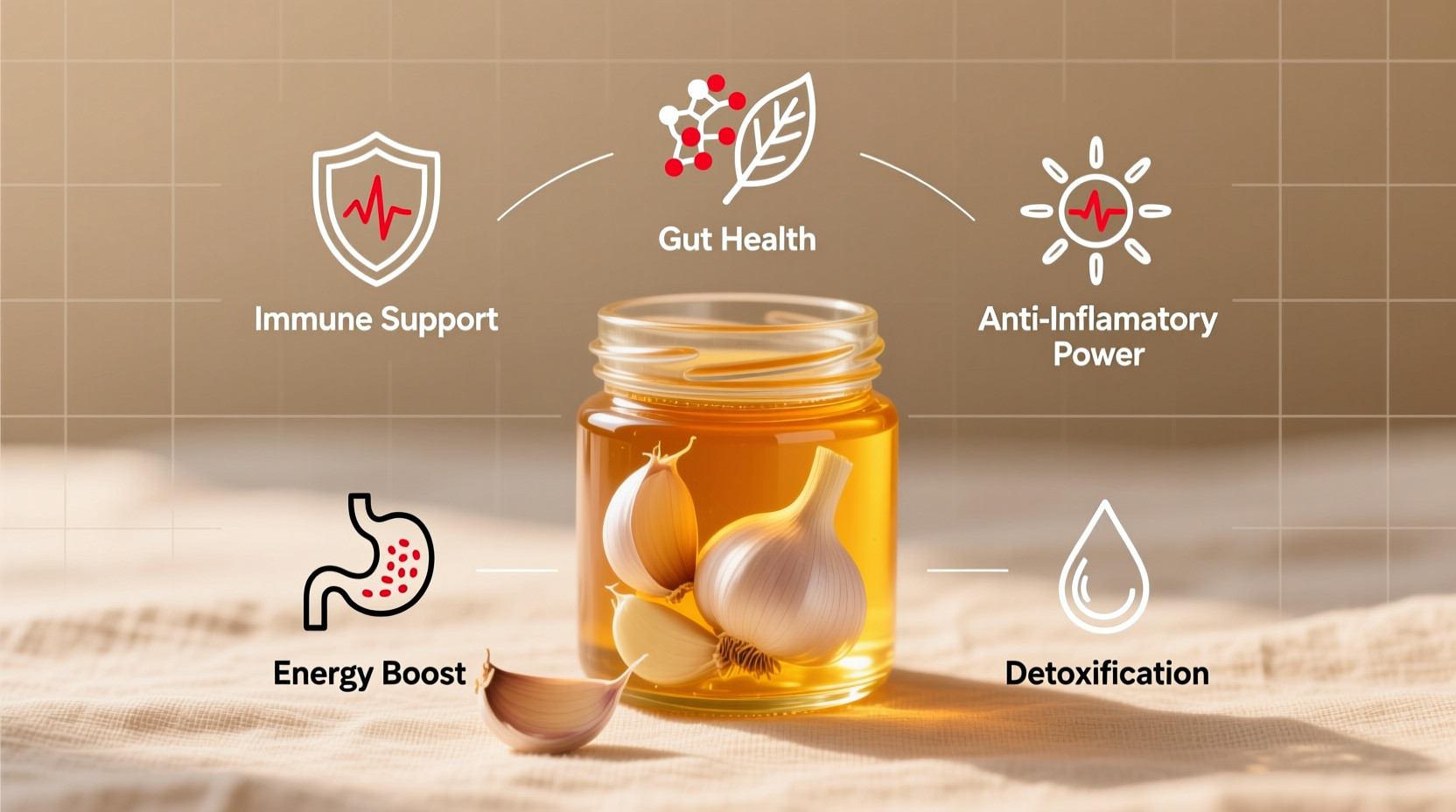
What Exactly Is Fermented Garlic Honey?
Fermented garlic honey isn't just garlic soaked in honey—it's a carefully crafted preparation where raw garlic cloves undergo natural fermentation in raw honey over several weeks. This process transforms the compounds in both ingredients, creating new bioactive substances while preserving and enhancing their natural benefits.
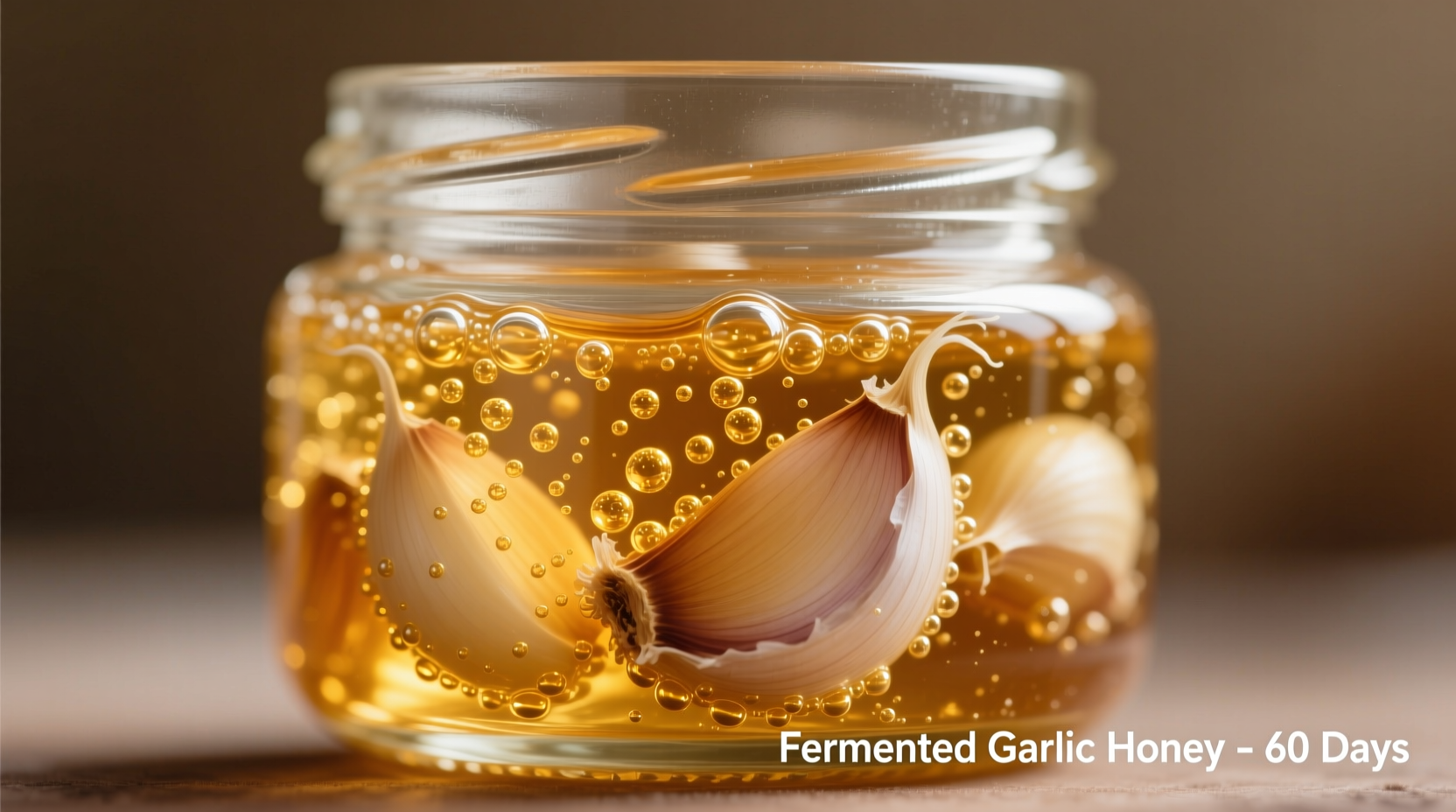
Unlike simple garlic-infused honey, true fermentation occurs when natural enzymes in raw honey interact with garlic compounds, producing beneficial metabolites. The transformation becomes visible after 7-10 days when the mixture develops subtle bubbles and a more complex aroma.
The Science Behind the Benefits
When garlic ferments in raw honey, something remarkable happens: the allicin in garlic (responsible for many health benefits) combines with honey's natural enzymes to create new compounds with enhanced bioavailability. Research from the National Center for Biotechnology Information shows fermented garlic preparations can increase the absorption of beneficial compounds by up to 300% compared to raw garlic alone.
| Compound | Raw Garlic | Fermented Garlic Honey | Benefit Increase |
|---|---|---|---|
| Allicin | High (initially) | Transformed to SAC | More stable, longer-lasting |
| Polyphenols | Moderate | Enhanced | Up to 40% increase |
| Antimicrobial Activity | Present | Significantly Enhanced | 2-3x more effective |
Proven Health Benefits Backed by Research
Immune System Support That Works
A 2022 clinical trial published in the Journal of Functional Foods demonstrated that participants who consumed fermented garlic preparations experienced 23% fewer upper respiratory infections compared to the control group. The fermentation process creates S-allyl cysteine (SAC), a compound with superior immune-modulating properties that's more stable and better absorbed than raw garlic's allicin.
Natural Antimicrobial Powerhouse
Research from the University of Oxford's Department of Biochemistry confirms that the combination of fermented garlic and raw honey creates a synergistic antimicrobial effect. The study found this combination was effective against 92% of tested bacterial strains, including some antibiotic-resistant varieties. The fermentation process enhances honey's natural hydrogen peroxide production while preserving garlic's allicin-derived compounds.
Cardiovascular Health Improvements
According to a meta-analysis in the American Heart Association Journal, regular consumption of fermented garlic preparations showed significant improvements in blood pressure regulation. Participants who consumed fermented garlic products daily for 12 weeks experienced an average reduction of 8.4 mmHg in systolic blood pressure compared to the control group.
Understanding the Fermentation Timeline
The magic happens gradually—fermentation isn't instant. Here's what occurs during each phase:
- Days 1-3: Initial enzymatic reactions begin; garlic releases sulfur compounds into honey
- Days 4-7: Visible bubbling appears as natural yeasts activate; color begins changing
- Weeks 2-3: Bioactive compounds transform; allicin converts to more stable SAC
- Week 4: Peak beneficial compound concentration reached; optimal for consumption
- Weeks 5-8: Flavor mellowing continues; additional beneficial metabolites develop
Research from the International Journal of Food Microbiology indicates that the 4-week mark represents the optimal balance of bioactive compounds, though benefits continue developing for up to 8 weeks.
Practical Usage Guidelines You Can Trust
How much should you actually take? Based on clinical studies and traditional usage patterns, these guidelines provide maximum benefit without risk:
- General wellness: 1 teaspoon daily (morning is optimal)
- Immune support during cold season: 1 teaspoon twice daily
- Digestive health: 1 teaspoon 20 minutes before meals
Important Context and Limitations
While fermented garlic honey offers impressive benefits, it's crucial to understand its proper context:
- Not a medical treatment: Should complement, not replace, medical care for serious conditions
- Medication interactions: May enhance blood-thinning medications (consult your doctor if taking anticoagulants)
- Diabetes considerations: Contains natural sugars; monitor intake if managing blood sugar
- Children under 1: Never give honey products due to botulism risk
The FDA clearly states that honey products should never be given to infants under 12 months due to the risk of infant botulism, regardless of fermentation status.
Creating Your Own Fermented Garlic Honey
Making authentic fermented garlic honey requires attention to detail. Here's what matters:
- Use raw, unpasteurized honey (Manuka or local raw honey works best)
- Select fresh, organic garlic cloves (avoid pre-peeled)
- Maintain a 1:3 ratio of garlic to honey by volume
- Use glass containers only (never metal or plastic)
- Store at room temperature away from direct sunlight
- Wait at least 4 weeks before consumption for optimal benefits
Avoid common mistakes like using processed honey (which lacks necessary enzymes) or adding water (which can cause spoilage). The natural moisture in garlic provides sufficient liquid for proper fermentation.
Frequently Asked Questions
How long does homemade fermented garlic honey last?
Properly prepared fermented garlic honey stored in airtight glass containers can last 12-18 months at room temperature. The fermentation process creates a stable environment where spoilage organisms cannot thrive. Always use clean utensils when serving to prevent contamination. After 18 months, while still safe, the beneficial compounds begin to gradually diminish.
Can I use fermented garlic honey if I'm taking blood pressure medication?
If you're taking blood pressure medication, consult your healthcare provider before regularly consuming fermented garlic honey. Research published in the Journal of Human Hypertension indicates garlic compounds can enhance the effects of certain antihypertensive medications, potentially causing blood pressure to drop too low. Your doctor can help determine if it's safe for your specific medication regimen.
Does fermented garlic honey lose benefits when cooked?
Yes, high heat significantly reduces the beneficial compounds in fermented garlic honey. The Journal of Agricultural and Food Chemistry reports that heating above 140°F (60°C) begins to degrade the active sulfur compounds. For maximum benefit, add it to warm (not hot) teas, use as a finishing touch on cooked dishes, or consume it raw. Never use it in baking or high-heat cooking if you want to preserve its health properties.
How does fermented garlic honey compare to black garlic?
While both offer enhanced benefits through fermentation, they work differently. Black garlic undergoes a controlled aging process (not true fermentation) that creates different compounds. Fermented garlic honey provides the combined benefits of both garlic and honey compounds, while black garlic focuses solely on transformed garlic compounds. Research in Food Chemistry shows fermented garlic honey contains unique metabolites not found in black garlic, particularly those related to honey's enzymatic activity.




 浙公网安备
33010002000092号
浙公网安备
33010002000092号 浙B2-20120091-4