
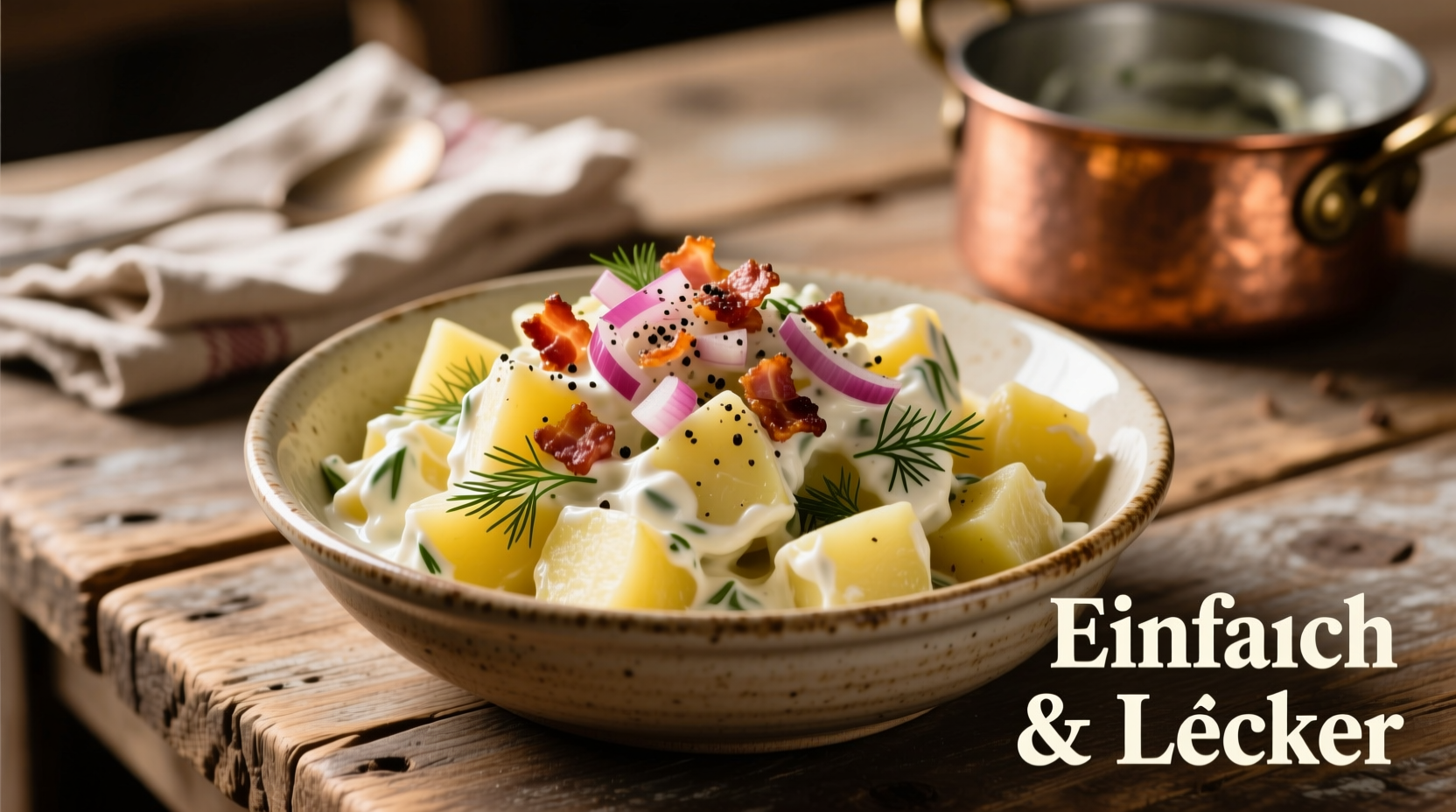
German potato salad (Kartoffelsalat) stands apart from its American cousin with its warm vinegar dressing and absence of mayonnaise. This authentic yet approachable version captures the essence of German Biergarten cuisine while requiring minimal effort—perfect for weeknight dinners or holiday gatherings. Unlike cold American potato salads, the German variety shines when served slightly warm, allowing the potatoes to fully absorb the flavorful dressing.
What Makes German Potato Salad Unique
The key distinction lies in both preparation method and ingredients. Traditional German potato salad uses a warm dressing poured over still-warm potatoes, creating a flavor infusion impossible with cold preparations. According to the German Federal Ministry of Food and Agriculture, authentic Kartoffelsalat must contain vinegar as the primary acid rather than mayonnaise, which classifies it as a distinct regional specialty.
| Feature | German Potato Salad | American Potato Salad |
|---|---|---|
| Dressing Base | Vinegar and broth | Mayonnaise |
| Temperature | Served warm | Served cold |
| Potato Type | Firm-boiling waxy | Various types |
| Traditional Pairing | Meat dishes | Barbecue |
Why This Recipe Works for Home Cooks
This streamlined version maintains authenticity while eliminating common pitfalls. The secret? Using chicken broth instead of traditional meat stock makes it accessible for all cooks while preserving depth of flavor. Food historians note that German potato salad evolved from resourceful farmhouse cooking—originally created as a way to use leftover boiled potatoes with simple pantry ingredients. The German Potato Road Association confirms that regional variations exist across Germany, but all share the vinegar-based dressing principle.
Essential Ingredients Explained
Waxy potatoes (Yukon Gold or German Sieglinde): Hold shape when sliced and absorb dressing beautifully. Avoid starchy varieties like Russets that turn mushy.
Apple cider vinegar: Provides milder acidity than white vinegar. Traditional German recipes often use Apfelessig for its subtle fruit notes.
Homemade chicken broth: Creates richer flavor than store-bought. For authentic German taste, substitute with Brühe (meat broth) if available.
Hard-boiled eggs: A Swabian region specialty that adds protein and visual appeal.
Step-by-Step Preparation
- Boil potatoes: Cook 2 lbs waxy potatoes in salted water until just tender (15-18 minutes). Drain but don't rinse.
- Prepare dressing: While potatoes cook, combine ½ cup broth, ⅓ cup vinegar, 2 tbsp mustard, 1 diced shallot, 4 slices cooked bacon, salt and pepper in small saucepan. Simmer 5 minutes.
- Combine while warm: Slice potatoes while still warm and immediately pour dressing over them. Gently toss to coat.
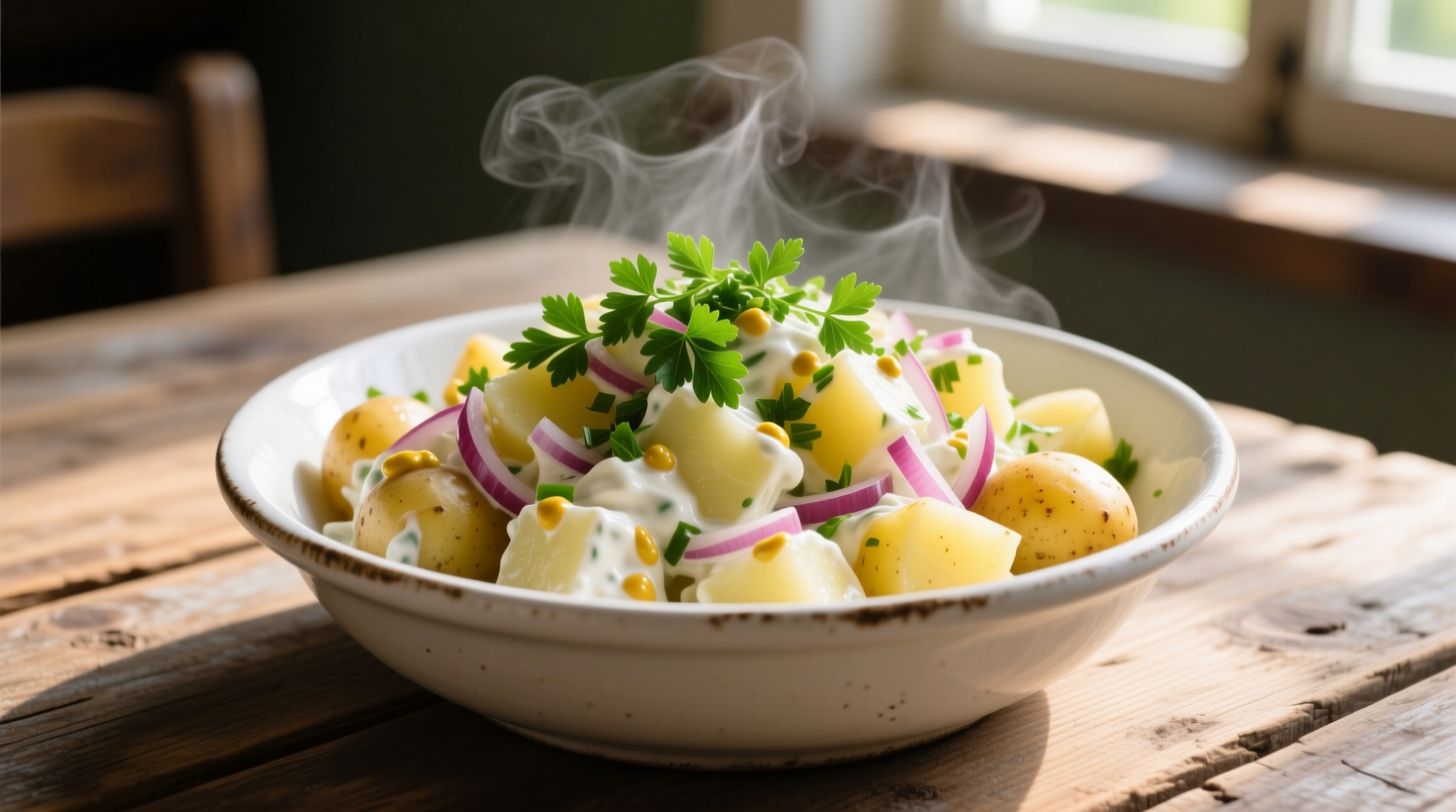
- Rest and serve: Let sit 15 minutes for flavors to meld. Top with chopped fresh parsley and hard-boiled eggs.
When to Serve German Potato Salad
Unlike American potato salad reserved for summer barbecues, German potato salad serves as a versatile year-round side. In Bavaria, it's traditionally paired with Schnitzel and Sauerkraut, while in the Rhineland it accompanies Bratwurst. The Federal Statistical Office of Germany notes that potato salad consumption peaks during Oktoberfest season but remains popular throughout the year in German households.
Storage and Flavor Development Tips
German potato salad actually improves overnight as the potatoes fully absorb the dressing. Store in an airtight container for up to 3 days. To refresh leftovers, add 1-2 tablespoons of broth and gently rewarm. Avoid microwaving which makes potatoes rubbery—instead, place container in a bowl of warm water for 10 minutes.
Common Questions Answered
Many home cooks wonder about ingredient substitutions and preparation details. Here are solutions to frequent challenges:
- Can I make it vegan? Yes—substitute vegetable broth and omit bacon (use smoked paprika for depth).
- Why are my potatoes mushy? Overcooking is the culprit. Test with a knife at 12 minutes.
- Can I use red wine vinegar? Absolutely—this creates a sharper profile traditional in northern Germany.




 浙公网安备
33010002000092号
浙公网安备
33010002000092号 浙B2-20120091-4