
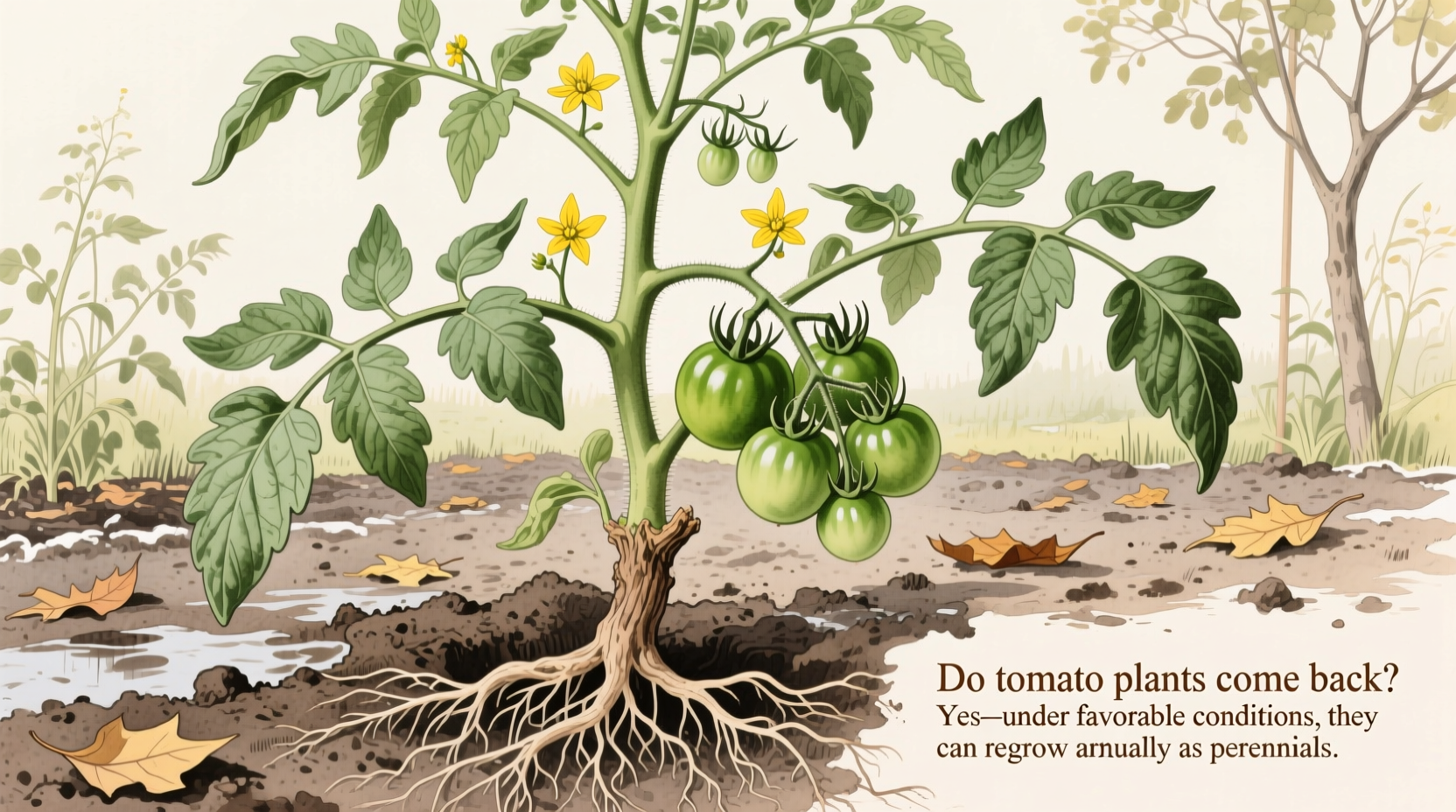
Understanding Tomato Plant Biology: Annuals vs. Perennials
When gardeners ask do tomato plants come back, they're often confused about tomato plant classification. Botanically known as Solanum lycopersicum, tomatoes are tender perennials that behave as annuals in most regions due to their extreme sensitivity to cold temperatures.
Unlike true perennials such as asparagus or rhubarb that return reliably each spring, tomato plants:
- Complete their entire life cycle (seed to flower to fruit to death) within one growing season
- Cannot survive freezing temperatures that occur in most temperate climates
- Lack the dormancy mechanisms that allow perennial plants to survive winter
Climate Zone Impact on Tomato Survival
Your location dramatically affects whether tomato plants can potentially survive beyond one season. The USDA Plant Hardiness Zone Map provides critical context for understanding if tomato plants come back in your area.
| USDA Zone | Winter Temperatures | Tomato Survival Potential | Practical Reality |
|---|---|---|---|
| 1-6 | -60°F to 0°F (-51°C to -18°C) | None | Plants die with first frost; must replant annually |
| 7-9 | 0°F to 25°F (-18°C to -4°C) | Very limited | Rare survival without protection; typically treated as annuals |
| 10-11 | 30°F to 40°F (-1°C to 4°C) | Moderate | Potential to overwinter with protection; may produce second season |
| Tropical (12-13) | Rarely below 50°F (10°C) | High | Naturally perennial; can produce for 2-3 years |
According to research from the University of California Agriculture and Natural Resources, tomatoes cease growth at temperatures below 50°F (10°C) and suffer irreversible damage below 32°F (0°C). This explains why tomato plants don't come back in regions with freezing winters.
Exceptions: When Tomato Plants Might Return
While do tomato plants come back typically has a negative answer, there are specific circumstances where tomatoes can survive beyond one season:
Tropical and Subtropical Climates
In USDA zones 10-13 where temperatures never drop below 50°F (10°C), tomatoes grow as true perennials. The University of Florida IFAS Extension confirms that in these regions, properly cared for tomato plants can produce fruit for 2-3 years before declining.
Overwintering Techniques for Temperate Climates
Gardeners in cooler climates can extend tomato plant life through these methods:
- Container growing: Move potted plants indoors before first frost
- Cutting back: Reduce plant size by 50% and place in bright, cool location (55-65°F)
- Root cuttings: Take 4-6 inch cuttings in fall, root in water, and restart indoors
The Cornell University Gardeners' Resource notes that successfully overwintered plants typically produce earlier but smaller harvests in their second season compared to new plants.
Practical Gardening Strategies for Continuous Harvest
Rather than wondering do tomato plants come back, focus on these proven strategies for reliable harvests:
Season Extension Methods
Maximize your growing season with these techniques:
- Use black plastic mulch to warm soil 2-3 weeks earlier in spring
- Employ cold frames or hoop houses for frost protection
- Choose fast-maturing varieties (55-65 days to harvest) for shorter seasons
Succession Planting Schedule
For continuous harvest without relying on overwintered plants:
- Start early varieties indoors 6-8 weeks before last frost
- Plant main crop varieties 2 weeks after last frost
- Plant late-season varieties in mid-summer for fall harvest
Common Misconceptions About Tomato Plants Returning
Several myths persist about tomato plants coming back that need clarification:
"Volunteer" Tomatoes Aren't the Same Plant
When tomatoes appear in the same spot the following year, they're usually volunteers from dropped fruit seeds, not the original plant returning. These volunteer seedlings often lack the disease resistance and productivity of cultivated varieties.
Indeterminate vs. Determinate Confusion
Many gardeners confuse indeterminate (vining) tomatoes that grow continuously during season with perennials. While indeterminates produce fruit throughout the season, they still die with frost and don't return the following year without intervention.
Planning for Next Season: Better Than Waiting for Plants to Return
Instead of hoping do tomato plants come back has a positive answer, implement these proactive strategies:
- Save seeds: Collect seeds from your best fruits for next year's planting
- Soil improvement: Amend soil with compost over winter for healthier next-year plants
- Disease prevention: Rotate crops to different garden areas annually
- Start early: Begin new plants indoors 6-8 weeks before last frost date
According to the National Gardening Association, starting fresh plants each year typically yields 30-50% more fruit than attempting to overwinter plants, making it the preferred approach for most home gardeners.
Final Thoughts on Tomato Plant Longevity
While the straightforward answer to do tomato plants come back is generally "no" in most climates, understanding the nuances of tomato plant biology empowers you to maximize your harvest. Whether through strategic season extension, careful overwintering, or simply planning better for next year, you can enjoy abundant tomatoes without relying on plants returning naturally.
For most gardeners, starting fresh each season with new, vigorous plants provides the most reliable and productive results. Focus your energy on proper soil preparation, variety selection, and season extension techniques rather than hoping your plants will survive the winter.
Can tomato plants survive winter outdoors?
Tomato plants cannot survive freezing temperatures outdoors. They suffer damage below 32°F (0°C) and die completely with hard frost. In USDA zones 10-13 where temperatures never drop below 50°F, they can survive winter and produce for multiple years.
How do I overwinter tomato plants indoors?
To overwinter tomato plants, move potted plants indoors before first frost, cut back by 50%, and place in a bright location with temperatures between 55-65°F. Water sparingly and provide supplemental lighting if natural light is limited. Expect reduced production in the second season.
Why do volunteer tomato plants appear in my garden?
Volunteer tomato plants grow from seeds in dropped or rotting fruit from the previous season. These are not the same plants returning but new seedlings. They often lack disease resistance and may produce inferior fruit compared to cultivated varieties.
Are there perennial tomato varieties available?
True perennial tomatoes don't exist for temperate climates. Some breeders are working on more cold-tolerant varieties, but all standard tomato varieties remain tender perennials that function as annuals outside tropical zones. The closest option is growing tomatoes as perennials in USDA zones 10-13.
Should I try to save my tomato plants over winter?
For most gardeners, starting fresh plants each year yields better results than overwintering. Overwintered plants typically produce 30-50% less fruit and may carry diseases into the new season. The effort required often outweighs the benefits compared to planting new, vigorous seedlings.




 浙公网安备
33010002000092号
浙公网安备
33010002000092号 浙B2-20120091-4