
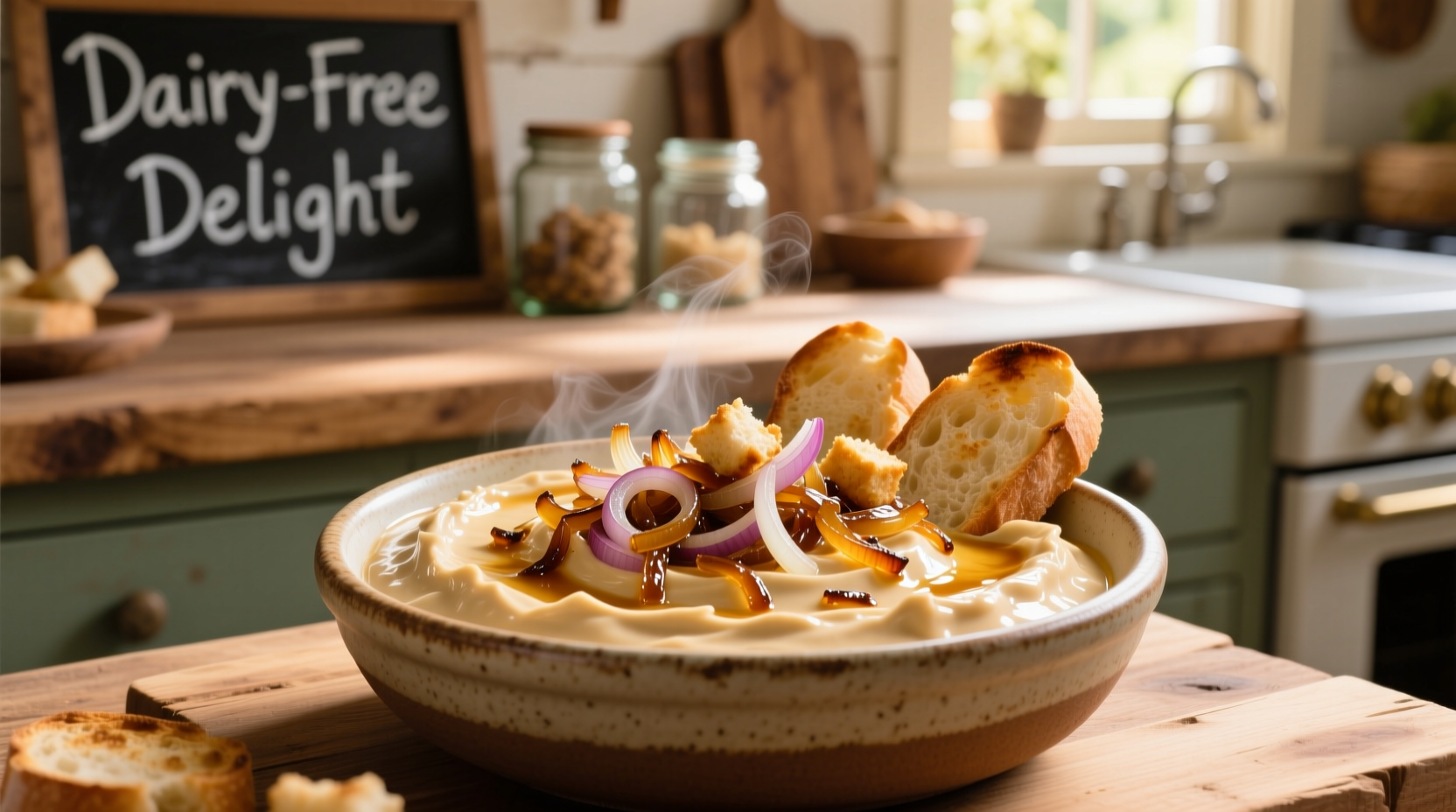
Craving that classic French onion dip flavor but need a dairy-free option? You're in luck. This guide reveals how to create a creamy, restaurant-quality dairy-free French onion dip that even dairy lovers will enjoy. Forget store-bought versions with artificial flavors—our recipe uses whole food ingredients and professional techniques to deliver authentic flavor in under 30 minutes.
Why This Dairy-Free Version Works Better Than Traditional
Most people don't realize that traditional French onion dip contains no actual French ingredients—it's an American creation from the 1950s featuring caramelized onions mixed with sour cream and other seasonings. The dairy-free version actually enhances the onion flavor by eliminating the sometimes-overpowering tang of sour cream.
Food science explains why plant-based bases work well: cashews contain natural fats that emulsify beautifully when blended, while vegan sour creams use coconut or soy bases that mimic dairy's texture. When onions caramelize properly (reaching 300°F/149°C), their natural sugars develop complex umami compounds that create depth without dairy.
| Dairy Substitute | Best For | Flavor Impact | Texture Result |
|---|---|---|---|
| Cashew cream | Whole food enthusiasts | Neutral, lets onions shine | Rich, velvety |
| Vegan sour cream | Convenience seekers | Slightly tangy | Closest to traditional |
| White bean base | High-protein needs | Earthy undertones | Thicker, heartier |
Essential Ingredients Breakdown
The magic happens when you understand each component's role. Forget generic "dairy-free" labels—specific choices make the difference between mediocre and magnificent dip.
Onion Selection Matters Most
Yellow onions provide the best balance of sweetness and pungency for caramelization. According to the Australian Department of Agriculture, yellow onions contain 4-5% sugar by weight—perfect for developing complex flavors through the Maillard reaction. Avoid sweet onions like Vidalias which burn easily.
Dairy-Free Base Options Compared
While store-bought vegan sour cream works in a pinch, homemade cashew cream delivers superior flavor control. Soak 1 cup raw cashews in hot water for 15 minutes, then blend with 1/4 cup water until completely smooth. This creates a neutral canvas that lets your caramelized onions shine.
Step-by-Step Preparation Guide
Follow these professional techniques for foolproof results every time. The key is patience during caramelization—rushing this step creates bitter, burnt onions instead of sweet, complex flavor.
Perfect Caramelization Technique
1. Thinly slice 3 large yellow onions (about 1/8 inch thick)
2. Heat 2 tbsp olive oil in cast-iron skillet over medium heat
3. Add onions and 1 tsp salt to draw out moisture
4. Cook undisturbed for 5 minutes, then stir every 3-4 minutes
5. After 15 minutes, add 2 tbsp water to deglaze browned bits
6. Continue cooking 10-15 more minutes until deep golden brown
Building Flavor Layers
While onions cook, prepare supporting flavors:
- Mince 2 garlic cloves (add during last 2 minutes of caramelization)
- Mix 1 tbsp Worcestershire sauce (Annie's brand is vegan)
- Add 1/2 tsp onion powder for flavor reinforcement
- Include 1/4 tsp smoked paprika for depth (optional)
Avoid These Common Mistakes
Even experienced cooks make these errors that ruin dairy-free French onion dip:
- Using high heat - Causes uneven cooking and burning. Maintain medium-low heat throughout
- Adding liquid too early - Prevents proper caramelization. Wait until onions release their natural moisture
- Skipping the resting period - Flavors need 2 hours to meld. Make ahead for best results
- Over-seasoning - Dairy-free bases can't mask excess salt. Season gradually
Serving Suggestions and Variations
This versatile dip works beyond standard chips. Try these professional pairings:
- Classic presentation: Serve in hollowed bread bowl with baguette slices
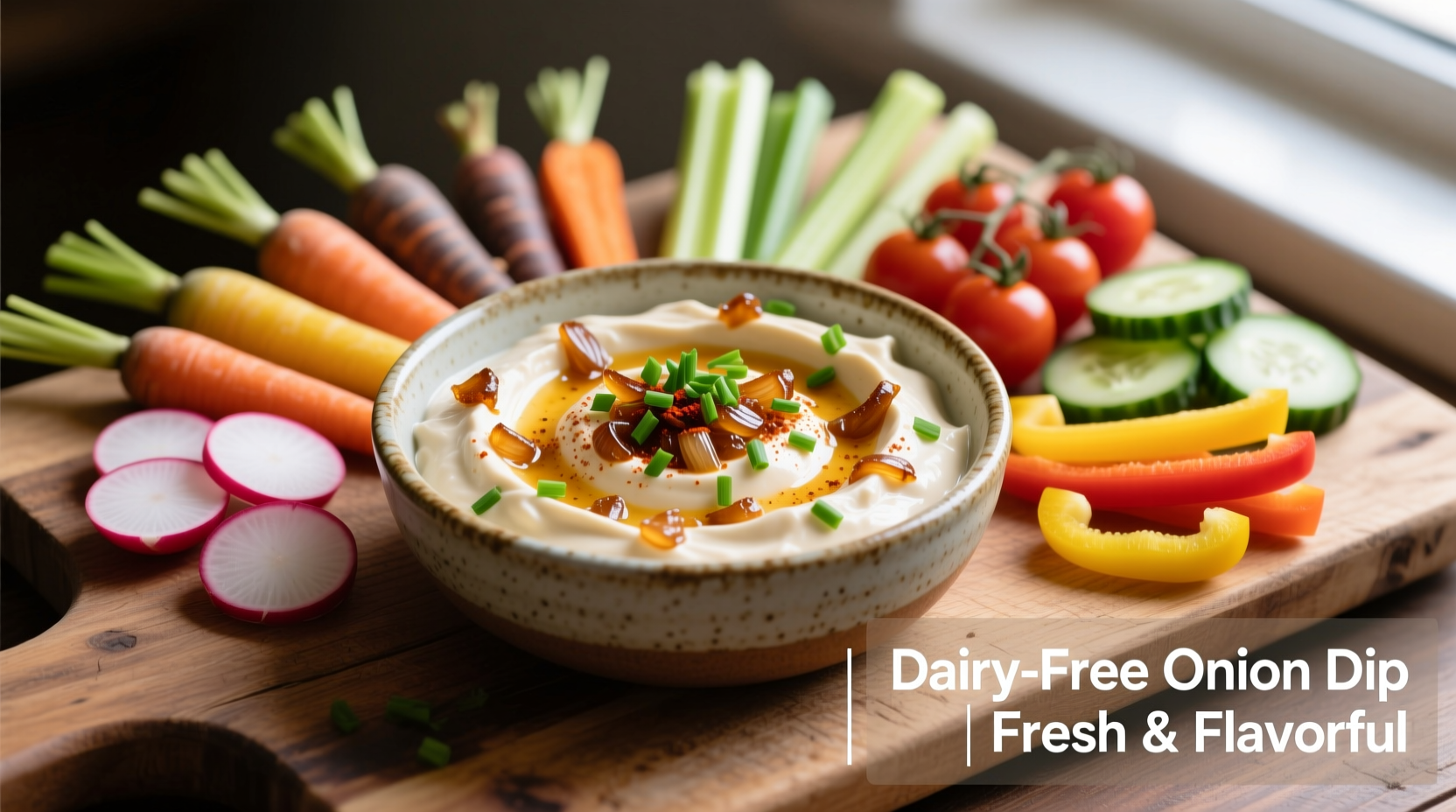
- Healthy option: Pair with rainbow vegetable crudités (bell peppers, radishes, jicama)
- Gourmet twist: Top with fresh chives and edible flowers
- Meal integration: Use as sandwich spread or baked potato topping
Storage and Shelf Life Guidelines
Proper storage maintains both safety and quality. According to FDA food safety guidelines, dairy-free dips follow similar storage rules as dairy versions due to their moisture content.
- Refrigerate in airtight container for up to 5 days
- Do not leave at room temperature more than 2 hours
- Freezing is not recommended (alters texture)
- Always use clean utensils to prevent contamination
When Dairy-Free French Onion Dip Works Best (and When It Doesn't)
Understanding context boundaries ensures success. This dip excels in:
- Social gatherings with diverse dietary needs
- Summer parties (more stable than dairy versions)
- Meal prep for weekly snacks
Limitations to consider:
- Not ideal for ultra-quick last-minute needs (requires proper caramelization)
- May separate if frozen and thawed
- Some store-bought vegan bases contain stabilizers affecting texture
Make It Your Own: Customization Ideas
Professional chefs always adapt recipes to their audience. Try these variations:
- Spicy version: Add 1 minced jalapeño during caramelization
- Herb-infused: Stir in 2 tbsp fresh thyme or rosemary
- Umami boost: Include 1 tsp nutritional yeast
- Low-sodium: Use coconut aminos instead of Worcestershire




 浙公网安备
33010002000092号
浙公网安备
33010002000092号 浙B2-20120091-4