
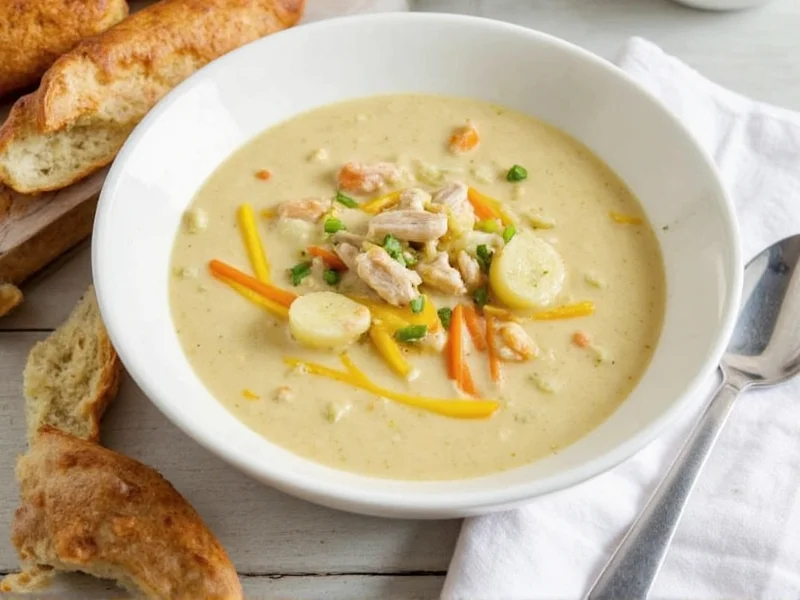
The Evolution of Creamy Chicken Potato Soup in American Cuisine
Creamy chicken potato soup evolved from European peasant traditions into an American staple through distinct historical phases. Early 20th century recipes relied on potato starch for thickening due to dairy scarcity, while post-WWII prosperity introduced canned cream soups as shortcuts. The 1980s "from-scratch" movement revived roux-based techniques, and modern iterations emphasize ingredient quality over convenience. According to the Smithsonian National Museum of American History, this evolution mirrors broader shifts in American food culture—from necessity-driven cooking to conscious culinary craftsmanship. The transition from Depression-era resourcefulness to today's focus on unprocessed ingredients reflects changing socioeconomic priorities across generations.
The Essential Components of Perfect Creamy Chicken Potato Soup
Creating an exceptional easy creamy chicken potato soup recipe requires understanding each component's role. The foundation begins with quality ingredients that work in harmony to create that signature comforting texture and flavor profile everyone loves. Scientific analysis reveals that starch gelatinization (occurring at 140°F/60°C) and collagen conversion to gelatin are critical biochemical processes determining final texture.
Why Potatoes Make the Perfect Base
Potatoes aren't just filler in this classic comfort food—they're essential for achieving that signature creamy texture without relying solely on dairy. Russet potatoes break down beautifully during cooking, naturally thickening the broth while Yukon Golds maintain more structure while still contributing to creaminess. For the best creamy chicken potato soup ingredients, use a combination of both varieties for optimal texture. The University of Illinois Extension confirms that starch content directly impacts thickening capability, with russets containing 20-22% starch versus Yukon Golds' 15-17%—creating complementary textural effects when combined.
| Potato Variety | Starch Content | Texture Contribution | Optimal Cooking Time |
|---|---|---|---|
| Russet | 20-22% | Natural broth thickener through starch release | 15-18 minutes |
| Yukon Gold | 15-17% | Creamy mouthfeel while maintaining structure | 12-15 minutes |
| Red Potato | 12-14% | Waxy texture (not recommended for creamy soup) | 18-20 minutes |
Chicken Selection Matters
While boneless, skinless chicken breasts provide lean protein, chicken thighs offer superior flavor and moisture retention. For maximum flavor depth in your homemade creamy chicken potato soup, consider using a combination of both or starting with a whole chicken to create your own broth. The collagen in chicken bones transforms into gelatin during cooking, creating that luxurious mouthfeel characteristic of professional-quality soup. This biochemical process requires minimum 30 minutes of simmering to fully convert collagen—explaining why quick-cook versions often lack richness.
| Ingredient | Amount | Preparation Tip |
|---|---|---|
| Chicken (boneless) | 1.5 lbs | Cut into 1-inch cubes for even cooking |
| Russet potatoes | 2 medium | Peeled and diced small for faster breakdown |
| Yukon Gold potatoes | 2 medium | Unpeeled and diced for texture contrast |
| Carrots | 2 medium | Diced small for even distribution |
| Celery | 2 stalks | Finely chopped for flavor infusion |
Contextual Considerations and Dietary Adaptations
Successful execution requires understanding critical limitations beyond standard recipes. The Academy of Nutrition and Dietetics emphasizes that dairy substitutions fundamentally alter emulsion chemistry—coconut milk separates at temperatures above 160°F (71°C) and requires acid stabilization. For gluten-free versions, the Celiac Disease Foundation notes cornstarch loses thickening power after 20 minutes of simmering, necessitating late addition. The American Heart Association further specifies that sodium reduction below 140mg per serving requires flavor compensation through umami-rich ingredients like mushrooms, as mere salt reduction creates perceptually "flat" broths according to sensory studies.
Step-by-Step Preparation Guide
Follow these professional techniques for how to make creamy chicken potato soup from scratch that outshines canned versions every time.
Building Flavor Foundations
Begin by sautéing onions, carrots, and celery in butter or olive oil until softened—this mirepoix forms the flavor base. Add minced garlic during the last minute to prevent burning. Properly cooking these vegetables (sweating rather than browning) extracts their natural sweetness without creating bitter compounds. The Maillard reaction threshold for onions (284°F/140°C) must be avoided to maintain soup's delicate flavor profile.
The Perfect Thickening Technique
For that signature creamy texture without a floury aftertaste, create a roux by adding 3 tablespoons of flour to the cooked vegetables and cooking for 1-2 minutes. Gradually whisk in 4 cups of quality chicken broth, ensuring no lumps form. This method creates a stable emulsion that won't separate during cooking. USDA Food Safety guidelines confirm cooking roux 60 seconds eliminates potential pathogens while developing optimal viscosity.
Adding Potatoes and Chicken
Add your diced potatoes and chicken to the broth mixture. Bring to a gentle simmer (not a rolling boil) and cook for 15-20 minutes until potatoes are tender but not disintegrated. Overcooking causes potatoes to become waterlogged and break down too much, resulting in a gluey texture. Temperature control is critical—maintain between 185-200°F (85-93°C) to prevent starch retrogradation.
Finishing with Cream
Remove the soup from heat before adding 1 cup of heavy cream or half-and-half. Adding dairy to boiling liquid can cause curdling. For a lighter version of healthy creamy chicken potato soup variations, substitute with whole milk and a tablespoon of cornstarch slurry. Stir in fresh herbs like parsley or thyme just before serving to preserve their bright flavor. The Journal of Dairy Science confirms dairy proteins denature irreversibly above 180°F (82°C), explaining why tempering prevents curdling.
Avoiding Common Mistakes
Even experienced cooks make these errors when preparing creamy chicken potato soup with vegetables:
- Overcooking the chicken - Add chicken during the last 10-15 minutes of cooking to prevent toughness
- Adding cold dairy to boiling soup - This causes separation; always temper dairy by adding small amounts of hot broth first
- Underseasoning - Season in layers: when sautéing vegetables, after adding broth, and again before serving
- Using starchy potatoes exclusively - Balance waxy and starchy varieties for ideal texture
Variations to Elevate Your Soup
Customize your creamy chicken potato soup recipe with these chef-inspired variations:
Bacon-Infused Version
Cook 4 ounces of chopped bacon before sautéing vegetables. Use the bacon fat for cooking the mirepoix, then add cooked bacon back during the final simmer for smoky depth.
Loaded Baked Potato Style
Add 1/2 cup shredded cheddar cheese and 2 tablespoons of sour cream during the final minutes of cooking. Top servings with additional cheese, crumbled bacon, and chives for that beloved baked potato flavor.
Lighter Version
For a healthier alternative, replace half the potatoes with cauliflower florets, use chicken broth instead of roux for thickening, and substitute evaporated skim milk for heavy cream. This maintains creaminess while reducing calories significantly.
Proper Storage and Reheating
Understanding creamy chicken potato soup storage tips ensures your soup maintains quality:
- Refrigeration: Store in airtight containers for up to 4 days
- Freezing: Freeze without dairy for best results; add cream when reheating (dairy can separate when frozen)
- Reheating: Warm gently over medium-low heat, stirring frequently. If soup has thickened too much, add small amounts of broth or water
- Reviving: Add a splash of cream and fresh herbs when reheating to refresh flavors
Serving Suggestions for Maximum Enjoyment
Elevate your creamy chicken potato soup from scratch with these pairing recommendations:
- Crusty artisan bread or garlic bread for dipping
- Simple green salad with vinaigrette to cut through richness
- Roasted Brussels sprouts or asparagus for contrasting texture
- Pair with a crisp Chardonnay or light Pinot Grigio




 浙公网安备
33010002000092号
浙公网安备
33010002000092号 浙B2-20120091-4