
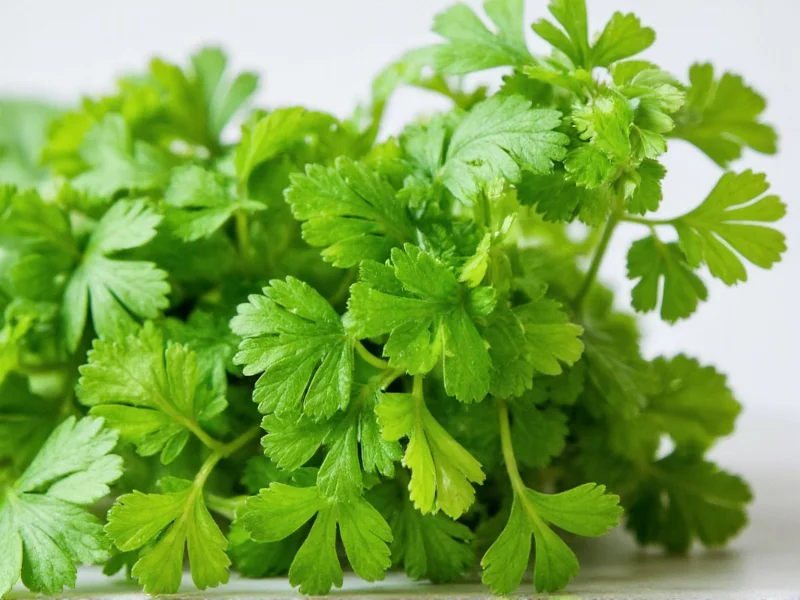
Understanding Coriander and Italian Parsley: Clearing the Confusion
Many home cooks and even experienced chefs occasionally mix up coriander (cilantro) and Italian parsley. This confusion often stems from their similar leafy green appearance when chopped. However, these herbs belong to different botanical families and offer vastly different flavor experiences in cooking.
Botanical Classification and Origins
Coriander (Coriandrum sativum) belongs to the Apiaceae family and is native to regions spanning from southern Europe to North Africa and southwestern Asia. Both its leaves (cilantro) and seeds (coriander) are used in cooking, though they have completely different flavor profiles.
Italian parsley (Petroselinum crispum var. neapolitanum) is a variety of flat-leaf parsley in the same Apiaceae family but a different genus. Unlike curly parsley, Italian parsley has flat, broad leaves and a more robust flavor preferred by chefs for its superior culinary qualities.
Historical Timeline and Cultural Significance
Coriander's culinary journey spans over 5,000 years, with archaeological evidence from the Neolithic period (circa 5000 BC) in the Near East indicating its early use as both food and medicine. It was documented in ancient Egypt's Ebers Papyrus (1550 BC) for digestive remedies and spread across Europe via Roman trade routes. In contrast, Italian parsley's adoption was slower; while native to the Mediterranean, it was initially used decoratively by ancient Greeks (associated with death rituals) and only entered mainstream European cooking in the 16th century as recorded in herbals. This historical divergence explains their distinct regional culinary associations today: coriander in Asian, Middle Eastern, and Latin American cuisines versus Italian parsley's foundational role in Mediterranean traditions. Detailed historical records are maintained by the USDA National Agricultural Library for coriander and parsley.
Physical Characteristics Comparison
Understanding the visual differences between coriander and Italian parsley is essential for proper identification. While they may look similar when chopped, their whole-plant characteristics reveal clear distinctions.
| Characteristic | Coriander (Cilantro) | Italian Parsley |
|---|---|---|
| Leaf Shape | Rounded, lacy edges with a more delicate appearance | Flat, broad leaves with serrated edges |
| Leaf Texture | Softer, more tender | Firmer, slightly tougher |
| Stem Color | Paler green | Darker green |
| Aroma | Strong, citrusy, sometimes described as soapy by genetic non-tasters | Grassy, mild, slightly peppery |
| Taste Profile | Bright, citrusy, pungent with a distinctive flavor | Mild, fresh, slightly bitter with herbal notes |
Culinary Applications and Flavor Profiles
The difference between coriander and Italian parsley becomes most apparent when tasting them. Coriander delivers a bold, citrus-forward flavor that can dominate a dish, while Italian parsley offers a more subtle, fresh background note that complements other ingredients.
When considering coriander vs Italian parsley appearance in finished dishes, coriander's more delicate leaves tend to wilt faster when cooked, making it ideal for fresh applications like salsas, guacamole, and garnishes for Southeast Asian and Latin American dishes. Italian parsley holds up better to cooking and is commonly used in Mediterranean cuisine, particularly in gremolata, tabbouleh, and as a finishing herb for meats and vegetables. This distinction is critical in traditional preparations like Lebanese tabbouleh, where parsley's structural integrity and mild flavor are essential – substituting coriander would fundamentally alter the dish's authenticity as documented by cultural culinary authorities.
Contextual Limitations in Substitution
Substitution success depends entirely on culinary context and regional authenticity requirements. Coriander's volatile aldehydes (which provide its signature citrus note) degrade rapidly under heat, making it unsuitable for long-cooked dishes where Italian parsley's more stable apiole compounds maintain integrity. Conversely, in Southeast Asian soups like Vietnamese pho, coriander's bright top notes are irreplaceable – adding Italian parsley would introduce off-flavors. The University of California Agriculture and Natural Resources confirms these limitations, noting that coriander's heat sensitivity restricts its use to finishing applications, while parsley's hardiness allows incorporation during cooking. Always prioritize dish authenticity: Mediterranean recipes demand Italian parsley, while Latin American and South Asian dishes require coriander for cultural fidelity.
Substitution Guidelines: Can You Swap Them?
One of the most frequently asked questions is can I substitute coriander for Italian parsley (or vice versa). The answer depends on the specific dish:
- Coriander as parsley substitute: Only in small quantities for dishes where a citrus note would be welcome. Never in traditional parsley-centric dishes like tabbouleh.
- Italian parsley as coriander substitute: Works better than the reverse, but you'll lose the distinctive citrus flavor. Add a squeeze of lime to approximate coriander's profile.
For authentic culinary uses of coriander and parsley, it's best to use the herb specified in the recipe. Their flavor chemistry differs significantly, with coriander containing aldehydes that give it its distinctive taste, while parsley has different volatile compounds.
Growing and Storage Tips
For gardeners interested in growing coriander and Italian parsley at home, note these key differences:
- Coriander: Grows quickly but bolts (goes to seed) in warm weather. Best grown in cool seasons. Prefers full sun to partial shade.
- Italian parsley: More heat-tolerant and slower to bolt. Can be grown as a biennial in milder climates. Prefers partial to full sun.
When it comes to storage, both herbs benefit from similar techniques but have different shelf lives. Wrap the stems in a damp paper towel and store in an airtight container in the refrigerator. Coriander typically lasts 3-5 days, while Italian parsley can remain fresh for 7-10 days.
Common Misconceptions Explained
The coriander Italian parsley confusion often occurs because:
- In some regions, particularly outside North America, "coriander" refers to both the leaves and seeds, while "cilantro" is less commonly used
- Chopped herbs look similar on finished dishes
- Both are commonly used as garnishes
Another critical factor is genetic variation in flavor perception. Approximately 4-21% of people carry the OR6A2 gene variant that causes coriander to taste soapy, with prevalence highest in European (up to 21%) and African populations and lowest in Hispanic and East Asian groups (as low as 4%). This explains why some individuals reject coriander despite its culinary ubiquity. The genetic basis is well-documented in National Institutes of Health research showing how olfactory receptor differences alter flavor perception (Molecular Biology and Evolution, 2012).
However, understanding how to tell coriander from Italian parsley is simple when examining the whole plant. Coriander leaves have a more rounded, lacy appearance with softer stems, while Italian parsley has flatter, broader leaves with more rigid, darker green stems.
Nutritional Comparison
Both herbs offer significant nutritional benefits with distinct micronutrient profiles according to USDA FoodData Central:
- Coriander: 100g provides 33% of daily vitamin A and 21% potassium, with linalool compounds demonstrating antioxidant activity in controlled studies.
- Italian parsley: Exceptionally nutrient-dense with 100g delivering 554% of vitamin K, 133% vitamin C, 27% folate, and 11% iron – making it one of the most vitamin K-rich foods known.
While these percentages reflect raw herb values (typically consumed in smaller quantities), even modest use contributes meaningful micronutrients. Full nutrient analysis is available in the USDA database for coriander and for parsley. Nevertheless, their primary culinary value remains their distinctive taste profiles rather than nutritional content.




 浙公网安备
33010002000092号
浙公网安备
33010002000092号 浙B2-20120091-4