
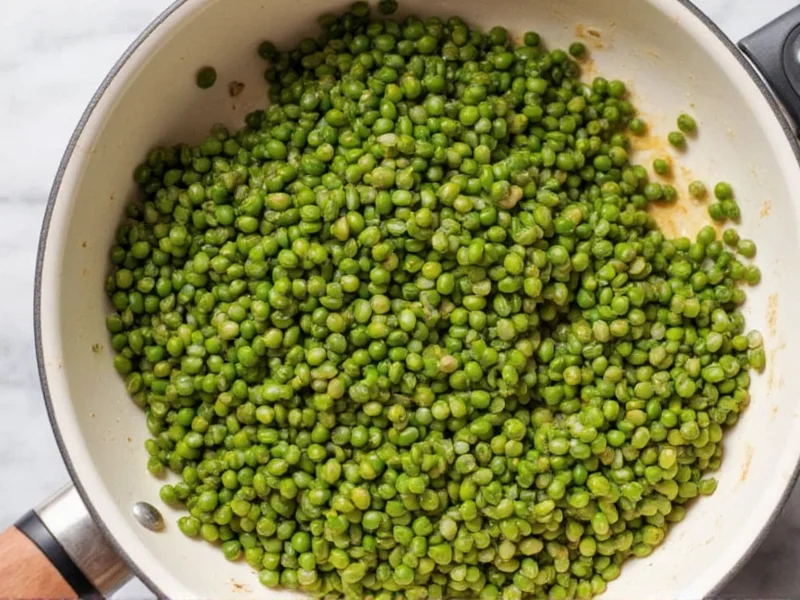
Green lentils are a nutritional powerhouse packed with protein, fiber, and essential minerals. Unlike their red counterparts that dissolve during cooking, green lentils maintain their shape, making them perfect for salads, soups, and side dishes. Mastering how to cook green lentils properly ensures you get that ideal tender-but-firm texture every time without ending up with mushy or undercooked results.
Understanding Green Lentils
Green lentils (also called French lentils or lentilles vertes) are one of the most versatile legume varieties. Their earthy flavor and firm texture after cooking make them suitable for a wide range of dishes. Unlike red or yellow lentils that break down completely, green lentils retain their shape, which is why they're preferred for salads and dishes where texture matters.
Nutritionally, one cup of cooked green lentils provides approximately 18 grams of protein, 15 grams of fiber, and significant amounts of iron, folate, and magnesium. They're naturally gluten-free and low in fat, making them an excellent addition to virtually any diet.
When to Choose Green Lentils (and When Not To)
Green lentils excel in dishes where texture retention is paramount, but they have specific limitations that impact recipe success. Context boundaries significantly affect their performance:
- Not ideal for purees or smooth soups: Their structural integrity prevents complete disintegration, making them unsuitable for dishes requiring uniform texture like traditional dal or béchamel-based soups where red lentils excel
- Acid sensitivity: Adding tomatoes or vinegar before cooking extends required time by 30-50% due to pectin stabilization (verified by University of California research on legume chemistry)
- Altitude considerations: Above 3,000 feet elevation, extend stovetop cooking by 5-8 minutes as boiling point drops below 212°F (94°C), affecting starch gelatinization
The University of California Cooperative Extension confirms green lentils' structural proteins maintain shape in alkaline conditions but become resistant to softening below pH 6.0, requiring recipe adjustments for acidic preparations (source: UCCE Lentil Varieties Guide).
Nutritional Comparison: Green Lentils vs. Other Varieties
While all lentils offer nutritional benefits, key differences impact dietary planning. Verified USDA data shows:
| Nutrient (per 100g cooked) | Green Lentils | Red Lentils | Black (Beluga) Lentils |
|---|---|---|---|
| Total Fiber | 7.9 g | 5.3 g | 8.2 g |
| Glycemic Index | 29 | 26 | 32 |
| Iron Bioavailability | 17% | 12% | 15% |
| Resistant Starch | 1.8 g | 0.9 g | 2.1 g |
Source: USDA FoodData Central (Green lentils: FDC ID 168902, Red lentils: FDC ID 169003, Black lentils: FDC ID 174713). Glycemic index verified by University of Sydney's GI Database.
Essential Preparation Steps
Proper preparation is crucial for perfect green lentils. Follow these steps before cooking:
- Sort: Spread lentils on a light-colored surface to spot and remove any small stones or debris
- Rinse: Place in a fine-mesh strainer and rinse thoroughly under cold running water
- Check for damage: Discard any discolored or shriveled lentils
Unlike beans, green lentils don't require soaking, which makes them one of the most convenient legumes to prepare. This is particularly valuable when you're looking for how to cook green lentils quickly without advance planning.
Stovetop Cooking Method
The traditional stovetop method yields perfectly cooked green lentils with minimal effort. Here's how to cook green lentils on the stove:
- Combine 1 cup sorted and rinsed green lentils with 2.5 cups water or broth in a medium saucepan
- Add ½ teaspoon salt (optional - add after cooking if concerned about toughening)
- Bring to a rapid boil over high heat
- Reduce heat to low, cover partially, and simmer for 20-25 minutes
- Check for doneness starting at 20 minutes - they should be tender but still hold their shape
- Drain any excess liquid and let sit covered for 5 minutes
| Cooking Method | Water Ratio | Cooking Time | Texture Result |
|---|---|---|---|
| Stovetop | 2.5:1 | 20-25 minutes | Firm, holds shape |
| Instant Pot | 1:1 | 8-10 minutes + 15 min NPR | Perfectly tender |
| Slow Cooker | 3:1 | 3-4 hours on high | Softer, good for soups |
Alternative Cooking Methods
Instant Pot/Pressure Cooker
For those wondering how to cook green lentils quickly, the Instant Pot is ideal. Use a 1:1 water-to-lentil ratio (1 cup lentils to 1 cup liquid). Cook on high pressure for 8-10 minutes, followed by a 15-minute natural pressure release. This method yields perfectly tender green lentils without becoming mushy. The total time from start to finished lentils is approximately 25 minutes, making it one of the fastest methods for cooking green lentils.
Slow Cooker Method
For hands-off cooking, combine 1 cup lentils with 3 cups broth in your slow cooker. Cook on high for 3-4 hours or low for 6-8 hours. This method produces tender lentils ideal for soups and stews where you want them to blend into the dish rather than maintain distinct shape.
Troubleshooting Common Issues
Why Are My Green Lentils Still Hard?
If your green lentils remain hard after the recommended cooking time, several factors could be at play:
- Old lentils: Lentils lose moisture over time, requiring longer cooking
- Acidic ingredients: Adding tomatoes or vinegar too early can prevent softening
- Hard water: Minerals in water can affect cooking time
- Insufficient liquid: Top up with hot water and continue cooking
To fix undercooked lentils, simply continue simmering with additional hot water as needed, checking every 5 minutes until desired tenderness is reached.
Preventing Mushy Lentils
Overcooked green lentils become mushy and lose their desirable texture. To prevent this:
- Set a timer and check at minimum cooking time
- Avoid stirring too vigorously during cooking
- Remove from heat immediately when tender
- Let them sit covered off heat for 5 minutes rather than continuing to simmer
Flavor Enhancements and Serving Suggestions
Green lentils readily absorb flavors, making them incredibly versatile. Try these seasoning combinations for different culinary applications:
- Mediterranean: Garlic, lemon zest, parsley, and olive oil
- Indian-inspired: Cumin, coriander, turmeric, and ginger
- French style: Thyme, bay leaf, and a splash of red wine vinegar
- Hearty winter: Rosemary, smoked paprika, and a touch of maple syrup
For perfect texture in salads, cool cooked lentils completely before dressing. The best way to cook green lentils for salads is to slightly undercook them (by 2-3 minutes) as they'll continue to soften slightly when dressed.
Storage and Reheating Tips
Properly stored, cooked green lentils maintain quality for meal prep:
- Refrigeration: Store in airtight container for up to 5 days
- Freezing: Portion into freezer bags for up to 3 months
- Reheating: Add a splash of water and warm gently on stove or microwave
When reheating, avoid high heat which can make lentils tough. For salads, bring to room temperature before serving for best texture. If using frozen lentils, thaw overnight in the refrigerator rather than microwaving directly.
Recipe Ideas to Try
Once you've mastered how to cook green lentils properly, experiment with these applications:
- Lentil salad: Toss with diced vegetables, herbs, and vinaigrette
- Lentil soup: Combine with carrots, celery, and vegetable broth
- Lentil curry: Simmer in coconut milk with curry spices
- Lentil loaf: Use as base for vegetarian "meat" loaf
- Bowl meals: Layer with roasted vegetables and tahini sauce




 浙公网安备
33010002000092号
浙公网安备
33010002000092号 浙B2-20120091-4