
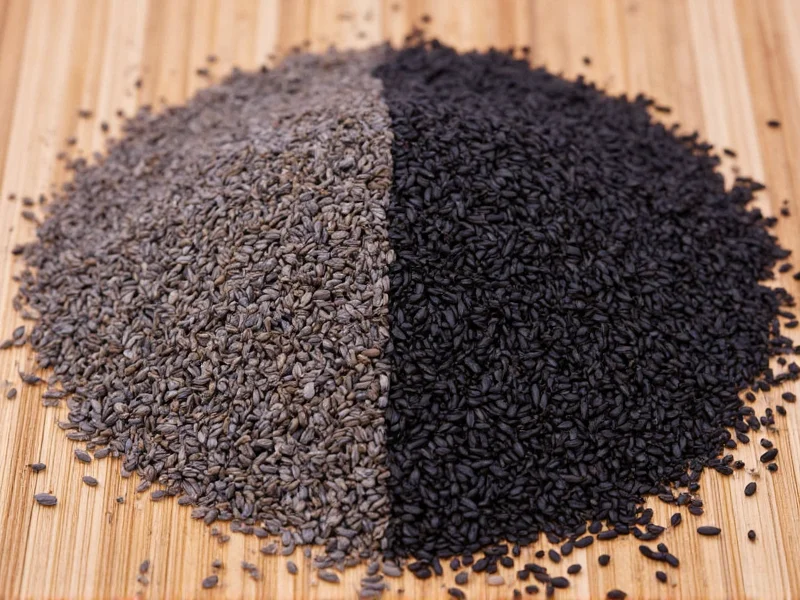
Understanding Black Seed (Nigella Sativa)
Often called black cumin or kalonji, black seed (Nigella sativa) has been used for centuries in traditional medicine across Middle Eastern and South Asian cultures. These tiny black seeds come from the flowering plant native to Eastern Europe, the Middle East, and Western Asia. The most valuable compound in black seed is thymoquinone, which accounts for many of its therapeutic properties.
Nutritionally, one tablespoon (6g) of black seeds contains approximately:
- 35 calories
- 1g protein
- 3g fat (primarily unsaturated)
- 2g carbohydrates
- 1g fiber
- Significant amounts of iron, magnesium, and zinc
Traditional applications of black seed include supporting respiratory health, improving skin conditions, and boosting immune function. Modern research suggests potential benefits for managing blood sugar levels and reducing inflammation, though more human studies are needed to confirm these effects.
Understanding Black Sesame Seeds
Black sesame seeds (Sesamum indicum) have been cultivated for thousands of years, particularly in Asian and African cuisines. Unlike their white counterparts, black sesame seeds retain their nutrient-rich outer hull, making them more nutritionally dense. These seeds have a stronger, nuttier flavor compared to white sesame seeds and are commonly used in Asian cooking and traditional medicine.
Nutritionally, one tablespoon (9g) of black sesame seeds contains approximately:
- 52 calories
- 2g protein
- 4.5g fat (healthy unsaturated fats)
- 3g carbohydrates
- 1.5g fiber
- Notable calcium, iron, magnesium, and copper content
Traditional uses of black sesame include promoting healthy hair and skin, supporting bone health, and improving digestion. The seeds contain lignans like sesamin and sesamolin, which may help lower cholesterol and provide antioxidant protection.
Nutritional Comparison: Black Seed vs Black Sesame
While both seeds offer impressive nutritional profiles, they differ significantly in specific nutrients. The following table highlights key differences between one tablespoon servings:
| Nutrient | Black Seed (6g) | Black Sesame (9g) | Significance |
|---|---|---|---|
| Calories | 35 | 52 | Black sesame has higher caloric density |
| Calcium | 20mg (2% DV) | 88mg (7% DV) | Black sesame contains over 4x more calcium |
| Iron | 1.5mg (8% DV) | 1.5mg (8% DV) | Equal iron content per serving |
| Magnesium | 20mg (5% DV) | 32mg (8% DV) | Black sesame has higher magnesium |
| Zinc | 0.4mg (4% DV) | 0.6mg (5% DV) | Black seed has slightly more zinc |
| Unique Compounds | Thymoquinone | Sesamin, Sesamolin | Different bioactive compounds drive distinct benefits |
Health Benefits Comparison
Both seeds offer impressive health benefits, but they excel in different areas due to their unique phytochemical compositions.
Black Seed Benefits
Research on black seed, particularly its oil, suggests several potential health benefits:
- Anti-inflammatory effects: Thymoquinone may help reduce inflammation markers in the body
- Immune support: May enhance immune cell activity and response
- Respiratory health: Traditional use for asthma and allergies shows some scientific support
- Skin health: Topical application may help with eczema and psoriasis
Black Sesame Benefits
Black sesame seeds offer different advantages:
- Bone health: Higher calcium content supports bone density and strength
- Heart health: Lignans may help lower LDL cholesterol and blood pressure
- Hair vitality: Rich in copper and other minerals that support melanin production
- Antioxidant protection: Contains sesamol and other compounds with strong antioxidant activity
Culinary Applications and Usage
Understanding how to use each seed properly maximizes their benefits and flavor profiles.
Using Black Seed
Black seeds have a slightly bitter, peppery flavor with onion-like notes. They work best when:
- Lightly toasted to enhance flavor before use
- Added to breads, flatbreads, and crackers
- Used in pickling vegetables
- Infused in oils for salad dressings
- Taken as supplements in capsule form for therapeutic benefits
For maximum benefit, many people consume 1-2 teaspoons of black seed oil daily, though consulting with a healthcare provider is recommended before starting any new supplement regimen.
Using Black Sesame
Black sesame has a stronger, nuttier flavor than white sesame and works well when:
- Used as a garnish for Asian dishes
- Ground into tahini or pastes
- Added to baked goods for visual contrast
- Used in traditional medicines like Chinese herbal formulas
- Pressed into oil for cooking or hair treatments
Unlike black seed, black sesame can be consumed in larger quantities as a food ingredient without concerns, though moderation is always recommended.
Scientific Research and Limitations
While both seeds show promise in research, it's important to understand the current state of scientific evidence.
Most studies on black seed have focused on animal models or in vitro (test tube) studies. Human clinical trials are limited but growing. A 2020 review in Phytotherapy Research noted promising results for black seed in managing metabolic syndrome components, but called for more rigorous human trials.
Research on black sesame has shown more consistent results, particularly regarding cardiovascular health. A 2019 study in Nutrients found that sesame consumption significantly reduced blood pressure in hypertensive patients. However, most studies use sesame oil rather than whole seeds.
Neither seed should be considered a replacement for medical treatment. Both work best as part of a balanced diet rather than standalone remedies for specific health conditions.
Historical and Research Evolution
Centuries of traditional use have evolved into modern scientific validation through distinct research pathways:
Black Seed (Nigella sativa) Timeline
- 1550 BCE: Earliest documented medicinal use in Egyptian Ebers Papyrus for digestive and respiratory ailments. [National Center for Biotechnology Information, 2015]
- 7th Century CE: Systematic application in Unani medicine across the Middle East for immune and respiratory support. [World Health Organization Traditional Medicine Strategy]
- 2019: First large-scale human trial confirming thymoquinone's anti-inflammatory effects at 500mg/day dosage. [Frontiers in Immunology]
Black Sesame (Sesamum indicum) Timeline
- 3500 BCE: Earliest cultivation evidence in Indus Valley civilizations for oil extraction. [USDA Agricultural Research Service]
- 206 BCE: Formal inclusion in Chinese pharmacopeia Shennong Ben Cao Jing for blood and bone health. [Chinese Journal of Integrative Medicine, 2013]
- 2021: Meta-analysis confirming lignans' cholesterol-lowering effects at ≥30g/day consumption. [American Journal of Clinical Nutrition]
Contextual Applications and Limitations
Effectiveness varies significantly based on specific health contexts and physiological conditions:
- Diabetes Management: Black seed shows HbA1c reduction in clinical trials, but contraindicated with insulin due to hypoglycemia risk. Patients on metformin require glucose monitoring. [National Institute of Diabetes and Digestive Diseases, 2018]
- Bone Health for Kidney Stone Formers: Black sesame's calcium benefits are offset by high oxalate content (520mg/100g). Those with calcium-oxalate stones should limit intake to 1 tsp daily. [National Kidney Foundation Guidelines]
- Pregnancy Applications: Black seed oil is contraindicated due to uterine stimulant effects, while black sesame is traditionally used in postpartum recovery at ≤2 tbsp/day. [NIH Herbal Medicine Safety Report, 2020]
- Topical Hair Treatments: Black seed oil improves scalp psoriasis (5% solution), but black sesame oil's linoleic acid (45%) provides superior follicle nourishment for non-inflammatory hair loss. [International Journal of Trichology, 2013]
Potential Side Effects and Precautions
Both seeds are generally safe when consumed in food amounts, but certain precautions apply:
Black Seed Considerations
- May lower blood sugar levels - monitor if taking diabetes medication
- Potential blood-thinning effects - caution with anticoagulant medications
- May stimulate uterine contractions - avoid during pregnancy
- Can cause allergic reactions in some individuals
Black Sesame Considerations
- High in calories - consume in moderation if managing weight
- Contains oxalates - may contribute to kidney stones in susceptible individuals
- Rare sesame allergies affect approximately 0.1-0.2% of the population
- May interact with certain blood pressure medications
Which Should You Choose?
The choice between black seed vs black sesame depends on your specific health goals and culinary preferences:
- Choose black seed if you're looking for potential immune support, respiratory benefits, or anti-inflammatory properties
- Choose black sesame if you need more calcium for bone health, want to support heart health, or seek benefits for hair and skin
- Consider using both for complementary benefits, as they work well together in many traditional recipes
For general health maintenance, incorporating both seeds in appropriate amounts provides the broadest range of nutrients and benefits. Black sesame works well as a regular food ingredient, while black seed may be more valuable as a targeted supplement for specific concerns.




 浙公网安备
33010002000092号
浙公网安备
33010002000092号 浙B2-20120091-4