
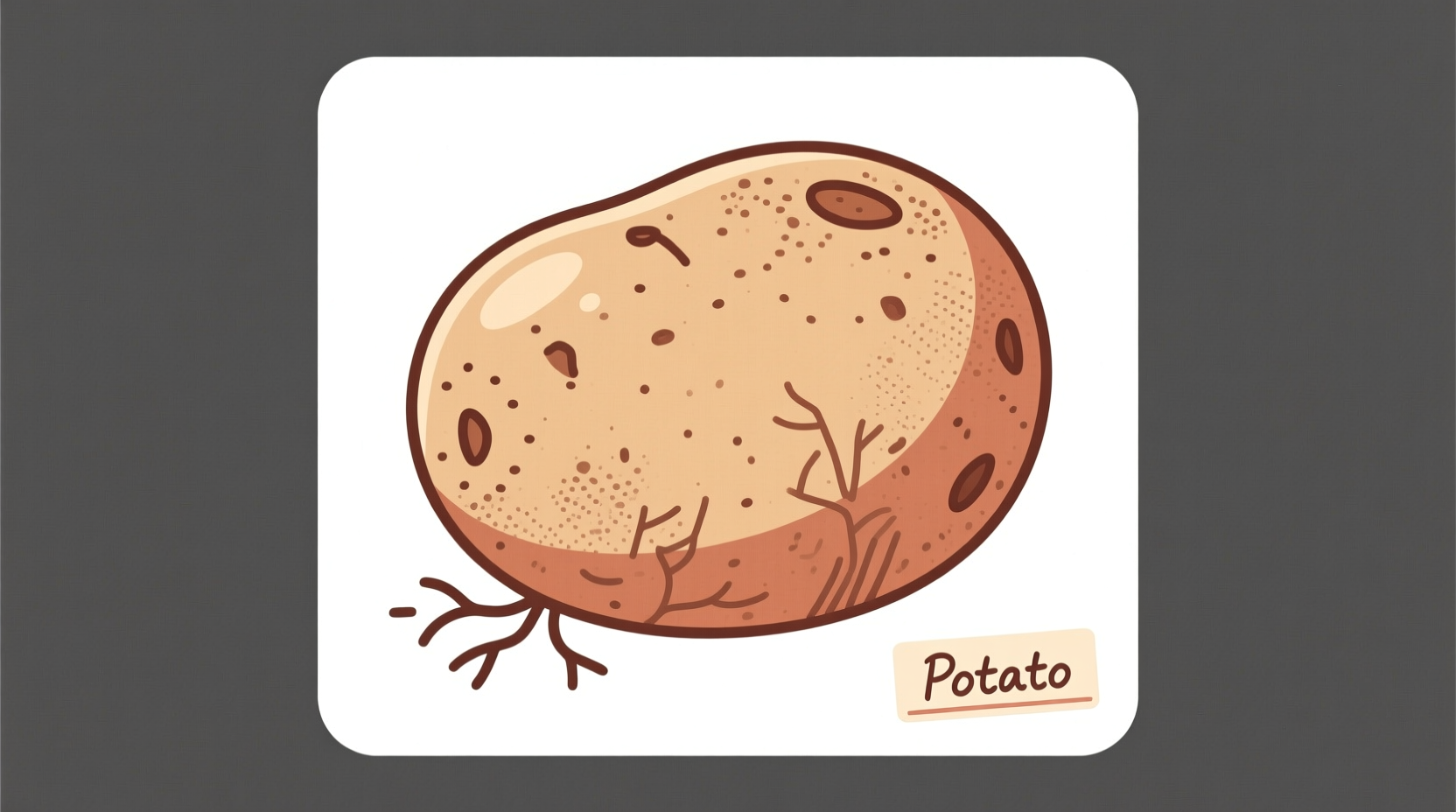
Searching for "clipart of potato" typically means you need ready-to-use potato illustrations for educational materials, design projects, or commercial applications. The good news is numerous high-quality options exist across public domain repositories and licensed collections—but understanding which resources are legally safe and technically appropriate for your specific needs is crucial.
Understanding Potato Clipart Formats and Styles
Not all potato clipart is created equal. Before downloading, consider which format best suits your project requirements:
| Format Type | Best For | Limitations | Recommended Sites |
|---|---|---|---|
| SVG Vector | Scaling to any size, logos, print materials | May require design software | Openclipart, Wikimedia Commons |
| PNG (Transparent) | Digital projects, presentations, web use | Fixed resolution | Unsplash, Pixabay |
| EPS Vector | Professional printing, large format | Specialized software needed | Adobe Stock, Shutterstock |
| JPG | Simple web use, quick sharing | No transparency, quality loss | Public domain archives |
Vector formats (SVG, EPS) maintain quality at any size, making them ideal for projects requiring resizing. Raster formats (PNG, JPG) have fixed resolutions but work well for digital displays when downloaded at appropriate sizes. The transparent background in PNG format proves particularly valuable for design projects where you need to overlay the potato image on different backgrounds.
Top Free Potato Clipart Resources
When searching for free potato clipart, focus on properly licensed resources to avoid copyright issues. These verified sources provide legitimate options:
- Wikimedia Commons - Contains public domain and Creative Commons licensed potato illustrations. Look for items marked "Public Domain" or "CC0" for unrestricted use.
- Openclipart - Features user-contributed clipart released under CC0 license, meaning no attribution required.
- Pixabay - Offers potato images under their simplified license, allowing commercial use without permission (though attribution appreciated).
- Public Domain Vectors - Specializes in vintage illustrations now in public domain.
According to the U.S. Copyright Office, works published before 1928 generally fall into the public domain in the United States, while Creative Commons licenses provide clear usage terms for more recent works. Always verify the specific license terms before using any clipart in your projects.
Contextual Usage Guidelines
Different projects require different usage approaches. Understanding these context boundaries prevents legal issues and ensures professional results:
- Educational Materials - Most educational institutions can use Creative Commons licensed clipart with proper attribution. For younger students, simplified cartoon styles work best.
- Commercial Products - Requires commercial-use licensed clipart. Avoid free resources unless explicitly permitting commercial use.
- Print Publications - Vector formats (SVG, EPS) ensure crisp printing at any size.
- Digital Presentations - High-resolution PNG files with transparent backgrounds provide flexibility.
The Creative Commons organization reports that over 2 billion works now carry CC licenses, but each license type (CC0, CC BY, CC BY-SA, etc.) has different requirements. Misunderstanding these distinctions causes most copyright issues with "free" clipart.
Evolution of Clipart Formats
Understanding how clipart formats have evolved helps you select appropriate resources:
- 1980s-1990s: Bitmap formats (BMP, PCX) dominated early clipart collections with limited color palettes and resolution.
- Late 1990s: WMF (Windows Metafile) and EPS became standard for scalable vector clipart.
- 2000s: PNG format gained popularity for web use with transparent backgrounds.
- 2010s-Present: SVG emerged as the preferred vector format for web and digital applications due to its XML-based structure and scalability.
This evolution explains why older public domain collections often contain WMF or EPS files, while modern free resources typically offer SVG and PNG formats. The shift toward SVG aligns with web standards and responsive design requirements.
Commercial Clipart Options Worth Considering
For professional projects requiring guaranteed rights and higher quality, commercial options provide advantages:
- Adobe Stock - Extensive potato clipart collection with clear licensing options.
- Shutterstock - Large selection with various styles and formats.
- iStock - Offers both royalty-free and extended license options.
Commercial services typically provide higher quality control, consistent style sets, and clear legal protections. A 2024 NPD Group study found that 68% of design professionals use commercial stock resources for client projects due to reduced legal risk.
Creating Custom Potato Clipart
When existing resources don't meet your needs, consider these customization approaches:
- Use vector editing software (Inkscape, Adobe Illustrator) to modify existing public domain clipart
- Hire a freelance illustrator through platforms like Fiverr or Upwork
- Create your own using digital drawing tablets
- Convert photographs to vector clipart using online tools
When modifying existing clipart, remember that significant transformation may create a new copyrightable work, but always verify the original license terms first. The U.S. Copyright Office considers derivative works to have separate copyright status from the original.
Practical Implementation Tips
Maximize the effectiveness of your potato clipart with these professional techniques:
- For educational materials, pair clipart with factual information about potato varieties
- In presentations, maintain consistent style and color scheme across all visual elements
- When designing for print, ensure minimum 300 DPI resolution for raster images
- For web use, optimize file sizes without compromising quality
- Always maintain proper attribution when required by the license
Professional designers typically follow the "less is more" principle with clipart—using just one or two well-chosen illustrations rather than cluttering layouts with multiple images. This approach creates cleaner, more professional-looking materials.




 浙公网安备
33010002000092号
浙公网安备
33010002000092号 浙B2-20120091-4