
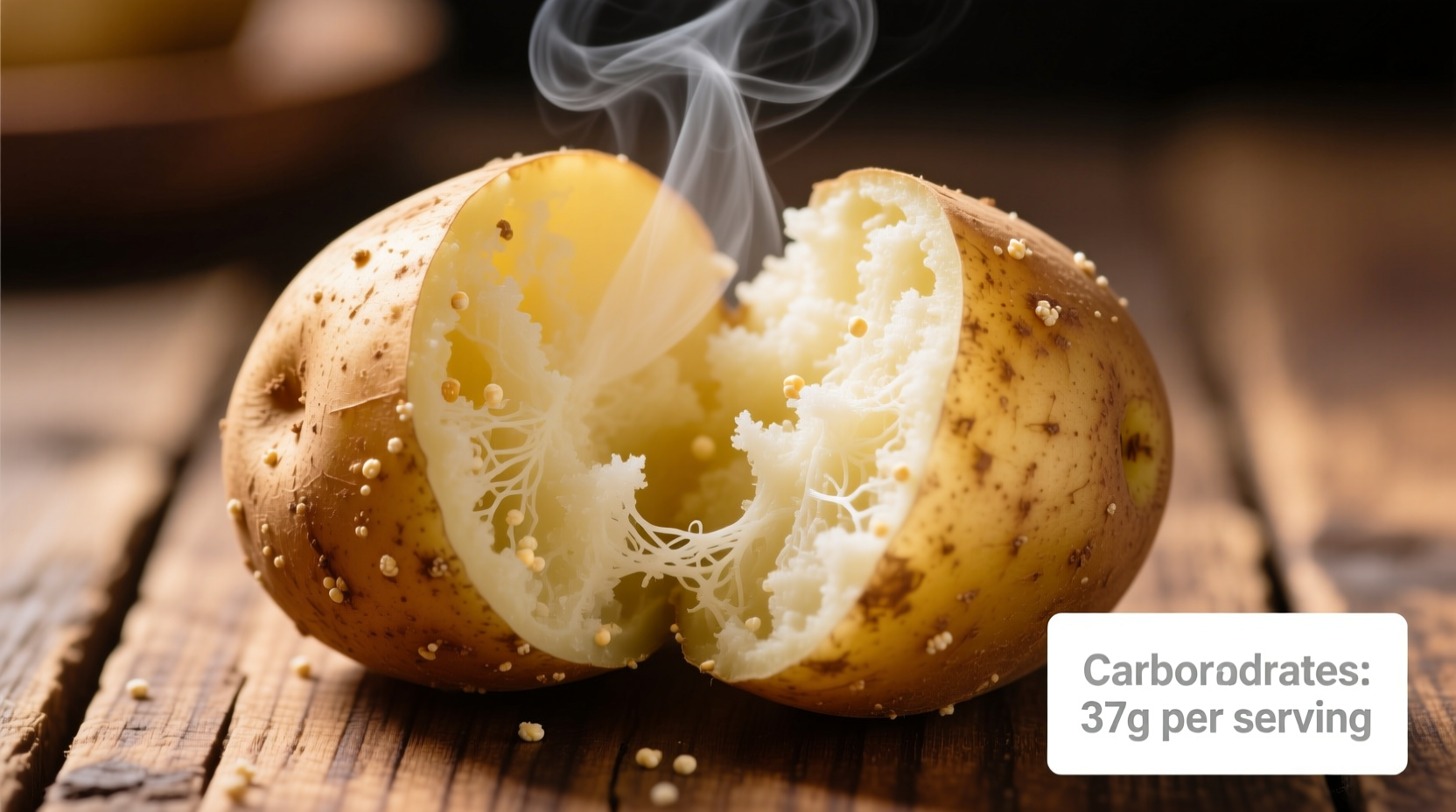
Understanding the carbohydrate composition of baked potatoes helps health-conscious eaters make informed dietary choices. Whether you're managing blood sugar, tracking macros, or simply curious about this staple food's nutritional profile, this guide delivers evidence-based insights you can trust.
Breaking Down Baked Potato Carbohydrates: What You're Really Consuming
When you bite into a fluffy baked potato, you're primarily consuming complex carbohydrates in the form of starch. Unlike simple sugars that cause rapid blood sugar spikes, potato starch provides gradual energy release. The skin contains valuable fiber that further moderates glucose absorption—a crucial detail often overlooked in carb counting.
According to USDA FoodData Central, a standard medium Russet potato (173g) with skin delivers:
| Nutrient | Amount | % Daily Value* |
|---|---|---|
| Total Carbohydrates | 37g | 13% |
| Dietary Fiber | 3.8g | 14% |
| Sugars | 2.3g | - |
| Starch | ~29g | - |
*Based on a 2,000-calorie diet. Source: USDA FoodData Central, ID 11018

How Potato Size Changes Your Carb Intake
Portion control dramatically impacts carbohydrate consumption. Many people underestimate how quickly carb counts escalate with larger servings:
- Small potato (130g): 29g total carbs
- Medium potato (173g): 37g total carbs
- Large potato (299g): 63g total carbs
- With skin removed: Reduces fiber by 30-50%, increasing net carb impact
This portion-size sensitivity represents a critical context boundary for carb counters. The same potato preparation can fit within various dietary frameworks depending solely on serving size—a small portion works for moderate-carb diets, while larger servings align better with active individuals needing substantial energy.
Baked Potato vs. Other Carb Sources: A Practical Comparison
When evaluating carbohydrate sources, consider both quantity and quality. Potatoes offer unique nutritional advantages compared to refined grains:
| Food (150g) | Total Carbs | Fiber | Protein | Key Nutrients |
|---|---|---|---|---|
| Baked Potato | 29g | 2.6g | 3.2g | Potassium, Vitamin C, B6 |
| White Rice | 45g | 0.6g | 4.3g | Few micronutrients |
| Whole Wheat Pasta | 42g | 3.8g | 7.5g | B vitamins, iron |
| Quinoa | 39g | 5.2g | 8.1g | Complete protein, magnesium |
This fact comparison reveals potatoes' nutritional density advantage—they deliver more potassium than bananas and significant vitamin C, unlike many refined carbohydrate sources. However, their glycemic index (75-85) exceeds that of quinoa (53) or steel-cut oats (42), making portion management essential for blood sugar control.
Maximizing Benefits While Managing Carbohydrate Impact
You don't need to eliminate potatoes from your diet—even when monitoring carbs. Strategic preparation methods significantly alter their metabolic impact:
- Cool before eating: Refrigerating cooked potatoes increases resistant starch by 300%, reducing net carbs and glycemic impact (Journal of Nutrition, 2018)
- Pair with protein/fat: Adding Greek yogurt or olive oil slows digestion, preventing blood sugar spikes
- Keep the skin: Contains half the fiber and valuable antioxidants concentrated near the surface
- Choose smaller portions: A 100g serving provides just 19g carbs—easily incorporated into most meal plans
Addressing Common Misconceptions About Potato Carbs
Several persistent myths distort potatoes' nutritional reality:
Myth: "Potatoes are just empty carbohydrates with no nutritional value."
Reality: A single medium potato provides 28% of your daily vitamin C, 27% of potassium, and 20% of vitamin B6—nutrients often lacking in modern diets.
Myth: "All carbohydrates in potatoes convert directly to sugar in your bloodstream."
Reality: The fiber and resistant starch in properly prepared potatoes significantly moderate glucose absorption, especially when cooled or eaten with the skin.
When Potatoes Fit (and Don't Fit) Your Dietary Goals
Understanding context boundaries helps determine if potatoes align with your nutritional strategy:
- Active individuals: Excellent pre-workout fuel due to rapid energy availability
- Diabetes management: Best consumed in controlled portions with protein/fat
- Keto diets: Generally incompatible except in extremely limited quantities
- General health: A nutrient-dense carbohydrate source when prepared simply
Research from the American Journal of Clinical Nutrition confirms that whole-food carbohydrate sources like potatoes, when consumed as part of balanced meals, don't inherently cause weight gain or metabolic issues—the preparation method and overall dietary pattern matter most.




 浙公网安备
33010002000092号
浙公网安备
33010002000092号 浙B2-20120091-4