
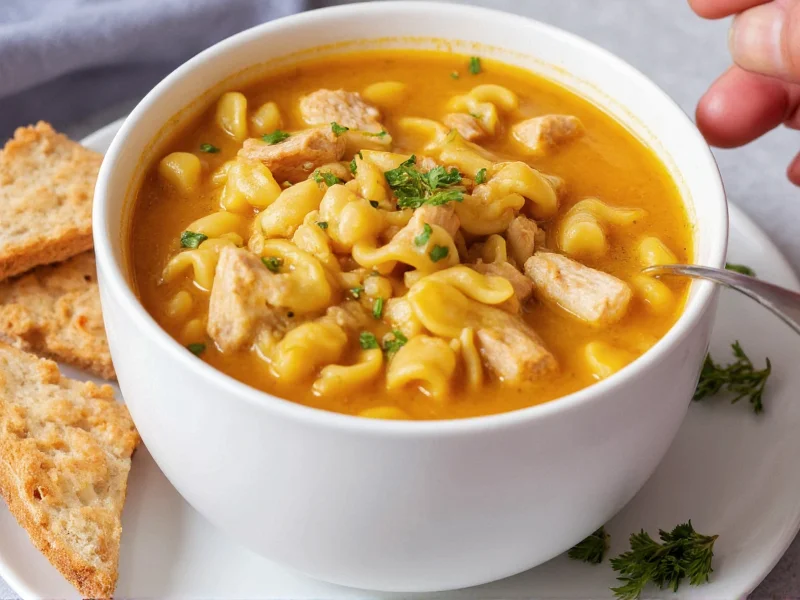
Campbell's Chunky Chicken Noodle Soup stands out in the canned soup market for its substantial ingredients and satisfying texture. This popular comfort food option delivers a heartier eating experience compared to standard chicken noodle varieties, making it a go-to choice for quick meals that feel more substantial.
What Makes It "Chunky"?
The "Chunky" designation refers to the soup's noticeably larger ingredient portions. While regular Campbell's Chicken Noodle Soup contains finely diced components, the Chunky version features:
- Substantial pieces of white meat chicken
- Thicker egg noodles that maintain their shape
- Visible carrots, celery, and other vegetables
- A richer, more robust broth
This formulation creates a more substantial mouthfeel and visually appealing product that many consumers perceive as closer to homemade soup.
Nutritional Profile Analysis
Understanding the nutritional content of Campbell's Chunky Chicken Noodle Soup helps consumers make informed choices. A standard 10.75-ounce can (about 255g) serving provides:
| Nutrient | Per Serving (1 cup) | % Daily Value |
|---|---|---|
| Calories | 130 | 7% |
| Total Fat | 3.5g | 4% |
| Sodium | 590mg | 26% |
| Total Carbohydrates | 15g | 5% |
| Protein | 12g | 24% |
The standard Chunky version contains more protein than many competing products, making it somewhat more filling. However, the sodium content remains relatively high, which concerns health-conscious consumers.
Ingredient Breakdown
Campbell's Chunky Chicken Noodle Soup ingredients list reveals what goes into each can:
- Chicken broth (with chicken juice concentrate)
- Chicken meat
- Enriched egg noodles (wheat flour, egg solids, niacin, ferrous sulfate, thiamine mononitrate, riboflavin, folic acid)
- Carrots
- Chicken fat
- Modified cornstarch
- Yeast extract
- Salt
- Sugar
- Onion powder
- Spices
- Disodium inosinate and disodium guanylate (flavor enhancers)
Unlike some budget soup options, Campbell's Chunky line contains actual chicken pieces rather than just chicken flavoring. The vegetables remain recognizable rather than being pureed into the broth.
Product Variations
Campbell's offers several variations of their Chunky Chicken Noodle Soup to accommodate different dietary preferences:
- Original Chunky Chicken Noodle - The classic formulation with standard sodium levels
- Healthy Request Chunky Chicken Noodle - Reduced sodium version (380mg per serving)
- Chunky Healthy Request Chicken Noodle with White Meat Chicken - Further sodium reduction
- Chunky Chicken & Dumplings - Alternative preparation style
The Healthy Request line addresses consumer concerns about high sodium content in traditional canned soups while maintaining the Chunky line's substantial ingredient profile.
Chunky vs. Regular Campbell's Chicken Noodle Soup
Many consumers wonder about the differences between Campbell's standard and Chunky versions. The key distinctions include:
| Feature | Chunky Chicken Noodle | Regular Chicken Noodle |
|---|---|---|
| Chicken Pieces | Visible, substantial chunks | Finely diced, less visible |
| Noodle Thickness | Thicker egg noodles | Thinner egg noodles |
| Vegetable Size | Larger, recognizable pieces | Finely diced, often pureed |
| Protein Content | 12g per serving | 5g per serving |
| Sodium Content | 590mg per serving | 890mg per serving |
Interestingly, despite its "hearty" positioning, the Chunky version actually contains less sodium than the regular condensed version when prepared according to directions. This surprises many consumers who assume heartier products contain more sodium.
Practical Usage Tips
Campbell's Chunky Chicken Noodle Soup works well in various scenarios:
- Quick meal solution - Ready in minutes with no preparation needed
- Cooking ingredient - Use as a base for casseroles, pot pies, or pasta dishes
- Cold remedy - Many consumers reach for it when feeling under the weather
- Meal extender - Add vegetables, extra protein, or whole grains to create a more substantial dish
For those looking to enhance the soup's nutritional profile, adding fresh vegetables like spinach or kale boosts vitamin content, while a squeeze of lemon brightens the flavor without adding sodium.
Storage and Shelf Life
Proper storage ensures optimal quality and safety:
- Unopened cans maintain quality for 18-24 months when stored in a cool, dry place
- Refrigerate opened soup in a covered container for 3-4 days
- Freeze portions for up to 2-3 months in airtight containers
- Always check for signs of spoilage like off odors, mold, or can bulging
Unlike some soups that separate when frozen, Campbell's Chunky varieties generally maintain their texture after thawing, though the noodles may soften slightly.
Consumer Considerations
Several factors influence consumer decisions about Campbell's Chunky Chicken Noodle Soup:
- Dietary restrictions - Contains gluten (from wheat noodles) and is not suitable for gluten-free diets unless specifically labeled
- Allergens - Contains egg and wheat; processed in facilities that handle other allergens
- Sodium concerns - The Healthy Request versions address this common issue
- Protein content - Higher than many competing products, making it somewhat more filling
For vegetarians or those avoiding poultry, Campbell's offers alternative Chunky varieties like Vegetable Beef or Minestrone that provide similar heartiness without chicken.
Frequently Asked Questions
Is Campbell's Chunky Chicken Noodle Soup gluten free?
No, standard Campbell's Chunky Chicken Noodle Soup contains wheat-based egg noodles and is not gluten free. Campbell's does offer some gluten-free soup varieties, but their Chunky Chicken Noodle line is not among them. Consumers with gluten sensitivities should check labels carefully or choose specifically labeled gluten-free alternatives.
How does Campbell's Chunky Chicken Noodle Soup compare to homemade versions?
While convenient, Campbell's Chunky Chicken Noodle Soup contains more sodium and preservatives than most homemade versions. The commercial product offers consistent quality and longer shelf life but lacks the depth of flavor and freshness of homemade soup. Many consumers use the canned version as a base and enhance it with fresh ingredients to bridge the quality gap.
What's the difference between Campbell's Chunky and Healthy Request Chunky?
The Healthy Request version contains approximately 35% less sodium (380mg per serving versus 590mg) while maintaining similar ingredient quality and chunk size. Both versions contain real chicken pieces and vegetables, but the Healthy Request line uses alternative sodium-reduction techniques without significantly altering the taste profile that consumers expect from the Chunky line.
Can I freeze Campbell's Chunky Chicken Noodle Soup?
Yes, you can freeze Campbell's Chunky Chicken Noodle Soup. Transfer opened soup to an airtight container, leaving about an inch of space for expansion, and freeze for up to 2-3 months. The texture may change slightly upon thawing, with noodles potentially becoming softer, but the overall quality remains acceptable. Do not freeze soup in the original can.
How can I improve the nutritional value of Campbell's Chunky Chicken Noodle Soup?
To boost nutrition, add fresh vegetables like spinach, kale, or broccoli during heating. Incorporate additional protein sources such as shredded cooked chicken or white beans. For reduced sodium, dilute with low-sodium broth or water. Adding a squeeze of fresh lemon juice enhances flavor without adding salt. These modifications increase vitamin content and create a more balanced meal while maintaining the convenience of the canned product.




 浙公网安备
33010002000092号
浙公网安备
33010002000092号 浙B2-20120091-4