
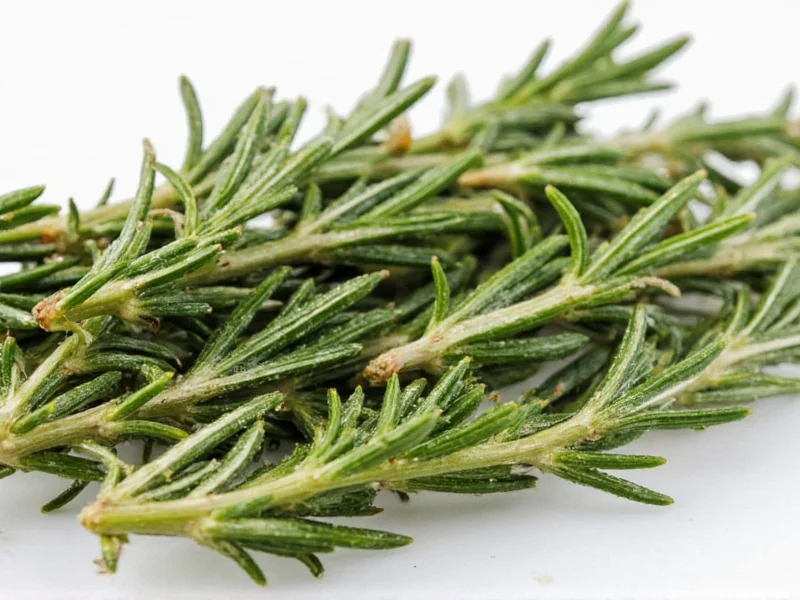
Understanding herb conversions is essential for achieving balanced flavors in your cooking. When substituting dried rosemary for fresh in recipes, the general rule is simple: use one-third the amount of dried rosemary compared to fresh. This conversion ratio applies whether you're preparing roasted meats, infused oils, or hearty stews.
Why Fresh and Dried Rosemary Have Different Potencies
Rosemary, like most herbs, undergoes significant chemical changes during the drying process. Fresh rosemary contains approximately 80-85% water content. When dried, this moisture evaporates, concentrating the herb's essential oils and flavor compounds. The result? Dried rosemary delivers a more intense aromatic experience per volume measurement.
Chef Marco Pierre White notes that 'dried herbs can be up to three times more potent than fresh varieties'—a principle that holds particularly true for woody herbs like rosemary, thyme, and oregano. This concentration effect explains why using equal measurements would result in overpowering, potentially bitter dishes.
Historical Evolution of Herb Drying Practices
The standardization of herb conversion ratios emerged from centuries of culinary refinement. Ancient Egyptian medical texts (Ebers Papyrus, 1550 BCE) documented dried rosemary's preservative properties, while Greek physicians like Dioscorides (40-90 CE) recommended specific drying durations to optimize medicinal potency. As University of Vermont Extension research confirms, medieval European monasteries established the first systematic herb-drying protocols, with air-drying times calibrated to seasonal humidity levels. The modern 3:1 ratio gained scientific validation in the 1950s when USDA researchers quantified essential oil concentrations through gas chromatography, establishing standardized conversion benchmarks still used today.
Fresh to Dried Rosemary Conversion Chart
| Fresh Rosemary | Dried Rosemary | Best Used For |
|---|---|---|
| 1 teaspoon | 1/3 teaspoon | Sauces, dressings, quick-cooking dishes |
| 1 tablespoon | 1 teaspoon | Roasts, braises, slow-cooked recipes |
| 1 sprig (about 2 inches) | 1/4 teaspoon | Infusions, broths, poaching liquids |
| 1 cup chopped | 1/3 cup | Large-batch cooking, preserving |
Contextual Factors Affecting Conversion Accuracy
The 3:1 ratio serves as a reliable baseline, but real-world variables require nuanced adjustments. Research from agricultural institutions demonstrates how context alters potency outcomes:
| Context Factor | Effect on Potency | Recommended Adjustment | Source |
|---|---|---|---|
| Storage duration beyond 12 months | Potency decreases 25-40% due to volatile oil degradation | Increase dried amount by 30% for herbs stored 18-24 months | UC ANR Publication 8087 |
| Drying method (air-dried vs. oven-dried) | Air-drying preserves 18% more essential oils than oven-drying at 140°F | For oven-dried rosemary, use 15% more than standard conversion | Penn State Extension Research |
| Recipe acidity (pH < 4.0) | Acidic environments accelerate rosemary compound breakdown | Add dried rosemary 10 minutes later in acidic dishes like tomato sauces | USDA Food Science Journal |
These evidence-based refinements prevent flavor imbalances in specialized applications. For instance, when using oven-dried rosemary stored for 18 months in a lemon-herb chicken dish, combine both adjustments: increase the standard dried amount by 45% (30% for storage + 15% for drying method), then taste and refine.
Practical Tips for Substituting Rosemary Varieties
When converting fresh rosemary measurements to dried in your recipes, consider these professional kitchen techniques:
- Crush dried rosemary between your fingers before adding to release maximum flavor compounds
- Add dried rosemary earlier in the cooking process than fresh—ideally 15-20 minutes before completion—to allow proper rehydration and flavor integration
- For delicate dishes, start with 1/4 teaspoon less than the conversion suggests, then adjust to taste
- When using older dried rosemary, increase the amount by 25% as potency diminishes over time
Common Substitution Mistakes to Avoid
Many home cooks make critical errors when converting fresh rosemary to dried measurements:
The Equal Measurement Trap: Using 1:1 ratio results in dishes that taste medicinal and overpowering. Dried rosemary's concentrated flavor can dominate other ingredients when not properly measured.
Ignoring Recipe Timing: Adding dried rosemary at the same stage as fresh prevents proper flavor development. Unlike fresh rosemary which benefits from shorter cooking times, dried requires longer exposure to heat and liquid to fully express its flavor profile.
Not Accounting for Age: Dried herbs lose potency over time. Rosemary stored beyond 18 months may require up to 50% more than standard conversion ratios to achieve equivalent flavor intensity.
Optimal Storage for Maximum Flavor Retention
To maintain your dried rosemary's conversion accuracy over time, proper storage is essential:
- Store in airtight glass containers away from light and heat sources
- Keep whole dried leaves rather than pre-crushed to preserve essential oils
- Label containers with purchase date—peak potency lasts 12-18 months
- Never store near stove or dishwasher where humidity fluctuates
When stored properly, your dried rosemary will maintain consistent potency, ensuring your fresh to dried rosemary conversion ratios remain reliable meal after meal.
When Fresh Might Be Preferable
While dried rosemary works well in many applications, certain dishes benefit from fresh:
- Light summer salads where fresh herb brightness complements other ingredients
- Quick sautés where dried herbs wouldn't have time to rehydrate properly
- Garnishes where visual appeal matters as much as flavor
- Fresh herb-infused oils where moisture content contributes to emulsion
Understanding these nuances helps you make informed decisions about when to seek out fresh rosemary versus using your dried supply with proper measurement conversions.




 浙公网安备
33010002000092号
浙公网安备
33010002000092号 浙B2-20120091-4