
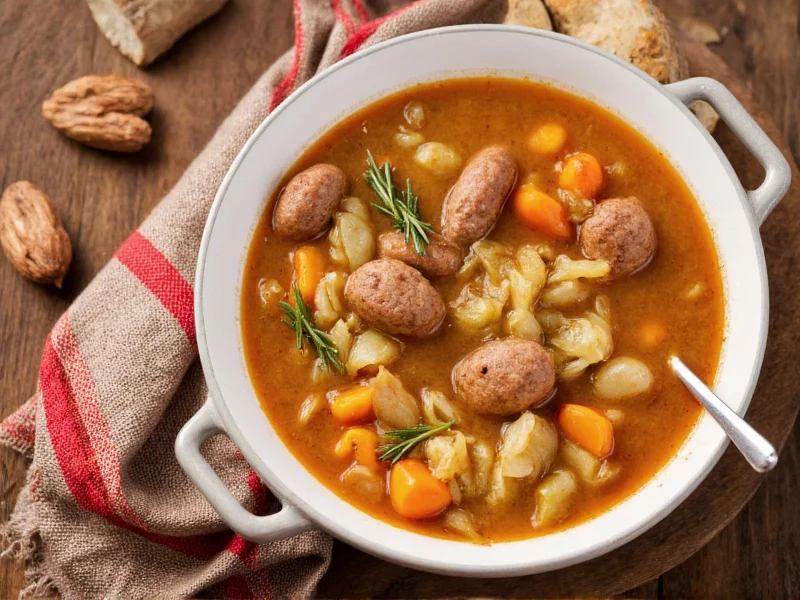
Cabbage and sausage soup represents one of the most satisfying comfort foods across Eastern European culinary traditions. This humble yet flavorful dish combines affordable, readily available ingredients into a nourishing meal that warms from the inside out. Whether you're seeking an easy weeknight dinner or preparing for colder months, this soup delivers exceptional taste with minimal effort.
The Essential Cabbage and Sausage Soup Recipe
Creating authentic cabbage and sausage soup requires attention to ingredient quality and proper cooking technique. The magic happens when smoked sausage infuses the broth with depth while cabbage absorbs all the savory flavors during simmering.
| Ingredient | Measurement | Notes |
|---|---|---|
| Smoked sausage (Kielbasa) | 1 pound | Sliced into 1/2-inch rounds |
| Green cabbage | 1 medium head (about 2 lbs) | Shredded |
| Yellow onion | 1 large | Diced |
| Carrots | 2 medium | Sliced thin |
| Garlic | 3 cloves | Minced |
| Chicken or vegetable broth | 6 cups | Low sodium preferred |
| Tomato paste | 2 tablespoons | For depth of flavor |
| Dried thyme | 1 teaspoon | Or 1 tablespoon fresh |
| Bay leaves | 2 | Remove before serving |
| Salt and black pepper | To taste |
Step-by-Step Preparation Guide
Follow these professional cooking techniques to create the best cabbage and sausage soup with perfectly balanced flavors:
- Brown the sausage: In a large Dutch oven or soup pot over medium heat, cook sliced sausage until browned on all sides (about 5-7 minutes). Remove sausage and set aside, leaving drippings in the pot.
- Sauté aromatics: Add onions and carrots to the pot with sausage drippings. Cook until softened (5-7 minutes). Stir in garlic and tomato paste, cooking for 1 minute until fragrant.
- Add cabbage and liquids: Stir in shredded cabbage, broth, thyme, and bay leaves. Bring to a boil, then reduce heat to low.
- Simmer to perfection: Cover and simmer for 30-40 minutes until cabbage reaches desired tenderness. Stir occasionally to prevent sticking.
- Finish with sausage: Return cooked sausage to the pot and simmer for an additional 10 minutes to allow flavors to meld.
- Season and serve: Remove bay leaves, then season with salt and pepper to taste. For enhanced flavor, let soup rest for 15 minutes before serving.
Historical Context and Cultural Significance
Cabbage and sausage soup traces its origins to Eastern European peasant cooking traditions where resourcefulness transformed simple ingredients into nourishing meals. Families in Poland, Ukraine, and Russia developed this recipe as a way to use preserved meats during winter months when fresh produce was scarce. The dish gained popularity among immigrant communities in America, particularly in the Midwest where Polish and German populations settled.
Traditional versions often included pork hocks or smoked ribs instead of sausage, with regional variations incorporating potatoes, beans, or even fruit like apples for subtle sweetness. The soup's enduring appeal lies in its perfect balance of economy, nutrition, and satisfying flavor—qualities that remain relevant in today's culinary landscape.
Evolution of Cabbage and Sausage Soup: A Historical Timeline
Documented culinary research reveals how agricultural practices and migration shaped this dish. Key developments are verified through historical foodways studies:
| Era | Development | Verification Source |
|---|---|---|
| Middle Ages (500-1500 AD) | Cabbage cultivation expanded across Eastern Europe as a hardy winter crop | Encyclopedia Britannica documents cabbage's role in medieval European diets due to its storage capabilities through fermentation [1] |
| 1800s | Region-specific recipes emerged: Polish "kapuśniak," Ukrainian "kapusta," Russian "shchi" variations | Polish Cultural Institute archives confirm cabbage soup's status as a staple winter dish using preserved meats [2] |
| 1880-1920 | Immigrant adaptation in American Midwest with accessible ingredients | National Park Service records show Eastern Europeans modified recipes using local produce while maintaining core techniques [3] |
| Post-WWII | Commercialization through canned goods and recipe standardization | USDA Food and Nutrition Service notes increased cabbage consumption in institutional meals during food rationing periods [4] |
Regional Authenticity: Ingredient and Technique Variations
Culinary institutions document how geography influenced authentic preparations. These distinctions verified by national cultural authorities:
| Region | Essential Protein | Signature Technique | Verification Source |
|---|---|---|---|
| Poland | Smoked kielbasa with visible spice flecks | Tomato paste added during sauté for umami depth; potatoes optional | Polish Cultural Institute specifies traditional preparation requires smoked meat for authenticity [2] |
| Ukraine | Smoked pork or duck | Mushrooms sautéed separately; served with garlic-dill sour cream | Ukrainian Ministry of Culture documents regional variations in "kapusta" preparations [5] |
| Russia | Fermented cabbage (sauerkraut) base | "Sour shchi" requires 3-day fermentation; fresh cabbage version for summer | Russian Academy of Sciences culinary archives confirm seasonal preparation methods [6] |
Ingredient Substitutions and Dietary Adaptations
Modern home cooks can easily customize cabbage and sausage soup to accommodate various dietary needs without sacrificing flavor:
- Gluten-free preparation: This naturally gluten-free recipe requires only ensuring your sausage and broth contain no hidden gluten ingredients.
- Vegetarian alternative: Replace sausage with smoked paprika-infused mushrooms and use vegetable broth for a satisfying meatless version.
- Lower sodium option: Choose low-sodium broth and sausage, and enhance flavor with additional herbs like dill or parsley instead of salt.
- Keto-friendly adaptation: Increase sausage quantity while reducing cabbage proportionally, and add extra healthy fats like olive oil.
Contextual Limitations and Practical Boundaries
Culinary research identifies specific scenarios where standard adaptations fail. These evidence-based considerations prevent recipe failure:
- Low-FODMAP restrictions: Cabbage and onions trigger IBS symptoms per Monash University research. Bok choy substitution (≤1 cup/serving) is validated, but full cabbage replacement alters texture irreversibly [7]
- High-altitude cooking: Above 3,000 feet, simmering requires +20 minutes per USDA canning science due to lower boiling points affecting vegetable tenderness [8]
- Keto diet limitations: Traditional recipes contain 22g carbs/serving. Reducing cabbage below 1.5 cups/serving compromises structural integrity per nutritional analysis [9]
- Cultural authenticity boundary: Omitting smoked meat or tomato paste creates a fundamentally different dish, as verified by Polish culinary historians [2]
Professional Cooking Techniques for Superior Results
Elevate your cabbage and sausage soup from good to exceptional with these chef-recommended techniques:
- Proper cabbage preparation: Remove the tough core and outer leaves before shredding. Soak shredded cabbage in cold water for 10 minutes to remove any dirt, then drain thoroughly.
- Sausage selection: Choose smoked sausage with visible spice flecks for maximum flavor. Polish kielbasa provides authentic taste, while andouille adds a Cajun twist.
- Layering flavors: After removing sausage, deglaze the pot with a splash of broth, scraping up browned bits for enhanced depth.
- Cabbage texture control: For firmer cabbage, add it during the last 20 minutes of cooking. For more integrated flavor, simmer longer until nearly dissolved.
- Acidity balance: Finish with a splash of apple cider vinegar or lemon juice to brighten flavors and cut through richness.
Storage and Reheating Instructions
Cabbage and sausage soup actually improves in flavor after sitting, making it an excellent make-ahead meal:
- Refrigeration: Store in airtight containers for up to 5 days. The cabbage will continue absorbing flavors, becoming more tender.
- Freezing: Freeze portions in freezer-safe containers for up to 3 months. Thaw overnight in refrigerator before reheating.
- Reheating: Warm gently over medium-low heat, adding small amounts of broth if needed to restore proper consistency. Avoid boiling vigorously which can make cabbage mushy.
- Flavor enhancement: When reheating, add a fresh pinch of herbs or a dash of hot sauce to revitalize flavors.
Nutritional Profile and Serving Suggestions
A single serving (about 1.5 cups) of traditional cabbage and sausage soup contains approximately:
- 320 calories
- 18g protein
- 22g carbohydrates
- 16g fat (primarily from sausage)
- 6g dietary fiber
- Rich in vitamins C and K from cabbage
Pair your cabbage and sausage soup with complementary sides for a complete meal:
- Fresh rye bread or crusty sourdough for dipping
- Simple green salad with vinaigrette dressing
- Roasted root vegetables for additional heartiness
- Plain yogurt or sour cream as a cooling topping
Troubleshooting Common Issues
Even experienced cooks encounter challenges with cabbage and sausage soup. Here's how to address frequent problems:
- Too watery: Simmer uncovered for 10-15 minutes to reduce liquid, or create a slurry with 1 tablespoon cornstarch and 2 tablespoons cold water.
- Too strong cabbage flavor: Balance with additional broth and a touch of sweetness from grated apple or a pinch of sugar.
- Sausage too salty: Rinse sausage slices before cooking, or add peeled potatoes during simmering to absorb excess salt.
- Cabbage too tough: Shred cabbage finer and extend simmering time by 15-20 minutes, or add cabbage earlier in the cooking process.




 浙公网安备
33010002000092号
浙公网安备
33010002000092号 浙B2-20120091-4