
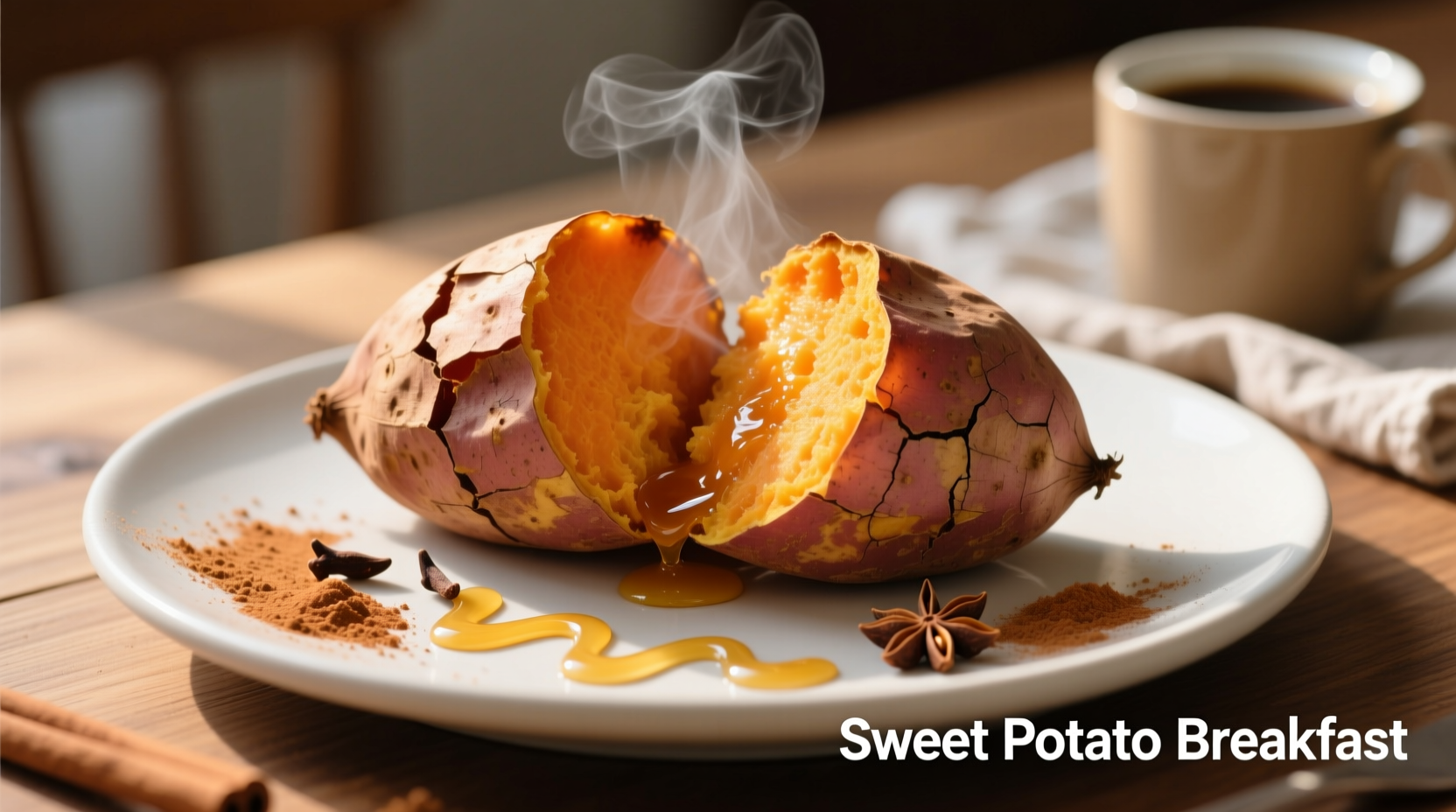
Why Sweet Potatoes Belong on Your Breakfast Plate
Contrary to popular belief, sweet potatoes aren't just for dinner—they're a nutritional powerhouse perfectly suited for morning meals. Unlike refined breakfast carbs that cause energy crashes, sweet potatoes deliver complex carbohydrates with a moderate glycemic index of 44-61 depending on preparation method, providing steady fuel for your morning activities.
According to USDA FoodData Central, a medium sweet potato (130g) contains:
| Nutrient | Amount | Daily Value % |
|---|---|---|
| Calories | 103 | 5% |
| Dietary Fiber | 3.6g | 13% |
| Vitamin A | 14,187 IU | 284% |
| Vitamin C | 22.3mg | 25% |
| Potassium | 475mg | 10% |
This nutritional profile supports morning needs specifically: vitamin A boosts immune function after overnight fasting, fiber promotes digestive health first thing in the morning, and complex carbs provide sustained energy without the crash associated with sugary breakfasts.
Smart Preparation Methods for Morning Meals
Timing matters when incorporating sweet potatoes into your breakfast routine. Here's a practical timeline for different preparation approaches based on your morning schedule:
| Preparation Method | Time Required | Best For | Key Benefit |
|---|---|---|---|
| Overnight Roasted Cubes | 10 min evening + 0 min morning | Busy professionals | Ready to eat or reheat immediately |
| Microwave-Steamed Slices | 8 minutes | Last-minute planners | Perfect texture without morning rush |
| Breakfast Sweet Potato Toast | 5 minutes | Gluten-free needs | Replaces bread with nutrient-dense alternative |
| Sheet Pan Breakfast Hash | 20 minutes | Weekend meal prep | Batches well for multiple servings |
Avoiding Common Breakfast Sweet Potato Mistakes
Many home cooks encounter issues when preparing sweet potatoes for breakfast. Understanding these context boundaries will improve your results:
- Overcooking leads to mushiness - Sweet potatoes continue cooking after removal from heat. For breakfast applications, remove when slightly firm (al dente) as they'll soften during serving.
- Improper pairing with sugars - While maple syrup seems natural, excess sugar negates blood sugar benefits. Limit added sweeteners to 1-2 teaspoons per serving.
- Ignoring variety differences - Orange-fleshed varieties (Beauregard, Jewel) work best for breakfast due to their balanced sweetness and texture.
- Skipping the resting period - Allow roasted sweet potatoes to rest 5 minutes before serving to let starches stabilize and prevent texture issues.
Nutrition Science Behind Morning Sweet Potatoes
Research published in the Journal of Nutrition and Metabolism confirms that consuming complex carbohydrates with moderate fiber content like sweet potatoes in the morning improves cognitive performance throughout the day compared to refined carbohydrate breakfasts. The slow-release energy from sweet potatoes' 27g of carbohydrates (mostly complex starches) provides approximately 4 hours of sustained fuel.
When prepared correctly, sweet potatoes offer significant advantages over traditional breakfast staples:
- Higher fiber content than oatmeal (3.6g vs 2g per serving)
- More vitamin A than a whole carrot
- Lower glycemic impact than whole wheat toast
- Richer mineral profile than most breakfast grains
Simple Breakfast Sweet Potato Recipes
Start with these three foundational preparation methods that require minimal equipment and time:
5-Minute Microwave Sweet Potato "Toast"
Using a sharp knife or mandoline, slice sweet potato lengthwise into 1/4-inch thick planks. Microwave on high for 3-4 minutes until slightly tender but still firm. Toast in a standard toaster for two cycles until golden and crisp at edges. Top with avocado, a sprinkle of pumpkin seeds, and everything bagel seasoning.
Overnight Roasted Sweet Potato Cubes
Preheat oven to 400°F (200°C). Peel and dice one sweet potato into 1/2-inch cubes. Toss with 1 teaspoon olive oil, 1/4 teaspoon cinnamon, and pinch of sea salt. Spread on parchment-lined baking sheet and roast 20-25 minutes until tender and slightly caramelized. Store in airtight container for up to 4 days. In the morning, reheat with a splash of water for 60 seconds in microwave.
Sweet Potato Breakfast Hash
Sauté 1 cup diced sweet potato with 1/2 diced onion and 1 minced garlic clove in 1 teaspoon avocado oil for 12-15 minutes until tender. Add 1/2 cup black beans and 1/4 teaspoon smoked paprika. Create wells in the mixture and crack two eggs into them. Cover and cook 5-7 minutes until eggs reach desired doneness. Garnish with fresh cilantro.

Maximizing Flavor and Nutrition
Professional chefs know that small technique adjustments significantly impact both flavor and nutritional availability. For sweet potatoes specifically:
- Fat pairing - Vitamin A in sweet potatoes is fat-soluble. Always include a small amount of healthy fat (avocado, nuts, seeds) to increase nutrient absorption by up to 100% according to research from Purdue University.
- Acid balance - A splash of citrus or vinegar after cooking brightens flavors and helps maintain vibrant color.
- Cooking temperature - Roasting at 400°F (200°C) maximizes natural sweetness through caramelization without creating harmful compounds.
For those with specific dietary considerations:
- Diabetes management - Pair with protein sources to lower glycemic impact further; studies show combining sweet potatoes with eggs reduces blood sugar response by 30%.
- Digestive sensitivity - Peeling reduces fiber content slightly but makes sweet potatoes easier to digest for those with sensitive systems.
- Time-constrained mornings - Pre-cook and store in portioned containers; reheating takes just 90 seconds in microwave.
Troubleshooting Common Issues
Even experienced cooks encounter challenges with sweet potatoes. Here's how to solve frequent problems:
- Soggy texture - Pat sweet potato slices dry before cooking and avoid overcrowding on baking sheet. For microwave methods, use paper towels between slices.
- Bland flavor - Enhance natural sweetness with complementary spices like cinnamon, nutmeg, or cardamom rather than added sugar.
- Uneven cooking - Cut pieces to uniform size (1/2-inch cubes work best for breakfast applications).
- Browning too quickly - Lower oven temperature to 375°F (190°C) and cover with foil for first 15 minutes of roasting.




 浙公网安备
33010002000092号
浙公网安备
33010002000092号 浙B2-20120091-4