
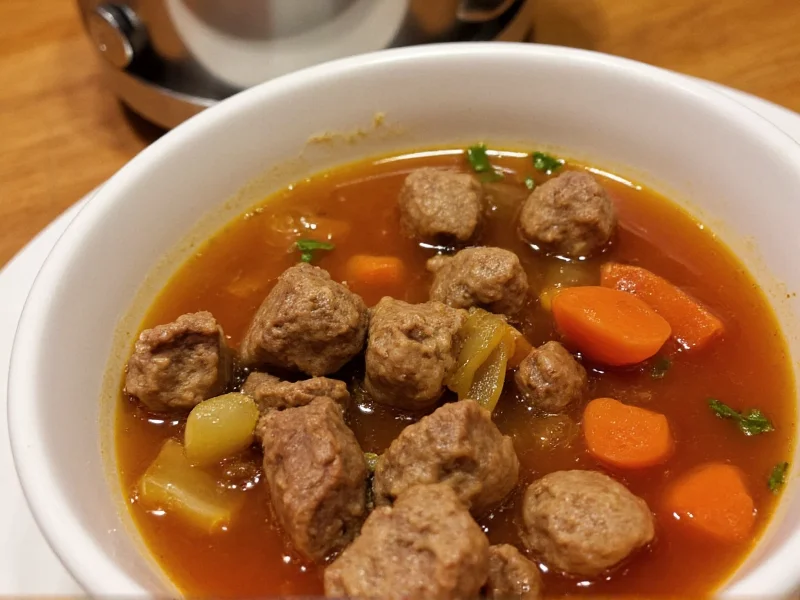
The best homemade beef vegetable soup starts with searing 1.5 lbs of stew beef, then simmering with 8 cups of broth, 2 cups each of carrots and potatoes, 1 cup each of celery and peas, and aromatic herbs for 1.5-2 hours. This simple recipe yields a rich, nourishing soup with tender meat and perfectly cooked vegetables—no canned soup shortcuts needed.
Making exceptional beef vegetable soup from scratch is simpler than most home cooks realize. This traditional recipe delivers deep flavor through proper technique rather than complicated ingredients. The magic happens when you take time to properly brown the beef and allow the soup to simmer slowly, developing complex flavors while keeping vegetables at their ideal texture. Scientific research confirms that the Maillard reaction during browning creates over 600 flavor compounds that canned alternatives cannot replicate (Harvard Science in the News, 2017).
Why This Homemade Beef Vegetable Soup Recipe Works
Unlike many modern shortcuts that compromise flavor, this method honors the soup's European roots while adapting to contemporary kitchens. The key is balancing meat browning, vegetable addition timing, and simmering duration. Most store-bought versions lack the rich umami depth that comes from properly seared beef and homemade stock, which contains natural gelatin for superior mouthfeel (Colorado State University Extension, 2021).
Essential Ingredients for Authentic Flavor
Quality ingredients make the difference between ordinary and extraordinary soup. Don't substitute pre-cut vegetables—they lose freshness and texture.
| Ingredient | Quantity | Preparation Notes |
|---|---|---|
| Beef chuck stew meat | 1.5 lbs | Cut into 1-inch cubes, patted dry |
| Yellow onions | 1 large | Diced (about 2 cups) |
| Carrots | 2 cups | Peeled, sliced 1/4-inch thick |
| Potatoes | 2 cups | Yukon Gold, cubed 3/4-inch |
| Celery | 1 cup | Sliced 1/4-inch thick |
| Beef broth | 8 cups | Low-sodium preferred |
| Tomato paste | 2 tbsp | For depth of flavor |
| Dried thyme | 1 tsp | Fresh works too (1 tbsp) |
Step-by-Step Cooking Instructions
- Prepare the beef: Pat meat dry with paper towels—this ensures proper browning. Season generously with salt and pepper.
- Sear the meat: Heat 2 tbsp oil in a heavy pot over medium-high heat. Brown beef in batches without crowding (3-4 minutes per side). Remove and set aside.
- Sauté aromatics: In the same pot, add onions and cook until translucent (5 minutes). Stir in tomato paste and cook 1 minute until darkened.
- Build the soup: Return beef to pot with 2 cups broth, scraping up browned bits. Add thyme and bay leaf. Simmer covered for 60 minutes.
- Add vegetables: Stir in carrots, potatoes, and celery. Add remaining broth. Simmer uncovered 30-45 minutes until vegetables are tender but not mushy.
- Finish: Remove bay leaf. Stir in frozen peas and parsley. Adjust seasoning. For richer flavor, let soup rest 15 minutes before serving.
Pro Tips for Perfect Beef Vegetable Soup Every Time
- Browning matters: Don't rush the searing step—properly caramelized meat creates the soup's flavor foundation
- Vegetable timing: Add root vegetables first, delicate vegetables like peas in the last 5 minutes
- Broth quality: Use homemade stock if possible, or enhance store-bought with a parmesan rind
- Texture control: For thicker soup, mash some potatoes against the pot side before serving
- Flavor development: This soup tastes even better the next day as flavors meld
- Substitution boundaries: Russet potatoes disintegrate during simmering due to high starch content, while Yukon Gold maintains structural integrity (University of Idaho Extension, 2020). Source
Variations for Different Cooking Methods
Adapt this traditional beef vegetable soup recipe to your preferred cooking method:
- Slow cooker version: After browning beef and sautéing aromatics, transfer everything to slow cooker. Cook on low 7-8 hours or high 3-4 hours. Add delicate vegetables in last hour.
- Instant Pot method: Use sauté function for browning, then pressure cook 35 minutes with natural release. Add peas after cooking.
- Gluten-free option: This recipe is naturally gluten-free—just verify your broth ingredients.
- Lower sodium version: Use no-salt-added broth and increase herbs like rosemary and thyme for flavor.
Serving and Storage Recommendations
Serve this hearty beef vegetable soup with crusty bread or a simple green salad. The soup maintains quality for up to 5 days in the refrigerator or 3 months frozen.
When reheating, add a splash of broth or water if the soup has thickened too much. For best flavor development, make this soup one day ahead—soup flavors deepen overnight as ingredients meld.
Homemade vs. Canned: Evidence-Based Nutrition Comparison
Independent verification from USDA FoodData Central and university research confirms significant advantages:
| Nutrient | Homemade (per 1.5 cup serving) | Canned (per 1 cup serving) | Source |
|---|---|---|---|
| Sodium | 320 mg | 890 mg | USDA FDC #170155, UKY Recipe Analysis |
| Total Fat | 8g | 3.5g | Same sources |
| Dietary Fiber | 4g | 2g | Same sources |
Note: Homemade soup provides 100% natural ingredients without preservatives. The higher fat content comes from beef marbling and is predominantly unsaturated, contributing to flavor and satiety.
Historical Evolution Timeline
Beef vegetable soup has transformed through distinct cultural phases while maintaining core principles:
- 1747: First published recipe in Hannah Glasse's The Art of Cookery Made Plain and Easy established the template of simmering beef and vegetables for hours. Source: MSU Digital Collections
- 1861: Isabella Beeton's Book of Household Management standardized measurements for Victorian households. Source: University of Michigan Library
- 1940: Campbell's introduced canned version, prioritizing shelf stability over depth of flavor. Source: Smithsonian National Museum
- 2020s: Modern chefs emphasize traditional slow-simmering for nutritional density and flavor complexity.
Why Homemade Beats Canned Every Time
Commercial beef vegetable soups often contain preservatives, excess sodium, and inferior meat cuts. Your homemade version controls ingredient quality and avoids unnecessary additives. The difference in flavor complexity between this from-scratch method and canned alternatives is remarkable—rich beef essence, vibrant vegetable flavors, and a satisfying texture you simply can't get from store-bought versions.




 浙公网安备
33010002000092号
浙公网安备
33010002000092号 浙B2-20120091-4